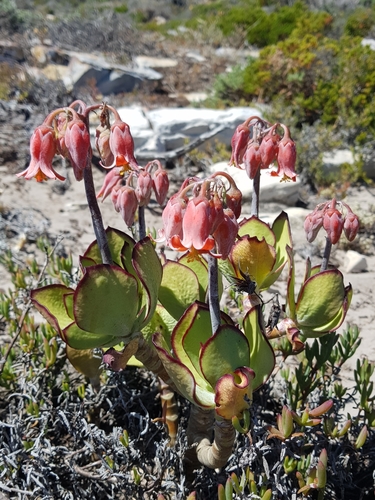
Sedum laxum
(Britt.) Berger
Roseflower stonecrop
CrassulaceaeLeaves

iNaturalist · cc-by-nc
(c) NC Orchid, some rights reserved (CC BY-NC)
(c) NC Orchid, some rights reserved (CC BY-NC)
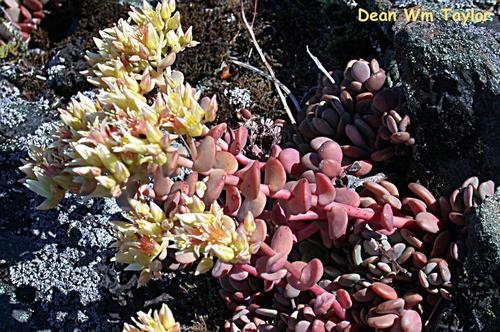
iNaturalist · cc-by-nc-sa
(c) 2004 Dean Wm. Taylor, some rights reserved (CC BY-NC-SA)
(c) 2004 Dean Wm. Taylor, some rights reserved (CC BY-NC-SA)
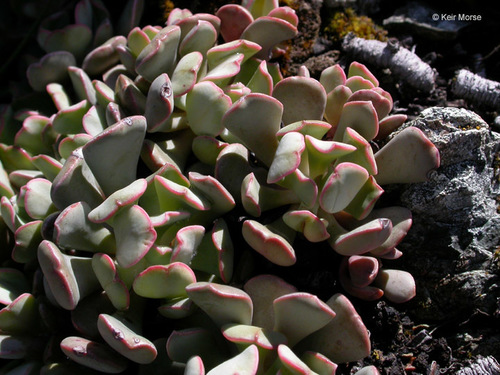
iNaturalist · cc-by-nc-sa
(c) 2008 Keir Morse, some rights reserved (CC BY-NC-SA)
(c) 2008 Keir Morse, some rights reserved (CC BY-NC-SA)
What to Eat
Edible parts: Leaves
The leaves are eaten.
Where to Find It
It is a temperate plant.
North America, USA,
Countries: Antigua & Barbuda, Barbados, Bahamas, Belize, Canada, Costa Rica, Cuba, Dominica, Dominican Republic, Grenada, Guatemala, Honduras, Haiti, Jamaica, St Kitts & Nevis, St Lucia, Mexico, Nicaragua, Panama, Puerto Rico, El Salvador, Trinidad & Tobago, United States, St Vincent
How to Identify
A succulent herb in the stonecrop family (Crassulaceae), found in temperate regions. The leaves are the edible portion.
Wikipedia
Source ↗Sedum laxum is a species of flowering plant in the family Crassulaceae known by the common name roseflower stonecrop. It is native to southwestern Oregon and northwestern California, where it can be found in rocky mountainous habitat. It is a succulent plant forming basal rosettes of oval or oblong leaves up to 3 centimeters long. The inflorescence is made up of one or more erect arrays of many flowers. The flowers have reddish or yellowish petals up to 1.3 centimeters long each.
References (1)
- Moerman, D. F., 2010, Native American Ethnobotany. Timber Press. p 525