Rubus queenslandicus
A. R. Bean
Rose-leaf bramble
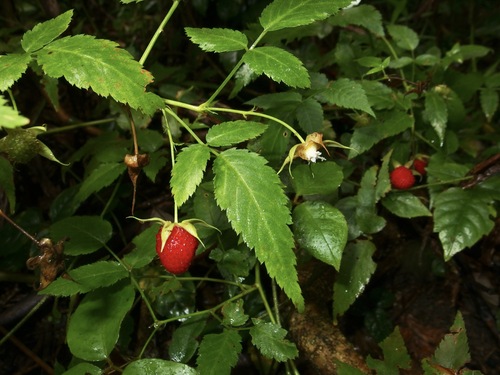
(c) Sue Carnahan, some rights reserved (CC BY), uploaded by Sue Carnahan
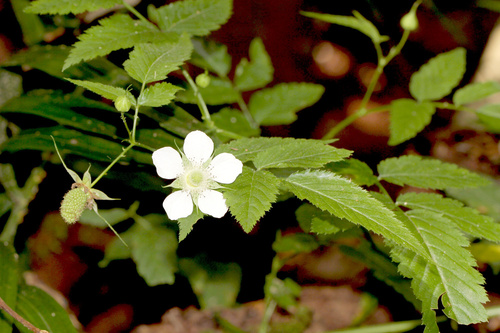
(c) Pete Woodall, some rights reserved (CC BY-NC), uploaded by Pete Woodall
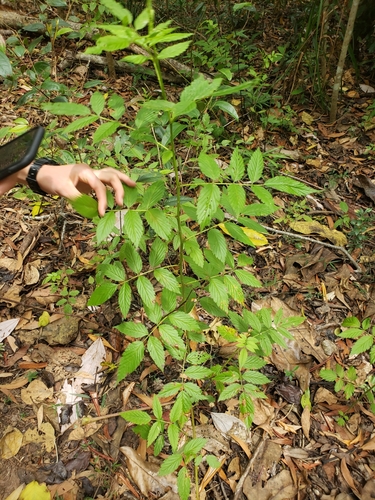
(c) eillsajah, some rights reserved (CC BY-NC), uploaded by eillsajah
What to Eat
Edible parts: Fruit
The fruit is edible.
Dangerous Lookalikes
This plant can be confused with the following toxic species. Always verify identification carefully before consuming any wild plant.


Red Baneberry: Short herbaceous plant (no thorns), berries on thick red stems, each berry has a single seed, compound sharply-toothed leaves.
Rose-leaf bramble: Thorny woody canes (brambles), aggregate berry made of many drupelets, berries pull easily from receptacle.
Where to Find It
It is a tropical plant. In NE Queensland in Australia it grows between 680-1,200 m above sea level.
Australia*, Mauritius,
How to Identify
A very prickly bramble. The stem has hooked spines. The leaves are compound with leaflets along the stalk and one at the end. The leaflets are 4-8 cm long by 1.4-2.7 cm wide. The end leaflet is larger. The fruit are 8-13 mm across.
Wikipedia
Source ↗Rubus queenslandicus, commonly known as bramble-of-the-cape, rose-leaf bramble, or native raspberry, is a plant in the rose family Rosaceae which is endemic to a small part of northeastern Queensland, Australia, where it is found on the margins of highland forest. Prior to 1997, collections of this plant were identified as either R. rosifolius, R. fraxinifolius or R. muelleri/R. probus.
Notes
Fruit,
References (2)
- http://florafnq.wordpress.com
- Australian Tropical Rainforest Plants website
More from Rosaceae


