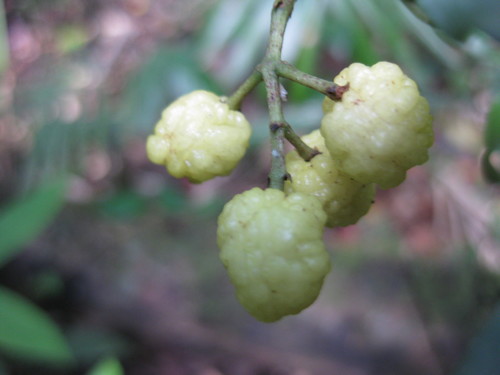
Zanthoxylum budrunga
DC.
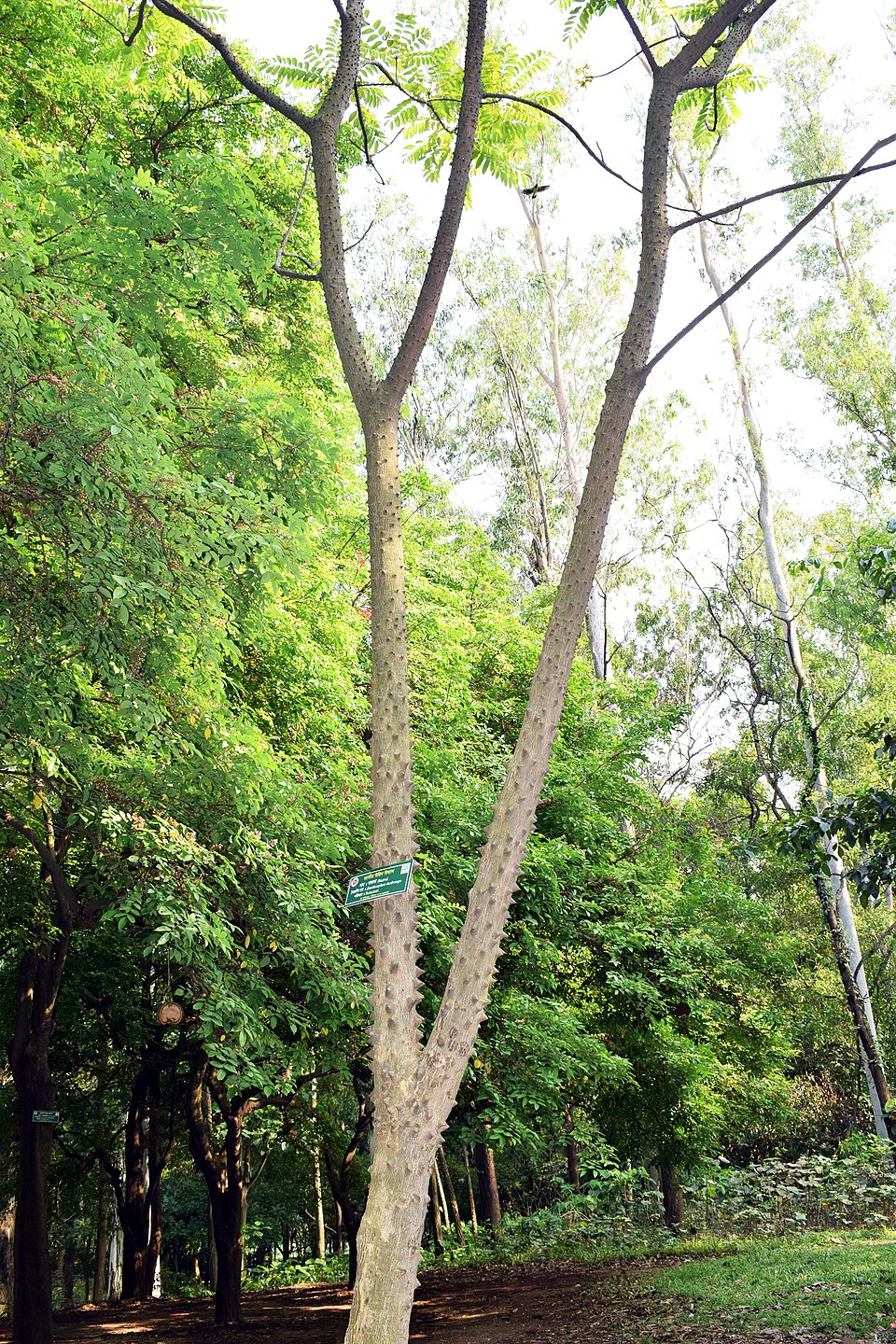
Wikimedia Commons - Dolon Prova

Wikimedia Commons - Dolon Prova
What to Eat
Edible parts: Leaves - flavouring, Fruit, Seeds - flavouring
The leaves can be eaten raw or cooked as a vegetable. The fruit are used in pickles. Ripe seeds have a black pepper-like flavor and are used as a flavouring.
Where to Find It
It is a tropical plant.
Asia, Bangladesh, Bhutan, Himalayas, India, Indochina, Myanmar, Northeastern India, SE Asia, Sikkim, Thailand,
How to Identify
A tree. It grows 15 m tall. It keeps its leaves throughout the year. The stems, branches and leaf stalks have prickles. The branches are crowded at the top of the tree. The leaves are 30-75 cm long. The flowers are small and greenish-white. The fruit are oblong. The seeds are brownish-black.
Notes
An unresolved name in The Plant List.
Names & Synonyms
Badrang, Bajna, Boketimur, Chyinbawng, Clavarier, Dieng-ka-shyrang, Hmekaung, Jang-bawng, Jingbawng, Kathit-su, Ma-yanin-kyetsu, Singzual
References (8)
- Gangte, H. E., et al, 2013, Wild Edible Plants used by the Zou Tribe in Manipur, India. International Journal of Scientific and Research Publications, Volume 3, Issue 5
- Guite, C., 2016, Study of wild edible plants associated with the Paite Tribe of Manipur, India. International Journal of Current Research. Vol. 8, Issue 11, pp. 40927-40932
- Konsam, S., et al, 2016, Assessment of wild leafy vegetables traditionally consumed by the ethnic communities of Manipur, northeast India. Journal of Ethnobiology and Ethnomedicine, 12:9
- Martin, F. W., et al, 1987, Perennial Edible Fruits of the Tropics. USDA Handbook 642 p 78
- Sawian, J. T., et al, 2007, Wild edible plants of Meghalaya, North-east India. Natural Product Radiance Vol. 6(5): p 423
- Sundriyal, M., et al, 1998, Wild edibles and other useful plants from the Sikkim Himalaya, India. Oecologia Montana 7:43-54
- Sundriyal, M. & Sundriyal, R. C., 2004, Structure, Phenology, Fruit Yield, and Future Prospects of some Prominent Wild Edible Plant Species of the Sikkim Himalaya, India. Journal of Ethnobiology 24(1): 113-138
- Wild edible plants of Himachal Pradesh (As Fagara budrunga)