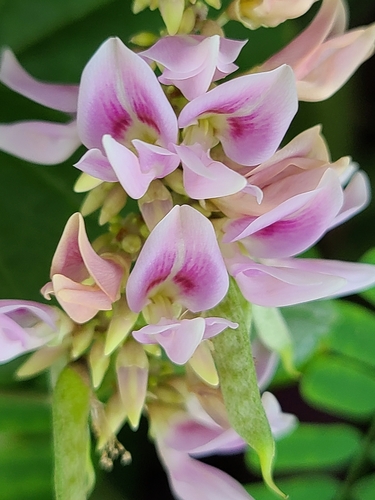
Senna auriculata
(L.) Roxb.
Matara tea, Tanner's cassia

(c) chaitanyavattem, some rights reserved (CC BY-NC)
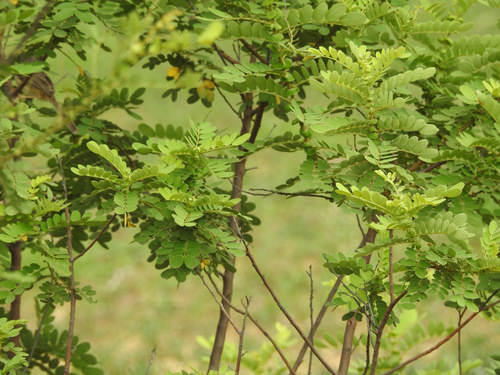
(c) Hopeland, some rights reserved (CC BY)
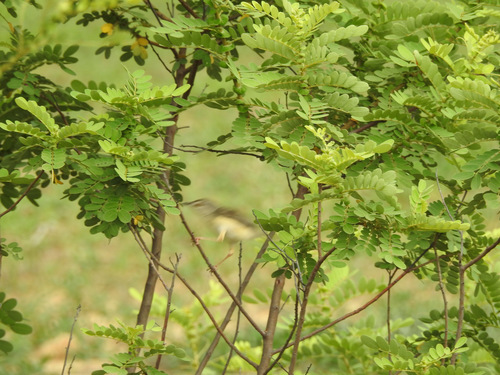
(c) Hopeland, some rights reserved (CC BY)
What to Eat
Edible parts: Leaves, Pods, Flowers, Bark - drink, Leaves - tea
Some caution should be exercised when eating this plant due to reports of toxicity. Young leaves are occasionally eaten — primarily as a famine food — and can be made into a refreshing drink; dried leaves are also used to make a tea. Young pods and young flowers are occasionally eaten as famine foods. The dried flowers are used as a coffee substitute. A fermented mixture of pounded bark dissolved in molasses is used as an alcoholic beverage.
Known Hazards
Where to Find It
A tropical plant. It grows in dry regions. In East Africa it grows between 150-610 m altitude. It requires full sun and rich light fertile well drained soil. It needs a pH between 5 and 7.7. It grows in regions with a rainfall between 380 and 4300 mm. It needs average temperatures between 16 and 27.5 °C. It is tolerant of drought. It can grow in arid places.
Africa, Asia, Bangladesh, Central Africa, Central African Republic, CAR, Congo DR, East Africa, Ghana, Himalayas, India*, Indochina, Indonesia, Malaysia, Maldives, Middle East, Myanmar, Nigeria, Pakistan, SE Asia, Sierra Leone, Sri Lanka, Sudan, Tanzania, West Africa, Yemen,
How to Identify
An evergreen shrub or small tree. It can grow to 7 m high. It has many branches. The branches have short hairs. The leaves are alternate and compound. They have leaflets along the stalk. There are 16-24 leaflets on short stalks. The leaflets slightly overlap. They have a sharp tip. They are more pale underneath. The flowers are large and bright yellow. They are arranged irregularly. They are in groups in the axils of leaves or at the ends of branches. They are 5 cm across on stalks 2.5 cm long. The fruit is a short pod 8-11 cm long by 1.5 cm wide. There are 12-20 seeds each in a separate cavity.
Nutrition Score: 17/100
| Part | Moisture | kJ | kcal | Protein | Vit A | Vit C | Iron | Zinc |
|---|---|---|---|---|---|---|---|---|
| Leaves | — | 84 | 2.5 | — | 968 | 12.7 | — | — |
How to Grow
Plants can be grown from seeds. They are planted 10-15 cm deep and are put 5-13 cm apart. They are then thinned out. It can be cut back and will re-grow. They can also be grown from stem cuttings.
Propagation: Seed has a hard seedcoat requiring scarification before sowing. Pour a small amount of nearly boiling water over the seeds (do not cook them), then soak in warm water for 12–24 hours until swollen. If not swollen, carefully nick the seedcoat without damaging the embryo and soak for a further 12 hours. Can also be propagated by cuttings. Thinning is advisable one year after sowing. Weeding and cultivation encourage growth but are not strictly necessary. Limed soil is reported to increase tannin content. Coppiced plants regrow well.
Medicinal Uses
The plant has a long tradition in local medicine, with leaves, flowers, seeds, roots, and bark all being used. Modern research has confirmed the presence of various medically active compounds. Saponin and the cardiac glucoside sennapicrin are reported from the roots. The bark, flowers, and seeds contain pyrrolizidine alkaloids, which are suspected of having hepatotoxic properties. However, leaf extracts have been shown in experiments to alleviate liver injury caused by alcohol. Extracts of dried flowers have demonstrated significant hypoglycaemic effects, supporting the traditional use of the plant for diabetes. The roots and bark are astringent and used in gargles, as an alterative, and to treat skin diseases, eye problems, and rheumatism. A decoction of the flowers and seeds is recommended for diabetes. The seeds are used to treat eye diseases, gonorrhoea, and gout. Leaves and fruits serve as an anthelmintic and diuretic. In Tanzania, the plant is used to treat impotence, which may be related to diabetes.
Other Uses
The plant is used for green manuring in India, for revegetating erodible soils, and has proved effective in reclaiming sodic soils dressed with gypsum. The bark yields tannin — plants three years old or more contain 15–24% tannin on a dry weight basis. A black dye is obtained from the bark. A fast yellow dye is obtained from the flowers. Flower buds are used in the galling process before dyeing cotton cloth and chintzes red, pink, or purple with madder roots (Rubia cordifolia). Boiled seeds are an important ingredient in indigo vats, where specific bacterial fermentation reduces insoluble indigo into soluble leuco-indigo, allowing textile fibres to absorb the dye; the seeds provide sugars to sustain the fermentation. A fibre obtained from the inner bark can be made into rope. Branches are used as chewing sticks and toothbrushes. Though the wood does not reach timber volumes, it is occasionally used for small tool handles. A curious reported use from India is that branches were formerly added to crucibles in the fabrication of wootz Damascus steel, contributing to the chemical composition responsible for the steel's distinctive patterning. The plant is also suitable for landscaping roadsides and gardens, tolerating drought and dry conditions but not much cold, and bearing attractive flowers in racemes.
Wikipedia
Source ↗Senna auriculata is a leguminous tree in the subfamily Caesalpinioideae. It is commonly known by its local names matura tea tree, avaram or ranawara, (Kannada: ಆವರಿಕೆ āvarike, Marathi: तरवड, Malayalam: ആവര, Sinhala: රණවරා ranawarā,Telugu: తంగేడు taṃgēḍu, Tamil: ஆவாரை āvārai) or the English version avaram senna. It is the State flower of Indian state of Telangana. It occurs in the dry regions of India and Sri Lanka. It is common along the sea coast and the dry zone in Sri Lanka.
Production
Plants mostly flower in the hot season.
Other Information
It is mostly grown for non food uses. It is an emergency or famine food.
Notes
There are 100 Cassia species. This group has been revised to a smaller more consistent group. It is used in medicine. Also as Caesalpinaceae.
Names & Synonyms
Anwala, Avarai, Avaram, Avarike, Awal, Peik-thingat, Ranauraa, Ranawara, Tangedu, Tanner's senna, Tarvad, Tarwad, Tawar
References (24)
- Ambasta S.P. (Ed.), 2000, The Useful Plants of India. CSIR India. p 109 (As Cassia auriculata)
- Bremness, L., 1994, Herbs. Collins Eyewitness Handbooks. Harper Collins. p 128
- Burkill, H. M., 1985, The useful plants of west tropical Africa, Vol. 1. Kew. (As Cassia auriculata)
- Burkill, I.H., 1966, A Dictionary of the Economic Products of the Malay Peninsula. Ministry of Agriculture and Cooperatives, Kuala Lumpur, Malaysia. Vol 1 (A-H) p 480 (As Cassia auriculata)
- Facciola, S., 1998, Cornucopia 2: a Source Book of Edible Plants. Kampong Publications, p 67 (As Cassia auriculata)
- FAO, 1988, Traditional Food Plants, FAO Food and Nutrition Paper 42. FAO Rome p 155 (As Cassia auriculata)
- Fl. ind. ed. 1832, 2:349. 1832
- Gunjatkar, N., & Vartak, V.D., 1982, Enumeration of wild edible legumes from Pune District, Maharashtra State. J.Econ. Tax. Bot. Vol 3 pp 1-9 (As Cassia auriculata)
- Hedrick, U.P., 1919, (Ed.), Sturtevant's edible plants of the world. p 173 (As Cassia auriculata)
- Jadhav, V. D. et al, 2011, Documentation and ethnobotanical survey of wild edible plants from Kolhapur district. Recent Research in Science and Technology. 3(12): 58-63 (As Cassia auriculata)
- Karthi, Sathya, & Salome, 2014, Uncultivated Edible Greens from Small Millet Farms Tamil Nadu India. IDRC (As Cassia auriculata)
- Kew Plants of the World Online
- Rajapaksha, U., 1998, Traditional Food Plants in Sri Lanka. HARTI, Sri Lanka. p 223 (As Cassia auriculata)
- Macmillan, H.F. (Revised Barlow, H.S., et al), 1991, Tropical Planting and Gardening. Sixth edition. Malayan Nature Society. Kuala Lumpur. p 356 (As Cassia auriculata)
- Martin, F.W. & Ruberte, R.M., 1979, Edible Leaves of the Tropics. Antillian College Press, Mayaguez, Puerto Rico. p 198 (As Cassia auriculata)
- Prashanth Kumar, G.M. and Shiddamallayya, N., 2015, Ethnobotanical Study of Less Known Wild Edible Plants of Hakki Pikki Tribes of Angadihalli, Hassan District, Karnataka. Journal or Medicinal Plants Studies 3(5):80-85 (As Cassia auriculata)
- Purseglove, J.W., 1968, Tropical Crops Dicotyledons, Longmans. p 204 (As Cassia auriculata)
- Rajasab, A. H. et al, 2004, Documentation of folk knowledge on edible wild plants of North Karnataka. Indian Journal of Traditional Knowledge. Vol 3(4) pp 419-429(As Cassia auriculata)
- Reddy, K. N. et al, 2007, Traditional knowledge on wild food plants in Andhra Pradesh. Indian Journal of Traditional Knowledge. Vol. 6(1): 223-229 (As Cassia auriculata)
- Royal Botanic Gardens, Kew (1999). Survey of Economic Plants for Arid and Semi-Arid Lands (SEPASAL) database. Published on the Internet; http://www.rbgkew.org.uk/ceb/sepasal/internet [Accessed 26th April 2011]
- Selvam, V., 2007, Trees and shrubs of the Maldives. RAP Publication No. 2007/12 p 54
- Sivakumar, A. & Murugesan, M., 2005, Ethnobotanical Studies of the wild edible plants used by the tribals of the Anaimalai Hills, the Western Ghats. Ancient Science of Life. XXV(2) Oct-Dec. (As Cassia auriculata)
- Sujanapal, P., & Sankaran, K. V., 2016, Common Plants of Maldives. FAO & Kerala FRI, p 236
- World Checklist of Useful Plant Species 2020. Royal Botanic Gardens, Kew