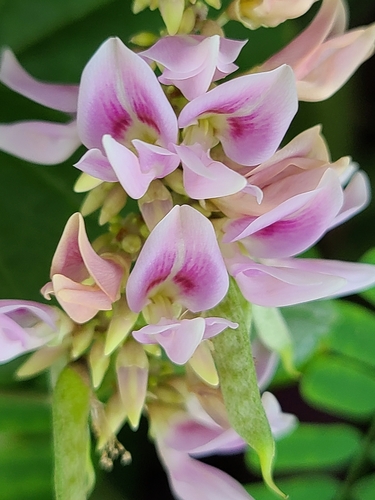
Crotalaria macrocalyx
Benth.

(c) Marco Schmidt, some rights reserved (CC BY-NC-SA)
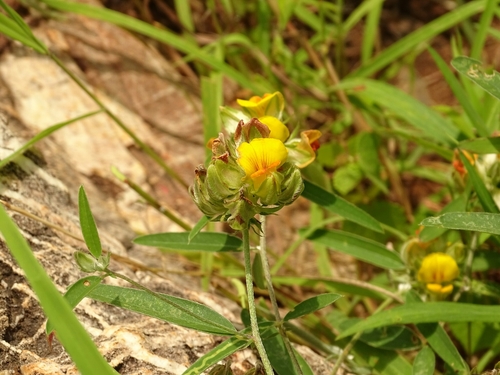
(c) AMADOU BAHLEMAN FARID, some rights reserved (CC BY-NC)
What to Eat
Edible parts: Leaves
Young leaves are cooked and eaten as a vegetable, often in stews, or dried and stored for later use.
Known Hazards
Where to Find It
It is a tropical plant. It grows in the savannah.
Africa, Benin, Burkina Faso, Chad, Niger, Sahel, Senegal, West Africa,
How to Identify
A small shrub. It has deep roots and keeps growing from year to year. It produces branched stems each year. These can be 30-90 cm long.
How to Grow
Found in the wild on clay soils. The plant grows wild on sandy and gravelly soils. We have no specific report for this species, but most species in this genus have a symbiotic relationship with certain soil bacteria; these bacteria form nodules on the roots and fix atmospheric nitrogen. Some of this nitrogen is utilized by the growing plant but some can also be used by other plants growing nearby.
Propagation: Seed - pre-soaking the seed for 12 hours in warm water can help to reduce germination time. If you have sufficient seed then it can be sown in situ. Otherwise sow in trays in a nursey and, when the seedlings are large enough to handle, pot them up into individual pots. Plant out when 15cm or more tall.
References (2)
- Achigan-Dako, E, et al (Eds), 2009, Catalogue of Traditional Vegetables in Benin. International Foundation for Science.
- N'Danikou, S. et al, 2010, Eliciting Local Values of Wild Edible Plants in Southern Bénin to Identify Priority Species for Conservation. Economic Botany, 20(10), 2011, pp. 1–15.