Agave maximiliana
Baker

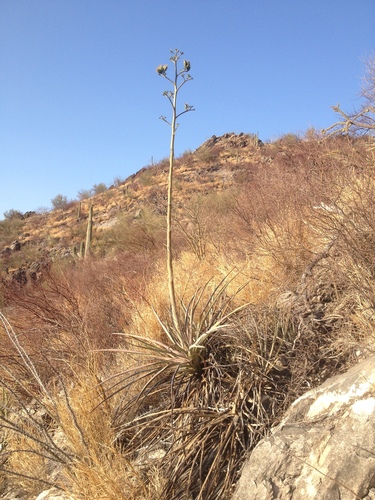
(c) Juan Ignacio 1976, some rights reserved (CC BY-SA)
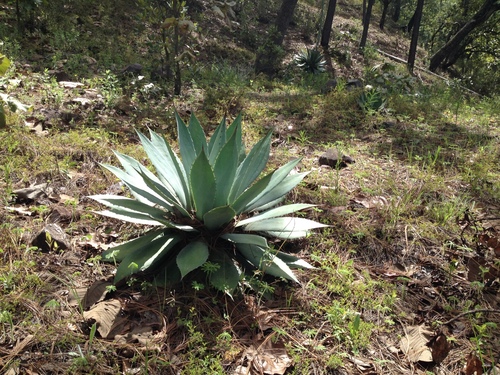
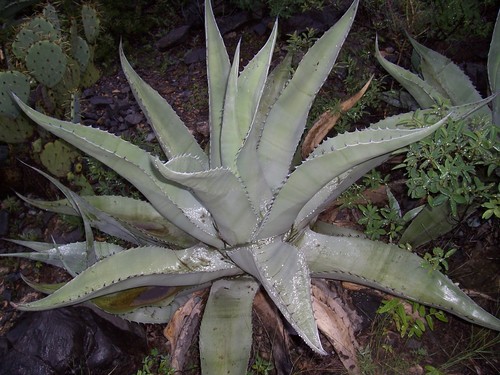
(c) Pablo Carrillo-Reyes, some rights reserved (CC BY-NC), uploaded by Pablo Carrillo-Reyes
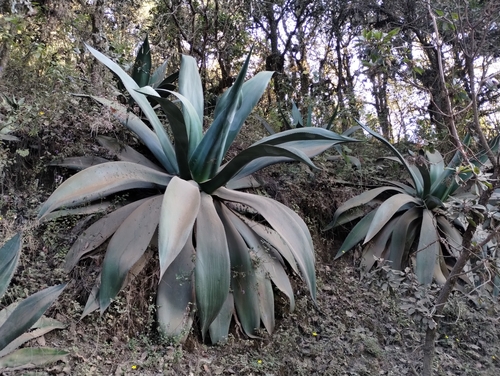
(c) andres1221, some rights reserved (CC BY-NC)
What to Eat
Edible parts: Flowers, Heart, Growing tip
Flower buds - cooked. The flowers are eaten in a stew. The plant is used to make mezcal, or 'raicilla', (a distilled spirit). Mezcal is a distilled alcoholic beverage that potentially can be made from almost any species of Agave, though only around fifty are used regularly and seven species are especially favoured. Mature plants are harvested from the wild, their leaves and roots are removed and the remaining 'hearts' are baked (often in an earth oven), then mashed and the resulting liquid allowed to ferment for a few days before being distilled to produce mezcal.
Known Hazards
How to Identify
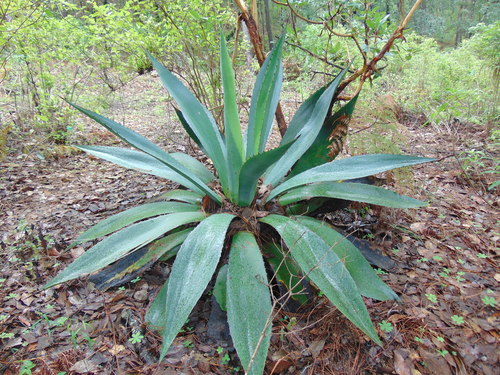
A large succulent plant in the agave family found in temperate regions. The flowers, heart, and growing tip are edible.
How to Grow
Agave species are found mainly in the arid and semi-arid regions of southwestern N. America, especially in Mexico, extending from the warm temperate zone to the tropics often at moderate elevations. Many species can withstand at least a few degrees of frost, but only in drier regions and where soils are very well-drained. Agave species generally require a sunny position, succeeding in most soils of medium-fertility so long as they are very well-drained. Most species are undemanding as to the soil pH, though those found in the wild on limestone soils will grow better in neutral to alkaline conditions. Plants are generally very tolerant of dry conditions and of extended periods of drought. Most Agave species are monocarpic, individual rosettes living for a number of years without flowering before sending up an often very large flowering stem and then dying after flowering and setting seed. Individual plants take about 7 - 15 years in their native habitat, considerably longer in colder climates, before flowering. Members of this genus are rarely if ever troubled by browsing deer.
Propagation: Seed - surface sow in a container in a light position. The seed usually germinates in 1 - 3 months at 15 - 20°c. Prick out the seedlings into individual pots of well-drained soil when they are large enough to handle and grow them on in a sunny position until they are at least 10cm tall before planting out. Offsets and suckers can be potted up at any time they are available. Bulbils, where produced, are an easy method of propagation. Simply pot them up and plant out at the beginning of a growing season when they are 10cm or more tall.
Medicinal Uses
The sap is used as a medicine.