Berberis tinctoria
Lesch.

Wikimedia Commons - Yercaud-elango

Wikimedia Commons - Yercaud-elango
What to Eat
Edible parts: Fruit
The fruits are eaten raw.
Where to Find It
It is a tropical plant.
Asia, India,
How to Identify
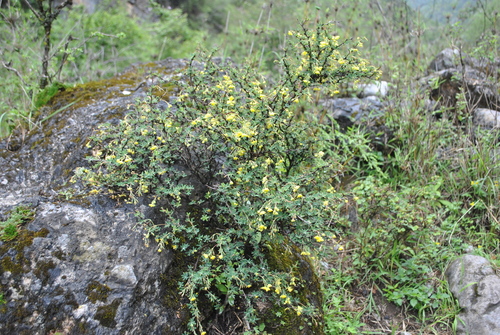
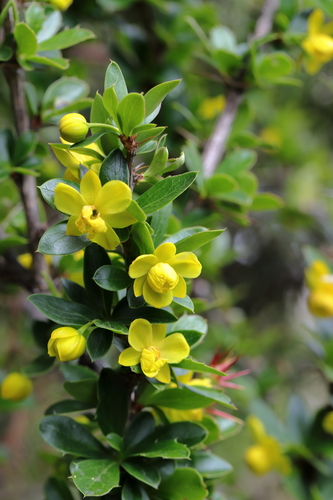
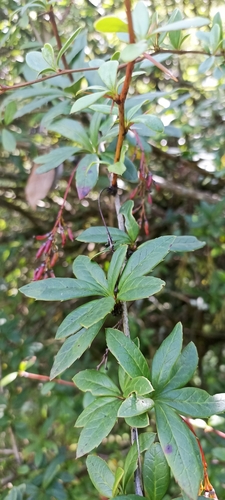
A shrub. It is evergreen and bushy. The twigs are pale brown and shiny. The leaves are prickly. The flowers are yellow and in groups. The fruit are spindle-shaped and dark blue.
Medicinal Uses
Berberis holstii is used as firewood, for making hedges, and cut branches are reported to be useful in the construction of barriers that are difficult for rodents to pass. It is also used in traditional medicine against a host of ailments, including coughing, pneumonia, malaria, stomach ache, and STDs, as an infusion of the root. One study found that alkaloid extracts of the roots showed significant activity against a strain of the malaria parasite, Plasmodium falciparum, as well as good activity against a strain of HIV, while not being cytotoxic.
Names & Synonyms
Oosi kala
References (2)
- Nayaham, M. C., et al, 1993, Less Known Edible Fruit - Yielding plants of Nilgiris. Ancient Science of Lif. Vol. X11 Nos. 3 & 4, pp 363-376
- Sasi, R. & Rajendran, A., 2012, Diversity of Wild Fruits in Nilgiri Hills of the Southern Western Ghats - Ethnobotanical Aspects. IJABPT, 3(1) p 82-87