Berberis leschenaultii
Wall. ex Wight & Arn.
BerberidaceaeFruit

iNaturalist · cc0
no rights reserved
no rights reserved

iNaturalist · cc0
no rights reserved
no rights reserved

iNaturalist · cc-by
(c) Sagnik Dutta Roy, some rights reserved (CC BY)
(c) Sagnik Dutta Roy, some rights reserved (CC BY)
What to Eat
Edible parts: Fruit
The ripe berries are eaten raw.
Where to Find It
It is a tropical plant. It grows in the hills above 1,500 m above sea level in India.
Asia, Australia, India,
Countries: United Arab Emirates, Afghanistan, Armenia, Australia, Azerbaijan, Bangladesh, Bahrain, Brunei, Bhutan, China, Georgia, Indonesia, Israel, India, Iraq, Iran, Jordan, Japan, Kyrgyzstan, Cambodia, North Korea, South Korea, Kuwait, Kazakhstan, Laos, Lebanon, Sri Lanka, Myanmar, Mongolia, Maldives, Malaysia, Nepal, Oman, Philippines, Pakistan, Qatar, Saudi Arabia, Singapore, Syria, Thailand, Tajikistan, Timor-Leste, Turkmenistan, Turkey, Taiwan, Uzbekistan, Vietnam, Yemen
How to Identify
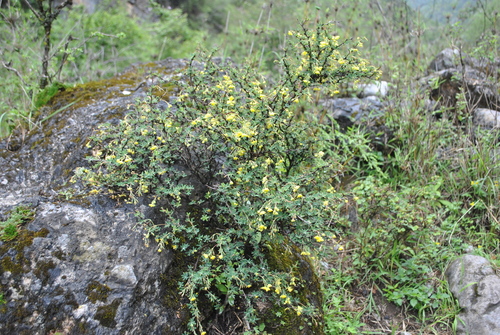
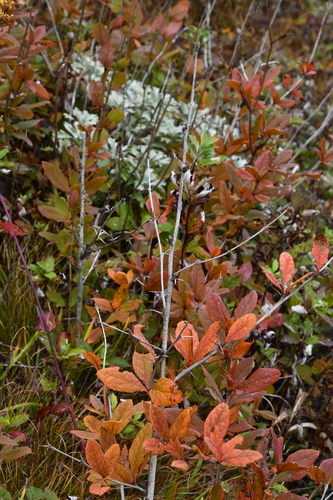
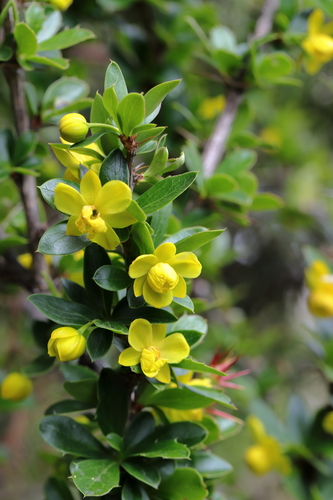
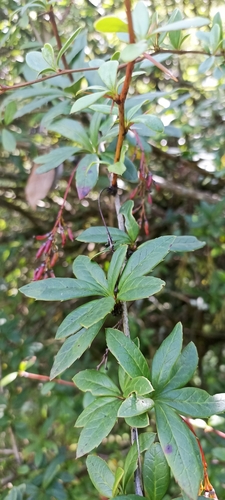
A shrub. It grows 4 m high. The small branches have leaf bases that remain attached to the branch. The leaves have an even number of leaflets. The leaves are 30 cm long by 10 cm wide and there are usually about 6 pairs of leaflets. The leaflets are 8 cm long by 5 cm wide. There are spiny teeth along the edge. The flower have yellow petals. The fruit are round berries 8 mm across. They have one seed. The become dark blue when ripe.
Names & Synonyms
Holy leaf berberis of Nilgiri, Mullu murungai keerai
Mahonia leschenaultii (Wall. ex Wight & Arn.) Takeda
References (4)
- Dobriyal, M. J. R. & Dobriyal, R., 2014, Non Wood Forest Produce an Option for Ethnic Food and Nutritional Security in India. Int. J. of Usuf. Mngt. 15(1):17-37
- Karthi, Sathya, & Salome, 2014, Uncultivated Edible Greens from Small Millet Farms Tamil Nadu India. IDRC (As Mahonia leschenaultii )
- Karuppusamy, S., et al, 2011, Antioxidant activity of selected lesser known edible fruits from Western Ghats, of India. Indian Journal of Natural Products and resources. 2(2): 174-178
- Sasi, R. & Rajendran, A., 2012, Diversity of Wild Fruits in Nilgiri Hills of the Southern Western Ghats - Ethnobotanical Aspects. IJABPT, 3(1) p 82-87