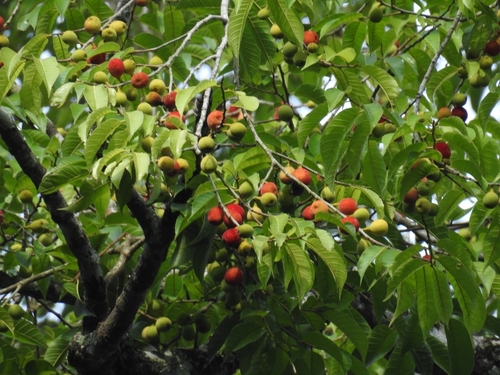
Ficus geniculata
Kurz
Putkal
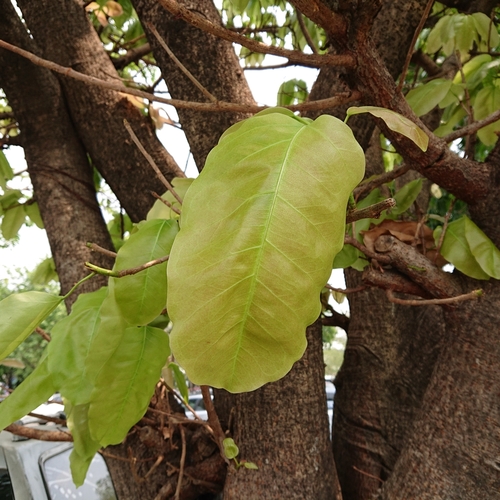
(c) Sutthikhun Phaengphongsai, some rights reserved (CC BY-NC-SA), uploaded by Sutthikhun Phaengphongsai
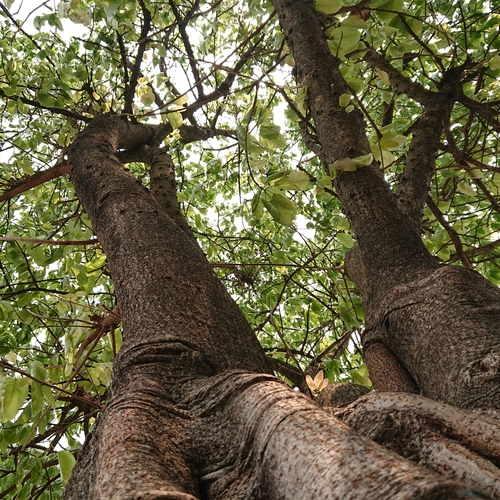
(c) Sutthikhun Phaengphongsai, some rights reserved (CC BY-NC-SA), uploaded by Sutthikhun Phaengphongsai
What to Eat
Edible parts: Leaf scales, Leaves
The young leaves and buds of Ficus geniculata are cooked and consumed by the tribal people of the state of Jharkhand in India. It is also used for pickles and chutneys consumed throughout the year. The tender shoots are also eaten.
Where to Find It
It is a tropical and subtropical plant. It grows at medium elevations in southern China. In XTBG Yunnan.
Asia, Cambodia, China, Himalayas, India, Indochina, Laos, Myanmar, Nepal, Northeastern India, SE Asia, Sikkim, Thailand, Vietnam,
How to Identify
A fig. It is a large tree. The leaves are oval and entire. They are 5-11 cm long by 3-8 cm wide. They are leathery and taper to the tip. Male and female flowers are separate. The fruit receptacles hang in clusters from the stem. They are in groups of 2-4. The fruit are small and yellow when ripe.
Wikipedia
Source ↗Ficus geniculata, also known as putkal, is a tree species of flowering plants that belongs to Moraceae, the fig or mulberry family. It is native to the wet tropical biomes of India and China.
Production
In southern China plants flower in April and May and fruit in June and July.
Names & Synonyms
Nyaung-chin, Nyaung-thabye, Phrap-agar, Phrapso, Tengabor
References (6)
- Dobriyal, M. J. R. & Dobriyal, R., 2014, Non Wood Forest Produce an Option for Ethnic Food and Nutritional Security in India. Int. J. of Usuf. Mngt. 15(1):17-37
- Mon, A. M., 2020, The uses of fig (Ficus) by five ethnic minority communities in Southern Shan State, Myanmar. Journal of Ethnobiology and Ethnomedicine (2020) 16:55
- Patiri, B. & Borah, A., 2007, Wild Edible Plants of Assam. Geethaki Publishers. p 134
- Sarma, H., et al, 2010, Updated Estimates of Wild Edible and Threatened Plants of Assam: A Meta-analysis. International Journal of Botany 6(4): 414-423
- Sawian, J. T., et al, 2007, Wild edible plants of Meghalaya, North-east India. Natural Product Radiance Vol. 6(5): p 417
- Wild edible plants of Himachal Pradesh