Bruinsmia polysperma
(C. B. Clarke) Steenis
StyracaceaeFruit

gbif · cc-by
Royal Botanic Gardens, Kew
Royal Botanic Gardens, Kew

gbif · cc-by
Royal Botanic Gardens, Kew
Royal Botanic Gardens, Kew

gbif · cc-by
Royal Botanic Gardens, Kew
Royal Botanic Gardens, Kew
What to Eat
Edible parts: Fruit
The ripe fruit are eaten and sold in local markets.
Where to Find It
It is a tropical plant. It grows in primary forests between 1,100-1,300 m above sea level in Yunnan.
Asia, China, India, Myanmar, Northeastern India, SE Asia, Vietnam,
Countries: United Arab Emirates, Afghanistan, Armenia, Azerbaijan, Bangladesh, Bahrain, Brunei, Bhutan, China, Georgia, Indonesia, Israel, India, Iraq, Iran, Jordan, Japan, Kyrgyzstan, Cambodia, North Korea, South Korea, Kuwait, Kazakhstan, Laos, Lebanon, Sri Lanka, Myanmar, Mongolia, Maldives, Malaysia, Nepal, Oman, Philippines, Pakistan, Qatar, Saudi Arabia, Singapore, Syria, Thailand, Tajikistan, Timor-Leste, Turkmenistan, Turkey, Taiwan, Uzbekistan, Vietnam, Yemen
How to Identify
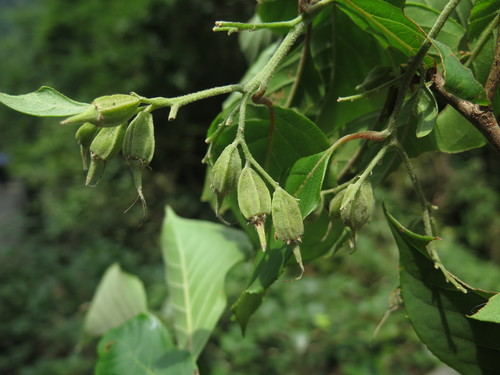
A tree. It grows 15 m tall. The trunk is 60 cm across. The leaves are narrowly oval and 14-17 cm long by 6-8 cm wide. There can be teeth towards the tip. The fruit are oblong and 10-12 mm long by 7-9 mm wide. The seeds are 1.5 mm long and pointed at both ends.
Production
In southern China plants flower in April to July and fruit October to December.
Other Information
Fruit are sold in local markets.
Names & Synonyms
Theipalingkawh
Styrax polyspermus C. B. Clarke
References (4)
- Dobriyal, M. J. R. & Dobriyal, R., 2014, Non Wood Forest Produce an Option for Ethnic Food and Nutritional Security in India. Int. J. of Usuf. Mngt. 15(1):17-37
- Hazarika, T. K., et al, 2012, Studies on wild fruits of Mizoram, India used as ethno-medicines. Genetic Resources and Crop Evolution. Published on line 03 February, 2012
- Kar, A., et al, 2013, Wild Edible Plant Resources used by the Mizos of Mizoram, India. Kathmandu University Journal of Science, Engineering and Technology. Vol. 9, No. 1, July, 2013, 106-126
- Lalfakzuala, R., 2007, Ethnobotanical usages of plants in western Mizoram. Indian Journal of Traditional Knowledge. Vol 6(3) pp 480-493
More from Styracaceae

Halesia carolina
Carolina Silverbell, Mountain Silverbell, Snowdrop tree, Silver-bell tree, Wild olive

Halesia tetraptera
Silverbell or Mountain Silverbell

Pterostyrax corymbosa
Epaulette Tree
Pterostyrax corymbosus
Epaulette tree, Silver bell, Snowdrop tree

Styrax argenteus var. ramirezii

Styrax benzoin
Benzoin, Storax, Sumatra benzoin