Senna tora
(L.) Roxb.
Stinking Cassia, Sickle senna
no rights reserved, uploaded by 葉子

(c) zainabadam, some rights reserved (CC BY-NC)
(c) Sandeep sakhare, some rights reserved (CC BY-NC)
What to Eat
Edible parts: Seeds, Pods, Leaves, Vegetable, Flowers
Seeds - cooked or roasted in the pods. They are eaten as a side-dish with rice. The roasted seeds are a coffee substitute. Young, tender leaves and shoots - cooked. They are steamed as a potherb, or cooked and eaten with rice. They contain about 6% protein. The following uses are for the closely related Senna obtusifolia, and probably also apply here. The powdered and fermented leaves are used as a condiment. The leaves are used to make a tea-like infusion. The seeds are occasionally dried and ground into a powder, which is cooked and eaten as a staple food in moderate amounts. As the seeds are reputedly poisonous, cooking or roasting is deemed necessary to make them safe to eat. The seeds contain commercially interesting levels of gums. In India they are collected from wild plants for the industrial extraction of gums (galactomannans) for the food industry.
Where to Find It
A tropical plant. It often grows on the edges of mangrove and coconut plantations. Plants grow near sea level in the tropics. In Nepal it grows to about 1400 m altitude. It grows in rich soil and near river banks. It grows in wetlands. It Indonesia it grows up to 1,000 m above sea level. In tropical Queensland it grows from sea level to 300 m altitude. It can grow in arid places.
Africa, American Samoa, Arabia, Asia, Australia, Bhutan, Burkina Faso, Cambodia, Cameroon, Central Africa, Central America, China, East Africa, East Timor, Fiji, Gambia, Himalayas, India, Indochina, Indonesia, Korea, Laos, Madagascar, Malaysia, Maldives, Marquesas, Mauritius, Middle East, Myanmar, Nepal, Nicaragua, Northeastern India, Oman, Pacific, Pakistan, Papua New Guinea, PNG, Philippines, Reunion, Rotuma, Samoa, Saudi Arabia, SE Asia, Senegal, Seychelles, Solomon Islands, South America, Sri Lanka, Taiwan, Tanzania, Thailand, Timor-Leste, Tuvalu, Vietnam, West Africa,
How to Identify
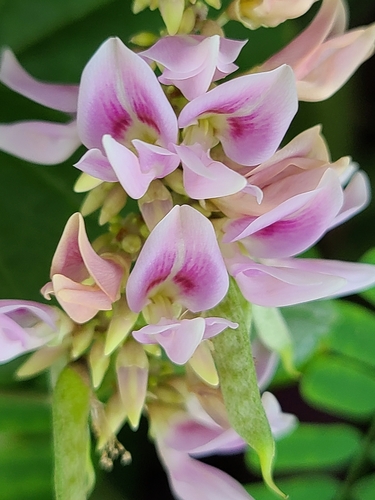
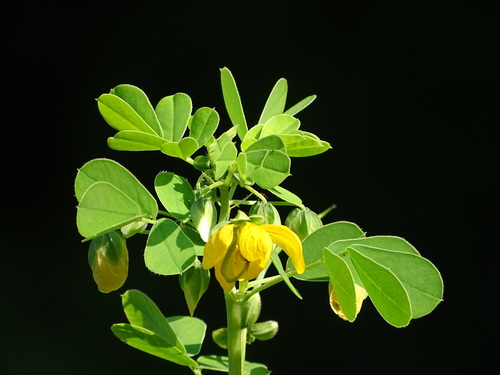
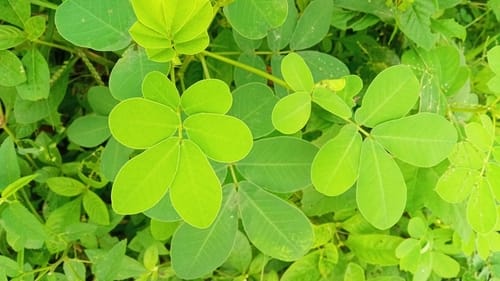
An erect, branched herb or shrub. It usually has a bad smell. It can be 0.3-2 m high. It has a sparse covering of small hairs. The stems do not have hairs. The leaves are compound and alternate. They are 5-6 cm long. The leaflets are in 3 pairs. They are oval and 2.5-5 cm long by 1.5-2.5 cm wide. They are broadly rounded at the top and can be wedge shaped at the base. The leaf stalk does not have a gland but the leaf axis has a gland between the lower two pairs of leaflets. The flowers are in the axils of leaves on branched stalks. The flower clusters are short and 2 flowered. There are 5 yellow petals. The petals are 8-10 mm long. The fruit are pods which are 4 angled. They are 10-15 cm long by 4-6 mm wide. They fall without splitting open to release their seeds. The seeds are dark brown and shiny. They are 5 mm long by 2.7 mm wide. The pit on the seed, covers much of the seed face.
Nutrition Score: 52/100
| Part | Moisture | kJ | kcal | Protein | Vit A | Vit C | Iron | Zinc |
|---|---|---|---|---|---|---|---|---|
| Leaves | 82.1 | 113 | 27 | 3.6 | — | 124 | — | — |
| Seeds | 11.64 | — | — | 32.4 | — | — | 1.43 | — |
| Stems | — | — | — | — | — | — | — | — |
How to Grow
Plants are grown by seeds.
Propagation: Scarify the seed and pre-soak for 2–3 hours in warm water before sowing from early spring to early summer in a warm greenhouse. Germination usually occurs in 1–12 weeks at 23°C. Prick out seedlings into individual pots once large enough to handle and grow on in the greenhouse, planting out the following spring. Division can be done as growth commences in spring. Alternatively, take cuttings of moderately ripe wood in July in a frame.
Medicinal Uses
The leaves and seeds are anticholesterolemic, antispasmodic, carminative, emollient, hepatic, ophthalmic and purgative. Powdered leaves are used to treat indigestion and stomach pain, and the leaves are applied externally for skin diseases. The seeds contain anthraquinones and naphthopyrones and have anthelmintic, antibacterial, antifungal and hepatic properties. In Korea, the seed is used to treat constipation, oedema, glaucoma and nyctalopia, and to protect the liver. In Nepal, a paste made from the seed is applied externally to treat leucoderma, leprosy and itchy skin. A paste of the roots mixed with lemon juice is applied as a poultice for ringworm. A decoction of the fruit is used to treat fevers.
Other Uses
The seeds (or possibly the pods) are a source of tannin.
Wikipedia
Source ↗This page is about the Cassia tora described by Linnaeus. Later authors usually applied the taxon to Senna obtusifolia. Senna tora (originally described by Linnaeus as Cassia tora) is a plant species in the family Fabaceae and the subfamily Caesalpinioideae. Its name is derived from its Sinhala name tora (තෝර). It grows wild in most of the tropics and is considered a weed in many places. Its native range is in Central America. Its most common English name is sickle senna or sickle wild sensitive-plant. Other common names include sickle pod, tora, coffee pod and foetid cassia. It is often confused with Chinese senna or sickle pod, Senna obtusifolia.
Other Information
It is not known if they are used for food in Papua New Guinea.
Notes
There are 100 Cassia species. This group has been revised to a smaller more consistent group. Chemical composition: Moisture = 11.64%. Protein (N x 6.25) = 32.36%. Fat (ether extract) = 5.75%. Carbohydrate (soluble) = 5.56%. Ash = 4.84%. Iron = 1.43%. Phosphorus = 1.50%. Amino acids (u mole/100 mg.): a .Alanine = 17.0. Arginine = 12.0. Asparagine 25.1. Cysteine = 2.2. Glutamine = 36.1. Glycine = 19.7. Histidine = 7.9. Isoleucine = 8.8. Leucine = 17.2. Methionine = 0.2. Methionine sulphonide = - . Phenylalanine = 8.9. Proline = 10.0. Threonine = 10.4. Tyrosine = 5.0. Valine = 12.0. Unidentified = 1.6. Vernacular. Also as Caesalpinaceae.
Names & Synonyms
Adi diga, Bab duli, Bapduli, Bokana, Chakauda, Chakoda, Chakonda, Chakor, Chakowar, Chakramandi, Chakunda, Chak-wad, Charota, Chekenda, Chekor sag, hinjudo, Chirota, Chum het lek, Chum het tai, Dadamari, Danghet chhieng, Dangywe, Dinghkri, Ecancule, Foetid cassia, Hadi diga, Hut, Jambanduro, Java-bean, Jhitkisak, Kaoal, Kasoda, Kasse, Kelbe, Ketepeng, Kovariya, Matkavai, Myay-pe-naw-nam, Ndur, Ngusat, Oosi thagarai, Pamaar, Panevar, Pawad, Peti-tora, Powada, Rahuri, Sano tapre, Sekto, Senavu, Sicklepod, Soru-medelua, Tafasa, Tagarai, Takala, Takla, Tankil, Tantemu, Tantepu kura, Tapre, Tarota, Tarvat, Tarvata, Thagarai, Thakara, Thakattasoppu, Thavara, Tora, Torthan, Turtha, Ulo, Vao pinati, Vaththiyara
References (112)
- Ambasta S.P. (Ed.), 2000, The Useful Plants of India. CSIR India. p 110 (As Cassia tora)
- Avinash, B. K., Kumar, R., et al, 2013, Ethnoboptany of Tharus of Dudhwa National Park, India. Mintage journal of Pharmaceutical & Medical Science 6-11
- Bandyopadhyay, S. et al, 2009, Wild edible plants of Koch Bihar district, West Bengal. Natural Products Radiance 8(1) 64-72
- Bandyopadhyay, S., et al, 2012, A Census of Wild Edible Plants from Howrah District, West Bengal, India. Proceedings of UGC sponsored National Seminar 2012 (As Cassia tora)
- Banerjee, A., et al, 2013, Ethnobotanical Documentation of Some Wild Edible Plants in Bankura District, West Bengal, India. The Journal of Ethnobiology and Traditional Medicine. Photon 120 (2013) 585-590 (As Cassia tora)
- Belem, M., et al, 2017, Strategy of Conservation and Protection of Wild Edible Plants Diversity in Burkina Faso. ANADOLU 27 (2) 2017, 82- 90 (As Cassia tora)
- Bhogaonkar, P. Y. & Devarkar, V. D., 2018, Inventory for ethnovegetable knowledge of the tribals of Satpura hill area-Melghat, Dist. Amravati (India), Plantae Scientia, 2018; Vol. 01 Issue 01: 01-08 (As Cassia tora)
- Bohra, N., et al, 2017, Ethnobotany of wild edible plants traditionally used by the local people in the Ramnagar regions from Nainital District, Uttarakhand, India. Biolife 5(1): 12-19 (As Cassia tora)
- Bojang, L., 1999, Non-wood Forest Products in The Gambia. EC-FAO Partnership Programme. (As Cassia tora)
- Burkill, I.H., 1966, A Dictionary of the Economic Products of the Malay Peninsula. Ministry of Agriculture and Cooperatives, Kuala Lumpur, Malaysia. Vol 1 (A-H) p 487 (As Cassia tora)
- Chandrakumar, P., et al, 2015, Ethnobotanical studies of wild edible plants of Gond, Halba and Kawar tribes of Salekasa Taluka, Gondia District, Maharashtra State, India. International Research Journal of Pharmacy 6(8) (As Cassia tora)
- Chauhan, S. H., et al, 2018, Consumption patterns of wild edibles by the Vasavas: a case study from Gujarat, India. Journal of Ethnobiology and Ethnomedicine (2018) 14:5 (As Cassia tora)
- Chowdery, T., et al, 2014, Wild edible plants of Uttar Dinajpur District, West Bengal. Life Science Leaflets. 47:pp 20-36 http://lifesciencesleaflets.ning.com
- Coe, F.G., and Anderson, G.J., 1996, Ethnobotany of the Garifuna of Eastern Nicaragua. Economic Botany 50(1) pp 71-107 (As Cassia tora)
- Coe, F. G. & Anderson, G. J., 1997, Ethnobotany of the Miskitu of Eastern Nicaragua. Journal of Ethnobiology 17(2): 171-214 (As Cassia tora)
- Cooper, W. and Cooper, W., 2004, Fruits of the Australian Tropical Rainforest. Nokomis Editions, Victoria, Australia. p 108
- Cowie, I, 2006, A Survey of Flora and vegetation of the proposed Jaco-Tutuala-Lore National Park. Timor-Leste (East Timor) www.territorystories.nt/gov.au p 45
- CRÉAC'H, (As Cassia tora)
- Dangol, D. R., 2002, Economic uses of forest plant resources in western Chitwan, Nepal. Banko Janakari, 12(2): 56-64 (As Cassia tora)
- Devarkar, V. D., et al, 2011, Dietary and Medicinal Significance of Wild Vegetables from Osmanabad Region, Maharashtra (India). Life sciences Leaflets 11:317-332. (As Cassia tora)
- De Wit, H., 1955, A revision of the genus cassia. Webbia 11:197-292
- Dhyani, S.K., & Sharma, R.V., 1987, Exploration of Socio-economic plant resources of Vyasi Valley in Tehri Garwhal. J. Econ. Tax. Bot. Vol. 9 No. 2 pp 299-310 (As Cassia tora)
- Diouf, M., et al, Leafy Vegetables in Senegal. Bioversity webite (As Cassia tora)
- Dobriyal, M. J. R. & Dobriyal, R., 2014, Non Wood Forest Produce an Option for Ethnic Food and Nutritional Security in India. Int. J. of Usuf. Mngt. 15(1):17-37 (As Cassia tora)
- Dunlop, C.R., Leach, G.J. & Cowie, I.D., 1995, Flora of the Darwin Region. Vol 2. Northern Territory Botanical Bulletin No 20. p 38
- Dutta, U., 2012, Wild Vegetables collected by the local communities from the Churang reserve of BTD, Assam. International Journal of Science and Advanced Technology. Vol. 2(4) p 119 (As Cassia tora)
- DUTHIE, (As Cassia tora)
- Facciola, S., 1998, Cornucopia 2: a Source Book of Edible Plants. Kampong Publications, p 67 (As Cassia tora)
- Flora of Australia Volume 12, Mimosaceae (excl. Acacia) Caesalpiniaceae. Melbourne: CSIRO Australia (1998) p 137
- Fl. ind. ed. 1832, 2:340. 1832
- Franklin, J., Keppel, G., & Whistler, W., 2008, The vegetation and flora of Lakeba, Nayau and Aiwa Islands, Central Lau Group, Fiji. Micronesica 40(1/2): 169–225, 2008
- French, B.R., 2010, Food Plants of Solomon Islands. A Compendium. Food Plants International Inc. p 386
- GAMMIE, (As Cassia tora)
- Garcia, G. S. C., 2006, The mother-child nexus. Knowledge and valuation of wild food plants in Wayanad, Western Ghats, India. Journal of Ethnobiology and Ethnomedicine, 2:39 (As Cassia tora)
- Grivetti, L. E., 1980, Agricultural development: present and potential role of edible wild plants. Part 2: Sub-Saharan Africa, Report to the Department of State Agency for International Development. p 26 (As Cassia tora)
- Gunjatkar, N., & Vartak, V.D., 1982, Enumeration of wild edible legumes from Pune District, Maharashtra State. J.Econ. Tax. Bot. Vol 3 pp 1-9 (As Cassia tora)
- GUPTA, (As Cassia tora)
- GUPTA & KANODIA, (As Cassia tora)
- Hanawa, Y., 2013, Wild edible plants used by Guiziga people of far north region of Cameroon. Int. J. Med. Arom. Plants. Vol 3 (2) : 136-143
- Henty, E.E., & Pritchard, G.S., 1973, Weeds of New Guinea and their control. Botany Bulletin No 7, Division of Botany, Lae, PNG. p 118 (As Cassia tora)
- Hussey, B.M.J., Keighery, G.J., Cousens, R.D., Dodd, J., Lloyd, S.G., 1997, Western Weeds. A guide to the weeds of Western Australia. Plant Protection Society of Western Australia. p 124
- Hu, Shiu-ying, 2005, Food Plants of China. The Chinese University Press. p 470 (As Cassia tora)
- ILDIS Legumes of the World http:www:ildis.org/Legume/Web
- IRVINE, (As Cassia tora)
- Jacquat, C., 1990, Plants from the Markets of Thailand. D.K. Book House p 45 (As Cassia tora)
- Jadhav, R., et al, 2015, Forest Foods of Northern Western Ghats: Mode of Consumption, Nutrition and Availability. Asian Agri-History Vol. 19, No. 4: 293-317
- Jadhav, V. D., Mahadkar, S. D. & Valvi, S. R., 2011, Documentation and ethnobotanical survey of wild edible plants from Kolhapur district. Recent Research in Science and Technology 3(12): 58-63 (As Cassia tora)
- Jose, D. T. & Sasidharan, N., 2016, Checklist of wild edible plants of Aralam Wildlife sanctuary, Kerala, India. South Indian Journal Of Biological Sciences 2016; 2(1); 141‐144 (As Cassia tora)
- Joshi, N., et al, 2007, Traditional neglected vegetables of Nepal: Their sustainable utilization for meeting human needs. Tropentag 2007. Conference on International Agricultural Research for Development. (As Cassia tora)
- Joshi, N. & Siwakoti, M., 2012, Wild Vegetables Used by Local Community of Makawanpur District and Their Contribution to Food Security and Income Generation. Nepal Journal of Science and Technology Vol. 13, No. 1 (2012) 59-66
- Kar, A., & Borthakur, S. K., 2008, Wild vegetables of Karbi - Anglong district, Assam, Natural Product Radiance, Vol. 7(5), pp 448-460 (As Cassia tora)
- Kar, A., et al, 2013, Wild Edible Plant Resources used by the Mizos of Mizoram, India. Kathmandu University Journal of Science, Engineering and Technology. Vol. 9, No. 1, July, 2013, 106-126 (As Cassia tora)
- Karthi, Sathya, & Salome, 2014, Uncultivated Edible Greens from Small Millet Farms Tamil Nadu India. IDRC (As Cassia tora) p 36
- Kiran, K. C., et al, 2019, Diversity and Seasonal Availability of Potential Wild Edible Plants from Vidarbha Region of Maharashtra State, India. Int.J.Curr.Microbiol.App.Sci (2019) 8(2): 1434-1446 (As Cassia tora)
- Kumar, A., 2013, Ethnobotanical study of wild vegetables used by rural communities of Kannauj district, Uttar Pradesh, India. Emir. J. Food Agric. 2013. 25 (10): 760-766 (As Cassia tora)
- Kumar, R. & Saikia, P., 2020, Wild edible plants of Jharkhand and their utilitarian perspectives. Indian Journal of Traditional Knowledge Vol 19 (2), April 2020, pp 237-250
- Kuo, W. H. J., (Ed.) Taiwan's Ethnobotanical Database (1900-2000), http://tk.agron.ntu.edu.tw/ethnobot/DB1.htm (As Cassia tora)
- Kuvar, S. D. & Shinde, R. D., 2019, Wild Edible Plants used by Kokni Tribe of Nasik District, Maharashtra. Journal of Global Biosciences. Volume 8, Number 2, 2019, pp. 5936-5945
- Lazarides, M. & Hince, B., 1993, Handbook of Economic Plants of Australia, CSIRO. p 51 (As Cassia tora)
- Lugod, G.C. and de Padua L.S., 1979, Wild Food Plants in the Philippines. Vol. 1. Univ. of Philippines Los Banos. p 40 (As Cassia tora)
- Luo, B., et al, 2019, Wild edible plants collected by Hani from terraced rice paddy agroecosystem in Honghe Prefecture, Yunnan, China. Journal of Ethnobiology and Ethnomedicine 15:56
- Lykke, A. M., Mertz, O, and Ganaba, S., 2002, Food Consumption in Rural Burkina Faso, Ecology of Food and Nutrition, 41:119-152
- Manandhar, N.P., 2002, Plants and People of Nepal. Timber Press. Portland, Oregon. p 140 (As Cassia tora)
- Marandi, R. R. & Britto, S. J., 2015, Medicinal Properties of Edible Weeds of Crop Fields and Wild plants Eaten by Oraon Tribals of Latehar District, Jharkhand. International Journal of Life Science and Pharma Research. Vo. 5. (2) April 2015 (As Cassia tora)
- Martin, F.W. & Ruberte, R.M., 1979, Edible Leaves of the Tropics. Antillian College Press, Mayaguez, Puerto Rico. p 85, 198 (As Cassia tora)
- McMakin, P.D., 2000, Flowering Plants of Thailand. A Field Guide. White Lotus. p 95 (As Cassia tora)
- Menninger, E.A., 1977, Edible Nuts of the World. Horticultural Books. Florida p 91 (As Cassia tora)
- Misra, S., 2018, Ethno Botany and Nutritional Status of Some Edible Plants of South Odisha, India. International Journal of Advances in Agricultural Science and Technology, Vol.5 Issue.2, February- 2018, pg. 21-32
- MORTIMORE, (As Cassia tora)
- Mot So Rau Dai an Duoc O Vietnam. Wild edible Vegetables. Ha Noi 1994, p 126 (As Cassia tora)
- Narayanan Ratheesh, M. K. et al, 2011, Wild edible plants used by the Kattunaikka, Paniya and Kuruma tribes of Wayanad District, Kerala, India. Journal of Medicinal Plants Research Vol. 5(15), pp. 3520-3529 (As Cassia tora)
- Ochse, J.J. et al, 1931, Vegetables of the Dutch East Indies. Asher reprint. p 379 (As Cassia tora)
- Paczkowska, G. & Chapman, A.R., 2000, The Western Australian Flora. A Descriptive Catalogue. Western Australian Herbarium. p 193
- Pagag, K. & Borthakur, S.K., 2012, Wild edible wetland plants from Lakhimpur district of Assam, India. Pleione 6(2): 322 - 327 (As Cassia tora)
- Pandy, R. K. & Saini, S. K., 2007, Edible plants of tropical forests among tribal communities of Madhya Pradesh. Indian Journal of Traditional Knowledge. 6(1), pp 185-190 (As Cassia tora)
- Parham, B. E. V., 1972, Plants of Samoa. New Zealand Department of Scientific and Industrial Research. Information Series. No. 85 p 144 (As Cassia tora)
- Patiri, B. & Borah, A., 2007, Wild Edible Plants of Assam. Geethaki Publishers. p 45 (As Cassia tora)
- Peekel, P.G., 1984, (Translation E.E.Henty), Flora of the Bismarck Archipelago for Naturalists, Division of Botany, Lae, PNG. p 218, 220 (As Cassia tora)
- Pham-Hoang Ho, 1999, An Illustrated Flora of Vietnam. Nha Xuat Ban Tre. p 851 (As Cassia tora)
- Phon, P., 2000, Plants used in Cambodia. © Pauline Dy Phon, Phnom Penh, Cambodia. p 141 (As Cassia tora)
- Prabha, Y. P., et al, 2010, Documentation of Wild Edible Plants of Melghat Forest, Dist. Amravati, Maharashtra State, India. Ethnobotanical Leaflets 14: 751-58, 2010. (As Cassia tora)
- Prachi, K., et al, 2012, Underutilized wild fruits of North Maharashtra. Journal of Research in Plant Sciences. (2012) 1:071-076 (As Cassia tora)
- Prafulla, S., 2017, Wild Food Diversity of Nawegaon-Nagzira Tiger Reserve in Gondia-Bhandara district of Maharashtra, India. Int. J. of Life Sciences, 2017, Vol. 5 (4): 620-626 (As Cassia tora)
- RADHA PANT (1963), (As Cassia tora)
- Rajapaksha, U., 1998, Traditional Food Plants in Sri Lanka. HARTI, Sri Lanka. p 223 (As Cassia tora)
- Rajkalkshmi, P. et al, 2001, Total carotenoid and beta-carotene contents of forest green leafy vegetables consumed by tribals of south India. Plant Foods for Human Nutrition 56:225-238
- Ramachandran, V.S. and Nair, V.J., 1981, Ethnobotanical studies in Cannanore District, Kerala State (India). J Econ. Tax. Bot. Vol 2 pp 65-72 (As Cassia tora)
- Ramachandran, V. S., 2007, Wild edible plants of the Anamalais, Coimbatore district, western Ghats, Tamil Nadu. Indian Journal or Traditional Knowledge. 6(1) pp 173-176 (As Cassia tora)
- Ramachandran,V. S., & Udhayavani, C., 2013, Knowledge and uses of wild edible plants by Paniyas and Kurumbas of Western Nilgiris, Tamil Nadu. Indian Journal of Natural Products and Resources. 4(4) December 2013, pp 412-418
- Rao, M. L. S., et al, 2014, Indigenous Plant Foods which are commonly consumed by the tribal communities in Dumbriguda Area of Visakhapatnam District, Andhra Pradesh, India. Biolife. Vol 2, Issue 3
- Rasingam, L., 2012, Ethnobotanical studies on the wild edible plants of Irula tribes of Pillur Valley, Coimbatore district, Tamil Nadu, India. Asian Pacific Journal of Tropical Biomedicine. (2012) S1493-S1497
- Reddy, B. M., 2012, Wild edible plants of Chandrapur district, Maharashtra, India. Indian Journal of Natural Products and Resources. 3(1) pp 110-117 (As Cassia tora)
- Royal Botanic Gardens, Kew (1999). Survey of Economic Plants for Arid and Semi-Arid Lands (SEPASAL) database. Published on the Internet; http://www.rbgkew.org.uk/ceb/sepasal/internet [Accessed 26th April 2011]
- Sarma, H., et al, 2010, Updated Estimates of Wild Edible and Threatened Plants of Assam: A Meta-analysis. International Journal of Botany 6(4): 414-423 (As Cassia tora)
- Shah, G.L. et al, 1981, An account of the Ethnobotany of Saurashtra in Gujarat State (India). J. Econ. Tax. Bot. Vol 2 pp 173-182 (As Cassia tora)
- Singh, G. K. & Ahirwar, R. K., 2013, An Ethnobotanical Survey for Certain Wild Edible Plants of Chanda Forest District Dindori Central India. International Journal of Science and Research. 6:14
- Singh, H.B., Arora R.K.,1978, Wild edible Plants of India. Indian Council of Agricultural Research, New Delhi. p 21, 84 (As Cassia tora)
- Sinha, R. & Lakra, V., 2007, Edible weeds of tribals in Jharkhand, Orissa and West Bengal. Indian Journal of Traditional Knowledge 6(1) January 2007 pp 217-222 (As Cassia tora)
- Sp. pl. 1:376. 1753 (As Cassia tora)
- Sujanapal, P., & Sankaran, K. V., 2016, Common Plants of Maldives. FAO & Kerala FRI, p 240
- Sukarya, D. G., (Ed.) 2013, 3,500 Plant Species of the Botanic Gardens of Indonesia. LIPI p 713
- Teron, R. & Borthakur, S. K., 2016, Edible Medicines: An Exploration of Medicinal Plants in Dietary Practices of Karbi Tribal Population of Assam, Northeast India. In Mondal, N. & Sen, J.(Ed.) Nutrition and Health among tribal populations of India. p 150 (As Cassia tora)
- Thaman, R. R, 2016, The flora of Tuvalu. Atoll Research Bulletin No. 611. Smithsonian Institute p 92
- Toppo, P. et al, 2016, Wild edible plants of Dhamtari district of Chhattisgarh, India. Van Sangyan Vol. 3, No. 4 (As Cassia tora)
- UPHOF, (As Cassia tora)
- USDA, ARS, National Genetic Resources Program. Germplasm Resources Information Network - (GRIN). [Online Database] National Germplasm Resources Laboratory, Beltsville, Maryland. Available: www.ars-grin.gov/cgi-bin/npgs/html/econ.pl (10 April 2000)
- Vartak, V.D. and Kulkarni, D.K., 1987, Monsoon wild leafy vegetables from hilly regions of Pune and neighbouring districts, Maharashtra state. J. Econ. Tax. Bot. Vol. 11 No. 2 pp 331-335 (As Cassia tora)
- Verdcourt, B., 1979, Manual of New Guinea Legumes. Botany Bulletin No 11, Division of Botany, Lae, Papua New Guinea. p 56 (As Cassia tora)
- WATT, (As Cassia tora)
- Wiersema, J. H. & Leon, B., 2013, World Economic Plants. A Standard Reference CRC Press. 2nd Ed. p 631
- Wild edible plants of Himachal Pradesh (As Cassia tora)
- World Checklist of Useful Plant Species 2020. Royal Botanic Gardens, Kew