Prainea limpato
(Miq.) Beumee ex K. Heyne
Limpatu
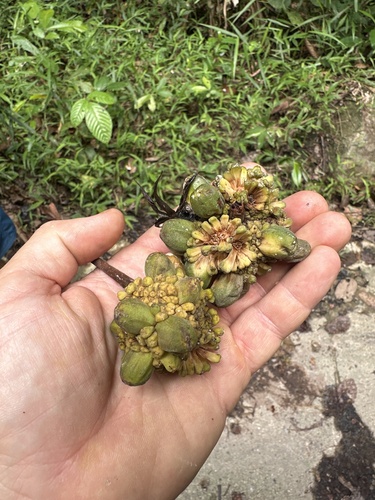
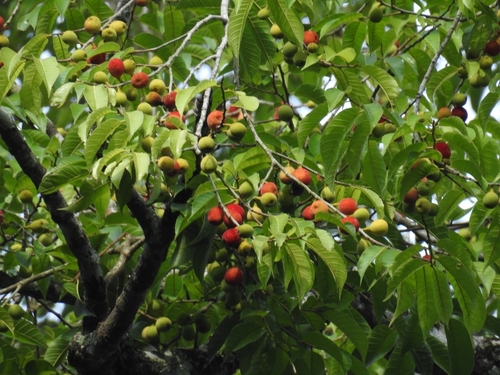
(c) Gabe Sachter-Smith, some rights reserved (CC BY-NC), uploaded by Gabe Sachter-Smith

(c) Andre Ronaldo, some rights reserved (CC BY-NC)
What to Eat
Edible parts: Fruit
The fruit is edible.
Where to Find It
It grows in mixed forests up to 300 m above sea level. It can be on clay, sandy or limestone sois.
Asia, Indonesia, Malaysia, New Guinea, SE Asia,
How to Identify
A tree. It grows about 30 m tall. The stem has white sap. The leaves are alternate and simple. They can be hairy underneath. The flowers are 0.5 mm across and greenish. The flowers are fused into a round flower head. The fruit are 5 cm across and green. They are irregular shaped. Only apart of the fruit is developed.
Other Uses
The orange-red wood is hard, very durable and is not attacked by insects. It lasts well when immersed in water. It is used in making houses, bridges etc.
Wikipedia
Source ↗Prainea limpato, also known as tampang susu in Malay and more locally as kesusu or empatak, is a species of flowering plant, a fruit tree in the fig family, that is native to Southeast Asia.
Names & Synonyms
Buruni, Ematak, Karon, Kesusu
References (3)
- Slik, F., www.asianplant.net
- World Checklist of Useful Plant Species 2020. Royal Botanic Gardens, Kew
- www.frim.gov.my