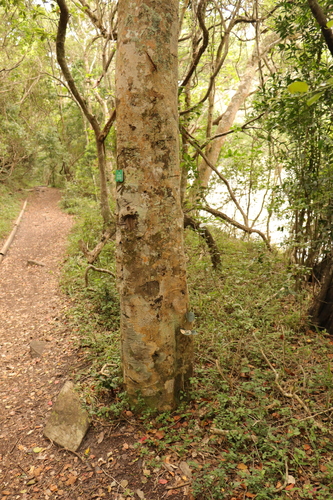
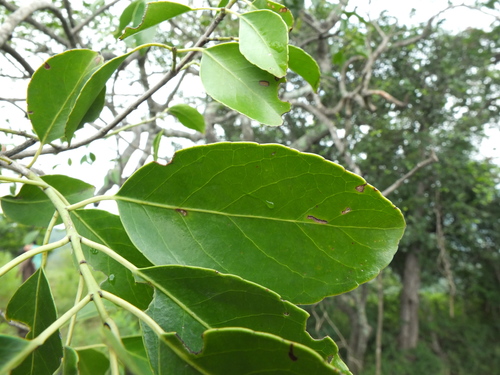
Lauridia tetragona
(L. f.) Archer
Bob-cherry, Climbing saffronwood

(c) Nick Helme, some rights reserved (CC BY-NC), uploaded by Nick Helme
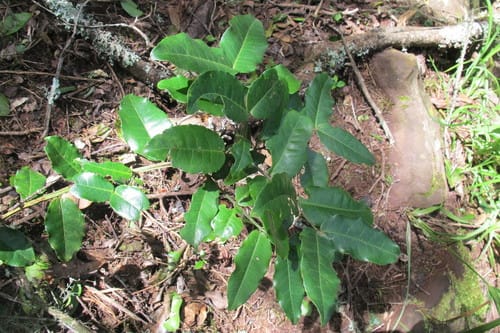
(c) James Deacon, some rights reserved (CC BY-SA)
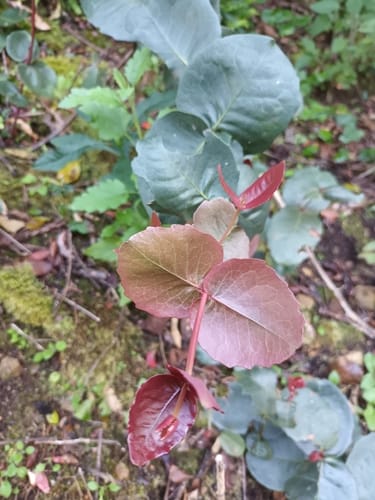
(c) Johan Huisamen, some rights reserved (CC BY-NC)
What to Eat
Edible parts: Fruit
The fruit are eaten, especially by children.
Known Hazards
Where to Find It
It is a subtropical plant. It occurs in dune bush. It is also in evergreen forest.
Africa, Eswatini, South Africa, Southern Africa, Swaziland,
How to Identify
A climber or scrambling shrub. It can be 0.6-2.5 m high. The branches are grey and flexible. The twigs are usually 4 angled. The flower shoots tend to grow backwards. The leaves are simple and opposite. They are leathery and 1.3-8 cm long by 0.6-5 cm wide. The edges of the leaves are often wavy and rolled inward. They often have spiny teeth. The flowers are small and white. They occur in clusters. The fruit are green but turn red or black when ripe. They have a stone inside. The fruit are edible.
Other Information
The fruit are eaten especially by children.
Notes
There are 80 Cassine species. Most are in Africa. The Celastraceae are mostly in the tropics and subtropics.
Names & Synonyms
Droelewer(bessies)
References (7)
- De Vynk, J. C., et al, 2016, Indigenous edible plant use by contemporary Khoe-San descendants of South Africa's Cape South Coast. South African Journal of Botany. 102 (2016) 60-69
- Palgrave, K.C., 1996, Trees of Southern Africa. Struik Publishers. p 513 (As Cassine tetragona)
- Palmer, E and Pitman, N., 1972, Trees of Southern Africa. Vol. 2. A.A. Balkema, Cape Town p 1315 (As Cassine tetragona)
- Peters, C. R., O'Brien, E. M., and Drummond, R.B., 1992, Edible Wild plants of Sub-saharan Africa. Kew. p 80 (As Cassine tetragona)
- Ruiters-Welcome, A. K., 2019, Food plants of southern Africa. Ph.D. thesis. Univ. of Johannesburg p 43
- Swaziland's Flora Database http://www.sntc.org.sz/flora
- Welcome, A. K. & Van Wyk, B.-E., 2019, An inventory and analysis of the food plants of southern Africa. South African Journal of Botany 122 (2019) 136–179