Capparis rosea
(Klotzsch) Oliv.
Red-fruited caper-bush

GBIF
What to Eat
Edible parts: Fruit
The fruit is eaten.
Where to Find It
It is a tropical plant. In Mozambique it grows between sea level and 400 m above sea level. It grows in dry deciduous woodland.
Africa, East Africa, Kenya, Malawi, Mozambique, Tanzania, Zambia, Zimbabwe,
How to Identify
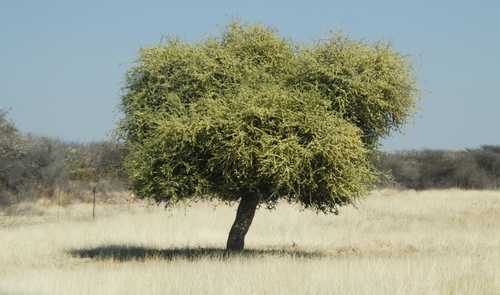
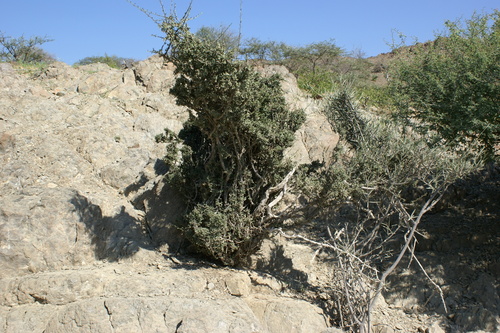
A scrambling herb or shrub. It grows 2 m tall. It has sharp thorns in pairs. The branches are slightly zigzag shaped. The leaves are narrowly oval and 5 cm long by 3 cm wide. They have grey velvet hairs when young. The flowers occur singly in the axils of the leaves. They are greenish-white. The fruit is narrowly oval and 4 cm long by 2.5 cm wide. It has 6-8 ridges. When it is ripe it turns deep pink.
Production
In East Africa, plants flower in September to October.
Notes
It is an Unresolved name in The Plant List.
Names & Synonyms
Muklala, Sakuera
References (3)
- Flora of tropical East Africa, 1964,
- Flora of Zimbabwe www/zinbabweflora.co.zw 124430 (As Capparis erythrocarpos var. rosea)
- Grivetti, L. E., 1980, Agricultural development: present and potential role of edible wild plants. Part 2: Sub-Saharan Africa, Report to the Department of State Agency for International Development. p 71