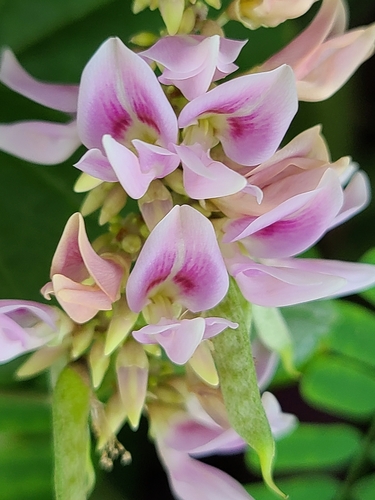
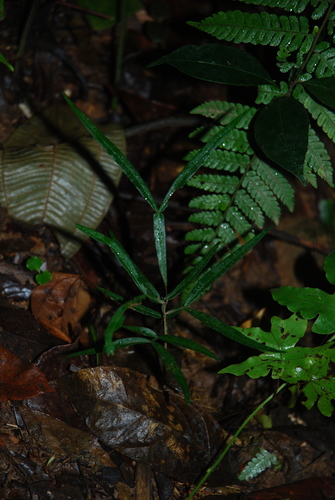
Inga acuminata
Benth.
no rights reserved
What to Eat
Edible parts: Fruit - aril
Fruit - raw. The white pulp surrounding the seeds is eaten. The yellowish or black seedpod is 8 - 20cm long.
Where to Find It
It is a tropical plant. It can tolerate floods. It grows on the floodplains of the Amazon and up to 1,200 m above sea level.
Amazon, Bolivia, Brazil, Caribbean, Central America, Colombia, Costa Rica, Ecuador, Panama, Peru*, South America, Trinidad-Tobago, Venezuela*, Windward Is.,
How to Identify
A tree. It grows 15-22 m tall. The fruit are long green pods. They can be 14 cm long by 2 cm wide. The pulp around the seeds is sweet. The pods bulge around the seeds.
How to Grow
Plants grow easily from seeds. Seeds germinate in 1-2 weeks given moisture and shade.
Other Uses
The wood of Inga species is generally attractive, but it has a coarse texture, is susceptible to attack by dry-wood termites and is not durable in the soil. The wood is used for fuel.
Notes
Also as Mimosaceae.
Names & Synonyms
Barbasco pakay, Chunta pakay, Mimontan, Mimontawe, Nina pakay, Pilingas, Shimbillo rabo de mono, Shimbillo delgado, Guamo
References (4)
- Kew Plants of the World On line
- Roa, J. A. G. & Boada, D. S. G., 2018, Fundación para el Fortalecimiento de la Fruticultura y Plantas Alimenticias no Convencionales en Colombia.
- Smith, N., et al, 2007, Amazon River Fruits. Flavors for Conservation. Missouri Botanical Gardens Press. p 114
- Torre, de la, L., et al, 2008, Enciclopedia de las Plantas Útiles del Ecuador. Herbario QCA. Pontificia Universidad Católica del Ecuador. p 342