Pouteria longifolia
(Mart. & Eichler ex Miq.) T. D. Penn.
Lucma, Longleaf pouteria

Wikimedia Commons (via Wikimedia Commons)

GBIF

Rapid Reference Collection (RRC) | Field Museum of Natural History - Keller Science Action Center

Field Museum of Natural History - Botany Department | GDI 2013-2015
What to Eat
Edible parts: Fruit
The fruit is eaten fresh and has a slightly mealy texture.
Where to Find It
It is a tropical plant. It grows in lowland forests including floodplains. It grows between 350-900 m above sea level.
Amazon, Andes, Bolivia, Ecuador, Peru*, South America,
How to Identify
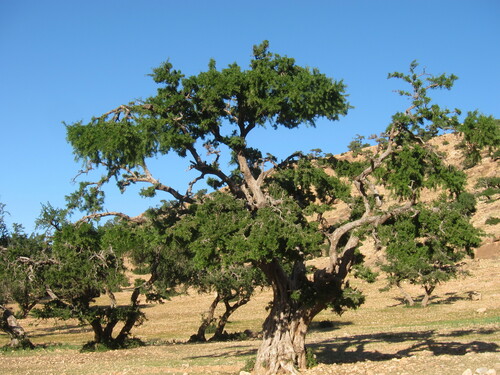
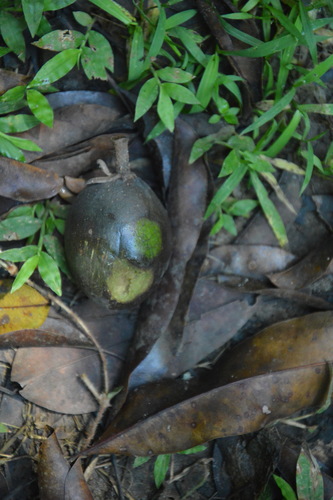
A tree. It grows 10 m tall. The leaves are spaced apart and arranged in spirals. They are 11-22 cm long by 3-8 cm wide. They are narrowly oval and taper to the tip. There are fine golden hairs underneath. There are 18-20 pairs of secondary veins. The flowers are in groups or 2-5 in the axils of leaves. The fruit are 14 cm long by 12 cm wide. They have a golden covering.
Wikipedia
Source ↗Pouteria longifolia is a species of plant in the family Sapotaceae. It is found in Bolivia and Peru.
Production
Fruit drop to the ground during the rainy season.
Names & Synonyms
Domapue, Lucuma, Meego
References (2)
- Grandtner, M. M. & Chevrette, J., 2013, Dictionary of Trees, Volume 2: South America: Nomenclature, Taxonomy and Ecology. Academic Press p 527
- Smith, N., et al, 2007, Amazon River Fruits. Flavors for Conservation. Missouri Botanical Gardens Press. p 234