Cladostemon kirkii
(Oliv.) Pax & Gilg.
CapparaceaeRoots

iNaturalist · cc-by-nc
(c) Ricky Taylor, some rights reserved (CC BY-NC), uploaded by Ricky Taylor
(c) Ricky Taylor, some rights reserved (CC BY-NC), uploaded by Ricky Taylor
iNaturalist · cc-by-nc
(c) magdastlucia, some rights reserved (CC BY-NC), uploaded by magdastlucia
(c) magdastlucia, some rights reserved (CC BY-NC), uploaded by magdastlucia

iNaturalist · cc-by-nc
(c) Kate Braun, some rights reserved (CC BY-NC), uploaded by Kate Braun
(c) Kate Braun, some rights reserved (CC BY-NC), uploaded by Kate Braun
What to Eat
Edible parts: Roots
The roots are eaten and used as a famine food.
Where to Find It
It is a tropical plant. It grows in the dry lowlands.
Africa, East Africa, Mozambique, Tanzania,
Countries: Angola, Burkina Faso, Burundi, Benin, Botswana, Congo (DRC), Central African Republic, Congo (Republic), Cote d'Ivoire, Cameroon, Cape Verde, Djibouti, Algeria, Egypt, Eritrea, Ethiopia, Gabon, Ghana, Gambia, Guinea, Equatorial Guinea, Guinea-Bissau, Kenya, Comoros, Liberia, Lesotho, Libya, Morocco, Madagascar, Mali, Mauritania, Mauritius, Malawi, Mozambique, Namibia, Niger, Nigeria, Rwanda, Seychelles, Sudan, Sierra Leone, Senegal, Somalia, South Sudan, Sao Tome & Principe, Eswatini, Chad, Togo, Tunisia, Tanzania, Uganda, South Africa, Zambia, Zimbabwe
How to Identify
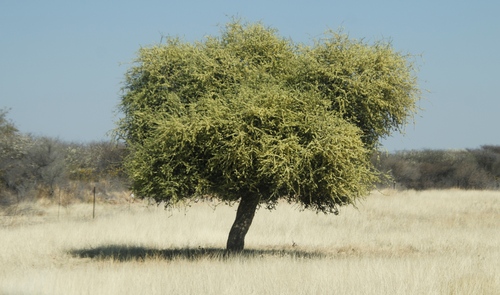
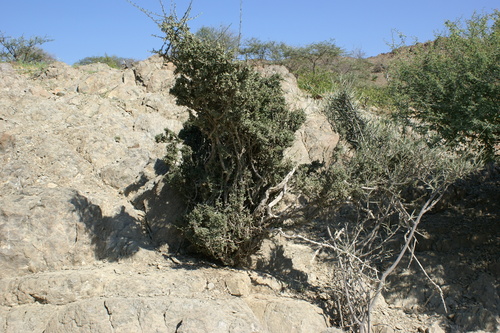
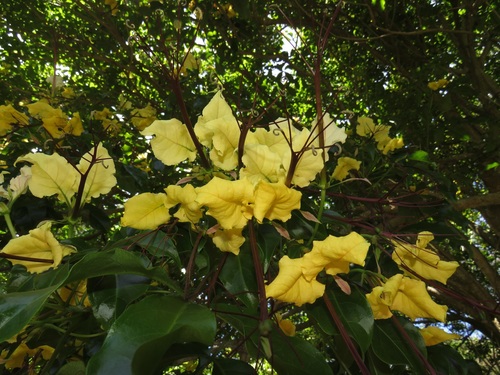
A small tree. It can grow to 10 m tall or be lying over. The leaves are alternate and have 3 leaflets. The leaf stalk is 3-14 cm long. The blade is 4-12 cm long by 2-5 cm wide. It is oval and wedge shaped at the base. The flowers have small petals that are greenish red and large petals that are white to yellow. They are in groups near the ends of the branches. The fruit are large and 10 cm across.
Other Information
The roots are a famine food.
Notes
There is only one Cladostemon species.
Names & Synonyms
Bunguane, Mahucue, Mauco, Mdudu
References (1)
- Lovett, J. C. et al, Field Guide to the Moist Forest Trees of Tanzania. p 34