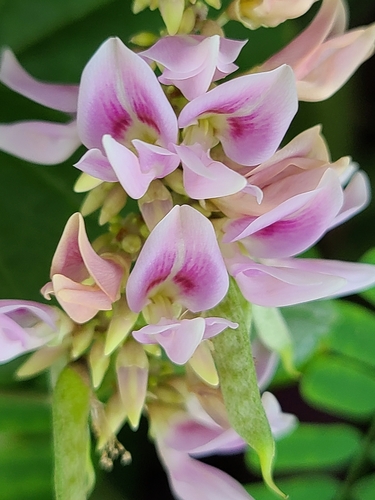
Crotalaria micans
Link

(c) João Medeiros, some rights reserved (CC BY)
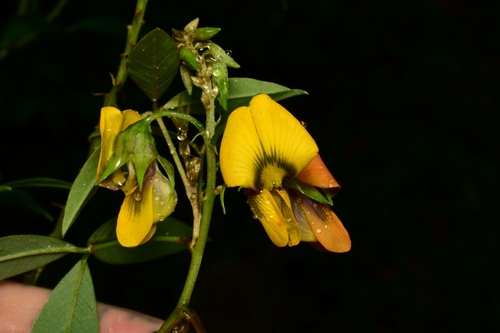
(c) Joey Santore, some rights reserved (CC BY-NC)
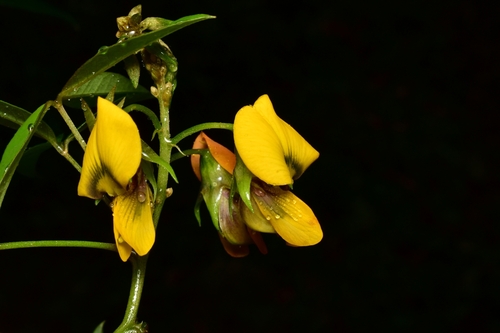
(c) Joey Santore, some rights reserved (CC BY-NC)
What to Eat
Edible parts: ?
Known Hazards
Where to Find It
It is a tropical plant. In China it grows in grassland between 100-2,400 m above sea level. In Yunnan.
Argentina, Asia, Australia, Bangladesh, Belize, Bolivia, Brazil, Cambodia, Cameroon, China, Colombia, Comoros, Congo DR, Ecuador, Fiji, French Guiana, Guatemala, Guianas, Guyana, Hawaii, Himalayas, Honduras, India, Indochina, Indonesia, Laos, Leeward Is., Madagascar, Malaysia, Mexico, Mozambique, Nepal, Nicaragua, Niue, Northeastern India, Panama, Papua New Guinea, PNG, Paraguay, Peru, Philippines, SE Asia, South America, Sri Lanka, Suriname, Taiwan, Thailand, Trinidad-Tobago, Uruguay, Venezuela, Vietnam, Winward Is., Zimbabwe,
How to Identify
A herb or small shrub. It grows 2 m tall. The stems have rusty hairs. The leaves have 3 leaflets. These are 4-7 cm long by 2-3 cm wide. The end one is largest. The flowers are in groups or 20-30 at the ends of branches. They are yellow. The pods are oblong and 3-4 cm long by 1-2 cm wide. There are 20-30 seeds.
How to Grow
Succeeds in the tropics and subtropics at elevations ranging from sea level to 2,600 metres, but grows best at lower elevations. Tolerates a wide range of climatic and soil conditions It is well suited to damp places. It grows in lowland areas generally and requires a position in full sunlight. Introduced in the past as an agriculture cover crop or as an ornamental, the plant can escape from cultivation and naturalize. It becomes weedy, growing along roadsides and other disturbed areas, sometimes in dense stands. Seed production is poor at high elevations. Early growth of the plant is fast - it can cover the soil in 3 weeks after germination and reach 2.5 metres after 3 months. Seeds mature 7 months after sowing in Indonesia. Plants reseed themselves once established. The plant can be cut repeatedly, provided it is not cut too low and a few leaves per stem are left. Yields of 40 tonnes per hectare of fresh material, 4 months after planting, have been reported from Java - this contains about 150 kg nitrogen. This species has a symbiotic relationship with certain soil bacteria, these bacteria form nodules on the roots and fix atmospheric nitrogen. Some of this nitrogen is utilized by the growing plant but some can also be used by other plants growing nearby.
Propagation: Seed - sow in situ. When broadcast, a seed rate of 20-35 kg/ha is used; 6-12 kg/ha is adequate for sowing rows 0.9-1.5 m apart. Seed - stored seed has a hard seedcoat and can benefit from scarification before sowing in order to speed up and improve germination. This can usually be done by pouring a small amount of nearly boiling water on the seeds (being careful not to cook them!) and then soaking them for 12 - 24 hours in warm water. By this time they should have imbibed moisture and swollen - if they have not, then carefully make a nick in the seedcoat (being careful not to damage the embryo) and soak for a further 12 hours before sowing. Cuttings
Medicinal Uses
The plant is used medicinally. No more information is given.
Other Uses
The crushed seeds are used to remove stains from clothes. Caracas rattlebox is grown as a green manure and cover crop in plantations of coffee, tea, tobacco and rice. It is easily incorporated into the soil and decomposition is rapid. The plant can be grown for erosion control.
Names & Synonyms
References (3)
- Kew Plants of the World Online
- INFOODSUpdatedFGU-list.xls
- World Checklist of Useful Plant Species 2020. Royal Botanic Gardens, Kew