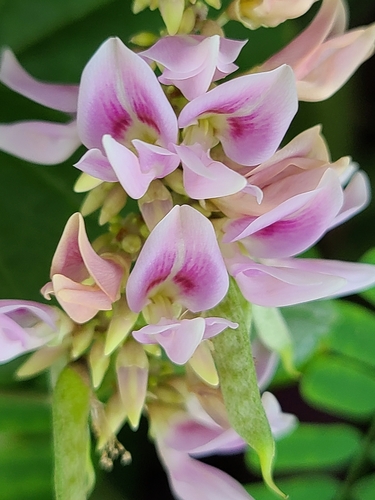
Pisum fulvum
Sibth. & Sm.
Tawny pea, Yellow wild pea

iNaturalist · cc-by
(c) Oleg Kosterin, some rights reserved (CC BY), uploaded by Oleg Kosterin
(c) Oleg Kosterin, some rights reserved (CC BY), uploaded by Oleg Kosterin
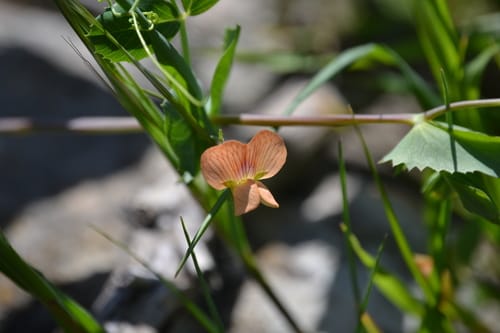
iNaturalist · cc-by-nc
(c) Ahmet Güngör, some rights reserved (CC BY-NC)
(c) Ahmet Güngör, some rights reserved (CC BY-NC)
What to Eat
Edible parts: Fruit, Shoots, Seeds, Pods
The soft fresh fruit are eaten raw, as are the young shoots. The seeds and pods are also edible portions.
Where to Find It
It is a Mediterranean climate plant.
Iraq, Israel, Jordan, Mediterranean, Middle East, Turkey, Türkiye,
How to Identify
A herb. It grows each year from seed. It grows 15-30 cm tall. The stems can be creeping. The leaves are 6-12 cm long and spreading. They are yellowish brown. The pods have a short beak. The seeds are black and 4 mm across.
Names & Synonyms
Baqile xatuni, Burraid
References (4)
- Al-Qura'n, S. A., 2010, Ethnobotanical and Ecological Studies of Wild Edible Plants in Jordan. Libyan Agriculture Research Center Journal International 1(4):231-243
- INFOODSUpdatedFGU-list.xls
- Mayer-Chussuck, U & Lev, E., 2014, Wild Edible Plants in Israel Tradition Versus Cultivation. in Z. Yaniv, N. Dudai (eds.), Medicinal and Aromatic Plants of the Middle-East, Springer
- Yesil, Y., et al, 2019, Wild edible plants in Yeşilli (Mardin-Turkey), a multicultural area. Journal of Ethnobiology and Ethnomedicine (2019) 15:52