Aneilema beniniense
(P. Beauv.) Kunth

(c) Bart Wursten, some rights reserved (CC BY-NC), uploaded by Bart Wursten
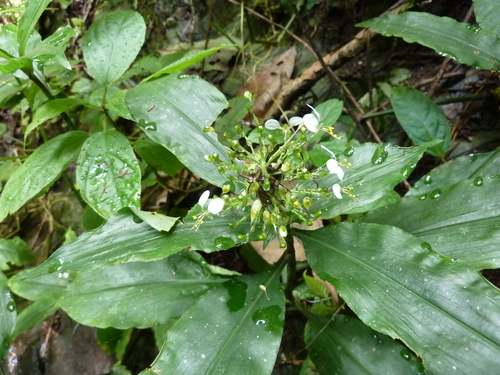
(c) Carel Jongkind, some rights reserved (CC BY-NC), uploaded by Carel Jongkind
What to Eat
Edible parts: Leaves
The leaves are cooked as a vegetable.
Where to Find It
It is a tropical plant. It grows along the edges of forests and in palm groves and wet grass savannah. In Ethiopia it grows between 700-1,600 m above sea level.
Africa, Angola, Central Africa, Central African Republic, CAR, Congo DR, East Africa, Ethiopia, Gabon, Guinea, Guinée, Guinea-Bissau, Sao Tome and Principe, West Africa,
How to Identify
A herb. It keeps growing from year to year. The leaves are alternate and form a sheath at the base. The leaves are sword shaped and 10 cm long by 3 cm wide. The flowers are in a group at the top. They are white and yellow.
How to Grow
The flowers open at about 7am, closing around noon.
Medicinal Uses
A decoction of the plant is used as a laxative for children.
Names & Synonyms
Ametegaella, Aretekodo, Chol'en, Lububi-lwa-mubunga, Mpimpita
References (4)
- Awas, T., 1997, A Study on the Ecology and Ethnobotany of Non-cultivated Food Plants and Wild Relatives of Cultivated crops in Gambella Region, Southwestern Ethiopia. Addis Ababa University. p 72
- Lautenschläger, T., et al, 2018, First large-scale ethnobotanical survey in the province of Uíge, northern Angola. Journal of Ethnobiology and Ethnomedicine (2018) 14:51
- Lulekal, E., et al, 2011, Wild edible plants in Ethiopia: a review on their potential to combat food insecurity. Afrika Focus - Vol. 24, No 2. pp 71-121
- Terashima, H., et al, 1992, Ethnobotany of the Lega in the Tropical Rainforest of Eastern Zaire (Congo): Part Two, Zone de Walikale, African Study Monographs, Suppl. 19:1-60


