Aneilema siliculosum
R. Br.

iNaturalist · cc-by
(c) Kym Nicolson, some rights reserved (CC BY), uploaded by Kym Nicolson
(c) Kym Nicolson, some rights reserved (CC BY), uploaded by Kym Nicolson
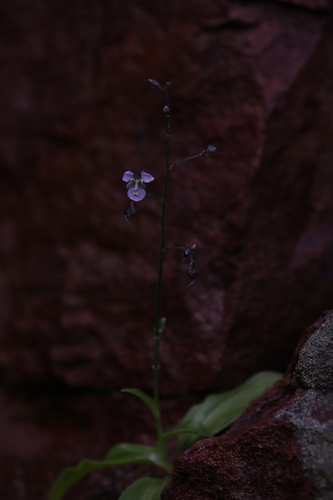
iNaturalist · cc-by
(c) Hugo Innes, some rights reserved (CC BY)
(c) Hugo Innes, some rights reserved (CC BY)
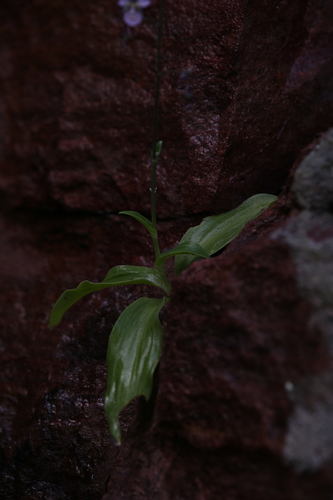
iNaturalist · cc-by
(c) Hugo Innes, some rights reserved (CC BY)
(c) Hugo Innes, some rights reserved (CC BY)
What to Eat
Edible parts: Roots, Stems
The stems and roots are eaten raw or roasted.
Where to Find It
A tropical plant. It does best in shade. It needs protection from hot sun and wind. It likes plenty of water. It is very frost tender. In tropical Queensland it grows between sea level and 880 m altitude. It grows well in rainforest.
Australia*,
Countries: Australia
How to Identify
A herb. It grows 20-30 cm high. It is angular and with many branches. The leaves are 15-20 cm long by 0.8-1.2 cm wide. They are narrow and sword shaped. They are pointed. The flower panicle is 10-15 cm long on the ends of the stems. The flowers are white or pale red. They are 0.5 cm across. The fruit is a 2 celled capsule.
How to Grow
Plants can be grown from stem cuttings.
Notes
There are about 100 Aneilema species.
Names & Synonyms
Djnj
Commelina siliculosa (R. Br.) Poir.
References (5)
- Cooper, W. and Cooper, W., 2004, Fruits of the Australian Tropical Rainforest. Nokomis Editions, Victoria, Australia. p 130
- Cribb, A.B. & J.W., 1976, Wild Food in Australia, Fontana. p 159
- Elliot, W.R., & Jones, D.L., 1982, Encyclopedia of Australian Plants suitable for cultivation. Vol 2. Lothian. p 194
- Jones D, L, 1986, Ornamental Rainforest Plants in Australia, Reed Books, p 260
- Lim, T. K., 2015, Edible Medicinal and Non Medicinal Plants. Volume 9, Modified Stems, Roots, Bulbs. Springer p 9


