Gagea chlorantha
(M. Bieb.) Schult. & Schult.f.
Gagea
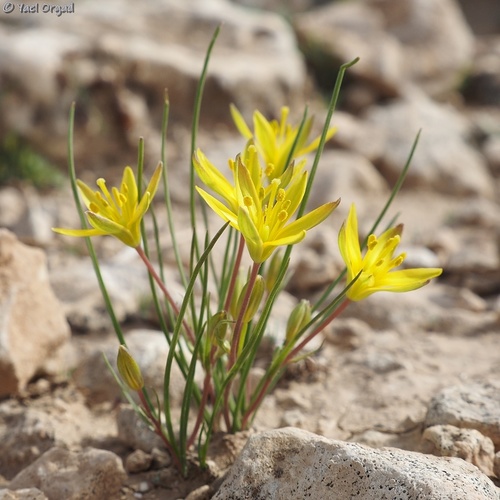
iNaturalist · cc-by-nc
(c) Yael Orgad, some rights reserved (CC BY-NC), uploaded by Yael Orgad
(c) Yael Orgad, some rights reserved (CC BY-NC), uploaded by Yael Orgad
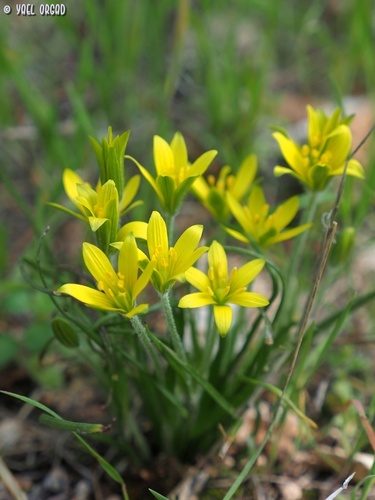
iNaturalist · cc-by-nc
(c) Yael Orgad, some rights reserved (CC BY-NC), uploaded by Yael Orgad
(c) Yael Orgad, some rights reserved (CC BY-NC), uploaded by Yael Orgad
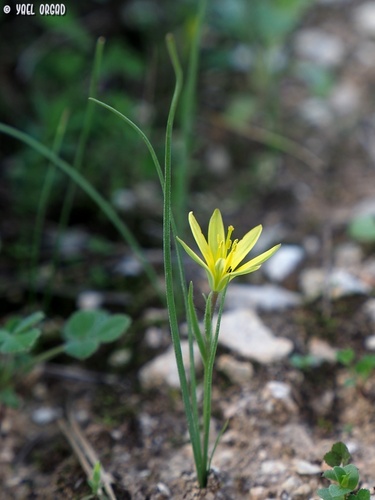
iNaturalist · cc-by-nc
(c) Yael Orgad, some rights reserved (CC BY-NC), uploaded by Yael Orgad
(c) Yael Orgad, some rights reserved (CC BY-NC), uploaded by Yael Orgad
What to Eat
Edible parts: Leaves - tea, Leaves
The leaves are brewed into tea or cooked with oil and onions as a side dish.
Where to Find It
It is a Mediterranean climate plant. It grows in limestone crevices.
Caucasus, Cyprus, Iran, Iraq, Lebanon, Palestine, Syria, Mediterranean, Middle East, Pakistan, Palestine, Tyrkey, Turkmenistan,
Countries: United Arab Emirates, Albania, Bosnia & Herzegovina, Bahrain, Cyprus, Algeria, Egypt, Spain, France, Greece, Croatia, Israel, Iraq, Iran, Italy, Jordan, Kuwait, Lebanon, Libya, Morocco, Monaco, Montenegro, Malta, Oman, Pakistan, Qatar, Saudi Arabia, Slovenia, Syria, Turkmenistan, Tunisia, Turkey, Yemen
How to Identify
A bulb plant. It grows 8-10 cm tall. The bulb is 1 cm across. There are 2 leaves at the base. They are narrow and curved. The leaves on the stem are shorter. The flower stalks have 3-4 flowers. They are yellow.
Names & Synonyms
Gagea aurea K. KochGagea caucasica StapfGagea cespitosa Hausskn. ex Boiss.
Gagea damascena Boiss. & Gaill.Gagea monticola Payne ex Boiss.Homungia chlorantha (M. Bieb. Rouy,
Homungia damascena (Boiss. & Gaill.) RouyOrnithogalum chloranthum M. Bieb.Stellaster chloranthus (M. Bieb.) KuntzeStellaster damascenus (Boiss. & Gaill.) Kuntze
References (1)
- Hinnawi, N. S. A., 2010, An ethnobotanical study of wild edible plants in the Northern West Bank "Palestine". An-Najah National University. p 94


