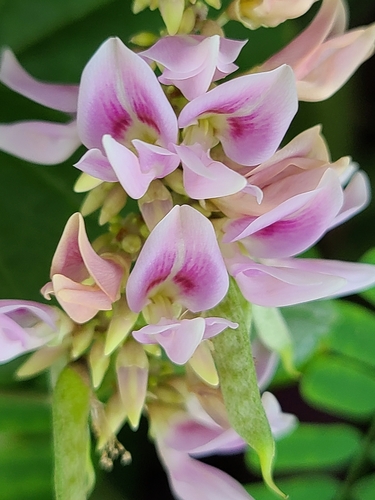
Amorpha nana
C. Fraser
Dwarf false indigo
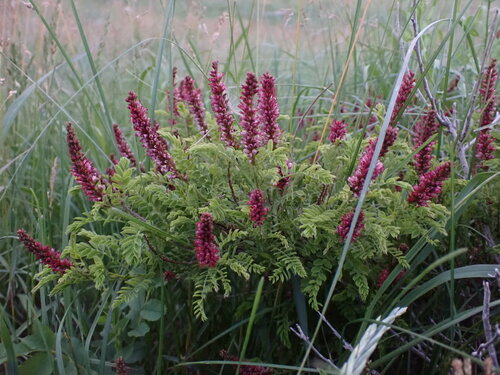
(c) Jared Shorma, some rights reserved (CC BY), uploaded by Jared Shorma
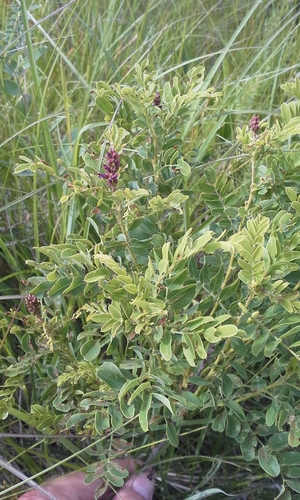
(c) Colin Murray, some rights reserved (CC BY-NC), uploaded by Colin Murray
What to Eat
Edible parts: Probably not edible.
No edible uses are known for this plant.
Where to Find It
It is a temperate plant. It grows on ricky and sandy soil. It suits hardiness zones 3-6.
USA
How to Identify
A bean family herb. It grows 30-90 cm tall. The leaves have leaflets along the stalk. The flowers are purple and in clusters. The fruit are small pods.
How to Grow
Prefers a light well-drained sandy soil in sun or light shade. Fairly wind-resistant. A very hardy plant, tolerating temperatures down to about -25c. Plants resent root disturbance, they should be planted out into their final positions whilst small. Plants are said to be immune to insect pests. Flowers are produced on the current season's growth. This species has a symbiotic relationship with certain soil bacteria, these bacteria form nodules on the roots and fix atmospheric nitrogen. Some of this nitrogen is utilized by the growing plant but some can also be used by other plants growing nearby.
Propagation: Seed — presoak for 12 hours in warm water and sow in early spring in a greenhouse. Germination usually occurs within 1–2 months at 20°C. When large enough to handle, prick seedlings out into individual pots and grow on in the greenhouse for their first winter, then plant out in late spring or early summer after the last expected frosts. Cuttings of half-ripe wood can be taken in June/July in a frame with a high success rate. Cuttings of mature wood from the current season's growth can be taken in autumn in a sheltered position outdoors, though these take 12 months to root. Suckers can be taken in spring just before new growth begins. Layering is also possible in spring.
Medicinal Uses
The plant has been used as a snuff in the treatment of catarrh, acting as an expectorant.
Other Uses
The resinous pustules found on some Amorpha species yield the insecticide 'amorpha'. The plant has a strong, spreading root system that makes it useful for controlling soil erosion. Special uses include nitrogen fixing and food forest applications.
Wikipedia
Source ↗Amorpha nana (dwarf indigo, dwarf indigobush, dwarf false indigo, fragrant indigo-bush, fragrant false indigo, dwarf wild indigo) is a 1–3-foot (30–91 cm) tall perennial shrub in the Pea family (Fabaceae) which is native to North America. It has vibrant green pinnate leaves and clusters of purple flowers. The fruits are small pods. Dwarf false indigo grows in dry prairies and rocky hillsides. Amorpha nana likes rocky and sandy soil. Thomas Nuttall described this species for science in 1813. The species name, nana, is the botanical Latin term for "dwarf".
Names & Synonyms
References (1)
- Jackes, D. A., Edible Forest Gardens