Baptisia australis
(L.) Br.
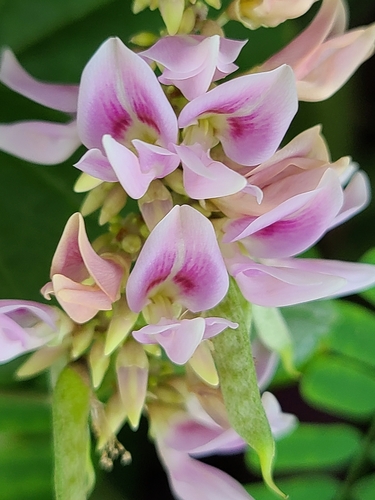
(c) Joseph D Kurtz, some rights reserved (CC BY-NC), uploaded by Joseph D Kurtz

(c) Mark Kluge, some rights reserved (CC BY-NC), uploaded by Mark Kluge

(c) Jason, some rights reserved (CC BY-NC), uploaded by Jason
What to Eat
None known
Known Hazards
Where to Find It
It is a temperate plant. It suits hardiness zones 4-8.
Slovenia, USA,
How to Identify
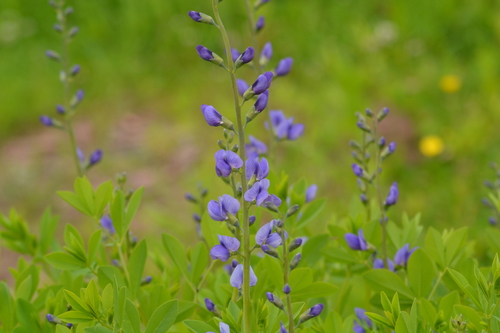
Baptisia australis is a slow-growing perennial reaching 1.5 m tall with 0.6 m spread. Foliage appears May to October; flowering occurs July to August with seed ripening August to September. It prefers light sandy and medium loamy well-drained soils, thriving in mildly acid to neutral pH. Requires full sun and tolerates both dry and moist soil. The plant fixes atmospheric nitrogen. Hardy to UK zone 5.
How to Grow
Propagation: Seed - best sown as soon as it is ripe in a cold frame. Stored seed should be pre-soaked for 24 hours in warm water and then sown in a cold frame in late winter or early spring. Prick out the seedlings into individual pots as soon as they are large enough to handle and plant them out into their permanent positions in the summer or following spring. Division in spring. Larger divisions can be planted straight into their permanent positions whilst smaller clumps are best potted up and kept in a cold frame until they are growing away well.
Medicinal Uses
Antiemetic Appetizer Digestive Emetic Purgative Appetizer, digestive. The root is antiemetic, emetic and purgative. There are confusing reports from two sources that the plant is used as an emetic and also that a cold tea is given to stop vomiting. A poultice of the root is anti-inflammatory and is held in the mouth to treat toothaches. The plant is under investigation as a potential stimulant of the immune system.
Other Uses
A blue dye is obtained from the plant. No more information is given, but it is likely to be the leaves that are used. Special Uses Food Forest Nitrogen Fixer
Wikipedia
Source ↗Baptisia australis, commonly known as blue wild indigo or blue false indigo, is a flowering plant in the family Fabaceae (legumes). It is a perennial herb native to much of central and eastern North America and is particularly common in the Midwest, but it has also been introduced well beyond its natural range. Naturally it can be found growing wild at the borders of woods, along streams or in open meadows. It often has difficulty seeding itself in its native areas due to parasitic weevils that enter the seed pods, making the number of viable seeds very low. The plant has low toxicity levels for humans.
Names & Synonyms
Nepravi indigovec
References (1)
- Jackes, D. A., Edible Forest Gardens