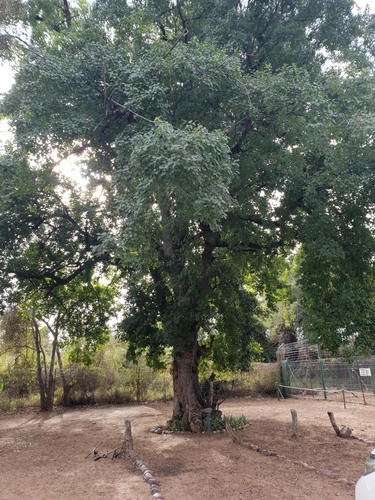
Ceanothus prostratus
Benth.
(c) mmhamil, some rights reserved (CC BY-NC)
(c) mmhamil, some rights reserved (CC BY-NC)
(c) mmhamil, some rights reserved (CC BY-NC)
What to Eat
None known.
Where to Find It
It is a warm temperate plant. It grows in hardiness zones 7-10.
USA,
How to Identify
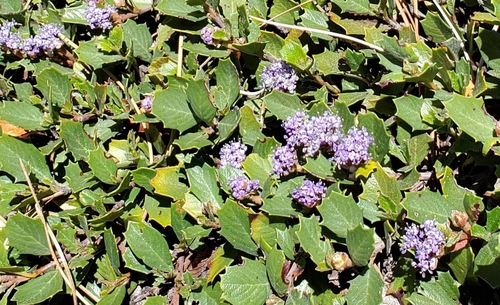
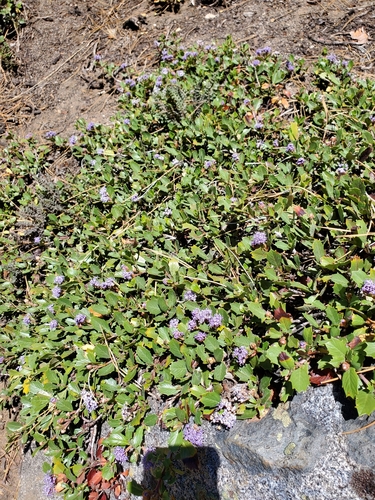
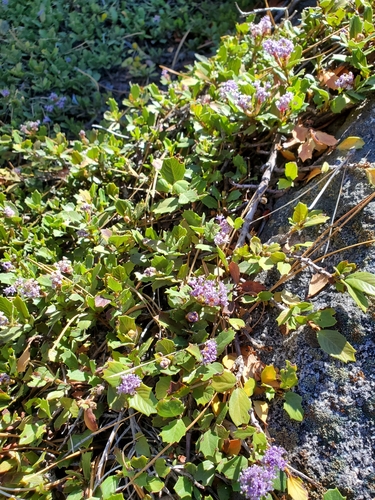
Evergreen shrub reaching 0.1m tall and 1.5m wide. Hermaphroditic flowers bloom April to May, pollinated by bees. Nitrogen-fixing capability. Tolerates light sandy and medium loamy soils with good drainage; prefers mildly acid to basic soils. Grows in semi-shade or full sun; adapts to dry or moist conditions. Hardy to UK zone 7.
How to Grow
Prefers a warm sunny position but tolerates light shade. Tolerates some lime, but will not succeed on shallow chalk. A difficult plant to cultivate, it might do well in a lime-free soil in full sun and occasionally does well on heavier soils. This species is particularly susceptible to damage by frost when it is young, though it should be hardy as it grows older. The sub-species C. prostratus occidentalis. Mc. Minn. is a form growing by the coast in N. California - it may be a more suitable form for maritime areas. Plants dislike root disturbance, they should be planted out into their permanent positions whilst still small. Dislikes heavy pruning, it is best not to cut out any wood thicker than a pencil. Plants flower on the previous year's growth, if any pruning is necessary it is best carried out immediately after the plant has finished flowering. Constant pruning to keep a plant small can shorten its life. Fast growing, it flowers well when young, often in its second year from seed. The branches are prostrate and often form roots where they touch the soil. Hybridizes freely with other members of this genus. Some members of this genus have a symbiotic relationship with certain soil micro-organisms, these form nodules on the roots of the plants and fix atmospheric nitrogen. Some of this nitrogen is utilized by the growing plant but some can also be used by other plants growing nearby. An evergreen. A clumping mat former. Forming a dense prostrate carpet with a limited spread.
Propagation: Sow seed as soon as it is ripe in a cold frame. Stored seed should be pre-soaked for 12 hours in warm water, then given 1–3 months of stratification at 1°C; germination usually takes 1–2 months at 20°C. One method recommends boiling water treatment, or heating seed in 4 times its volume of sand at 90–120°C for 4–5 minutes, followed by a 12-hour soak in warm water; after this treatment, a chilling period below 5°C for up to 84 days may be needed before germination occurs. Seed is long-lived — stored for 15 years in an airtight dry container at 1–5°C, it shows little drop in viability. Seed is ejected forcefully from the capsule at ripeness, so it must be collected just before dehiscence or it becomes difficult to extract and rarely germinates satisfactorily. Prick seedlings into individual pots as soon as they are large enough to handle and grow on under glass for at least the first winter before planting out in late spring or early summer. Half-ripe cuttings taken at a node can be struck in a frame in July or August. Mature wood cuttings from the current year's growth, 7–12 cm with a heel, can be taken in October in a cold frame. The roots are brittle — pot up callused cuttings in spring just before the roots break. Success rates are generally good.
Medicinal Uses
None known.
Other Uses
A green dye is obtained from the flowers. All parts of the plant are rich in saponins — when crushed and mixed with water they produce a good lather that makes an effective and gentle soap. It removes dirt well but does not lift oils, so it will not strip natural skin oils, nor remove engine oil or similar substances. The flowers are a particularly good source and leave a pleasant scent on skin after use. The developing seed cases are also a very good source of saponins. The plant makes a useful ground cover, especially on warm, sunny slopes.
Wikipedia
Source ↗Ceanothus prostratus is a species of shrub in the family Rhamnaceae. Common names include prostrate ceanothus, pinemat, and mahala mat. It is native to the Pacific Northwest of the United States where it grows in coniferous forests and open plateaus.
References (1)
- Jackes, D. A., Edible Forest Gardens