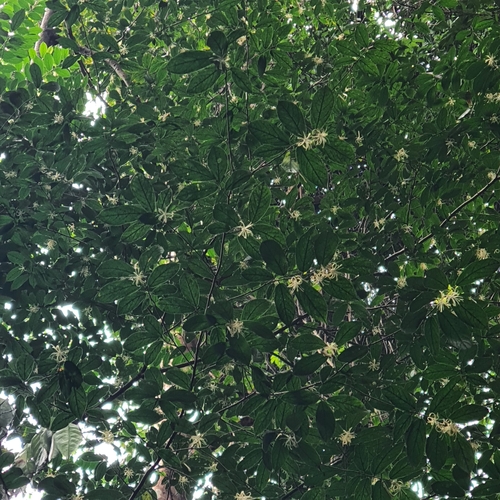
Cornus racemosa
Lam.
Grey dogwood

iNaturalist · cc-by
(c) Benny Mazur, some rights reserved (CC BY)
(c) Benny Mazur, some rights reserved (CC BY)

iNaturalist · cc-by-sa
(c) George F Mayfield, some rights reserved (CC BY-SA)
(c) George F Mayfield, some rights reserved (CC BY-SA)

iNaturalist · cc-by-sa
(c) George F Mayfield, some rights reserved (CC BY-SA)
(c) George F Mayfield, some rights reserved (CC BY-SA)
What to Eat
Edible parts: Fruit normally not considered edible.
Known Hazards
Where to Find It
It is a temperate plant. It suits hardiness zone 3.
Canada, North America, USA,
Countries: Antigua & Barbuda, Barbados, Bahamas, Belize, Canada, Costa Rica, Cuba, Dominica, Dominican Republic, Grenada, Guatemala, Honduras, Haiti, Jamaica, St Kitts & Nevis, St Lucia, Mexico, Nicaragua, Panama, Puerto Rico, El Salvador, Trinidad & Tobago, United States, St Vincent
How to Identify
A deciduous shrub in the dogwood family that grows about 5 m tall and forms dense thickets. It is native to temperate regions and hardy to zone 3, producing white berries.
Wikipedia
Source ↗Cornus racemosa, the northern swamp dogwood, gray dogwood, or panicle dogwood, is a shrubby plant native to southeastern Canada and the northeastern United States. It is a member of the dogwood genus Cornus and the family Cornaceae.
Names & Synonyms
Cornus comosa Raf.and others
References (2)
- Jackes, D. A., Edible Forest Gardens (As Cornus paniculata)
- Toupal, R. S. & Hollenback, K., 2009, An Ethnobotany of Indiana Dunes National Lakeshore: Plant Uses of the Ojibwa People. Bureau of Applied Research in Anthropology. University of Arizona