Sedum ternatum
Michx.
Mountain stonecrop

(c) BlueRidgeKitties, some rights reserved (CC BY-NC-SA)
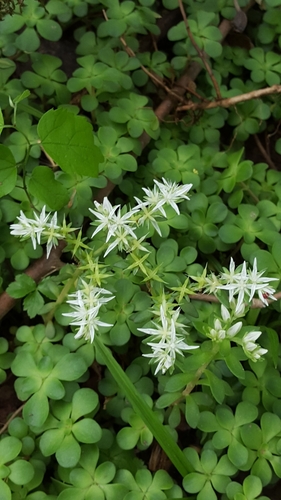
(c) coffey, some rights reserved (CC BY-NC), uploaded by coffey

(c) Douglas Goldman, some rights reserved (CC BY-SA), uploaded by Douglas Goldman
What to Eat
Edible parts: Stems, Leaves
The succulent young leaves are edible.
How to Identify
A succulent herb. It grows 15 cm tall. The stems will creep along the ground forming dense mats. The flowers are white.
How to Grow
The preference is partial sun to light shade, moist to dry-mesic conditions, and a loamy or rocky soil. Tolerates part shade and moist soils better than most other sedums. Bloom Time: April to May. Bloom Description: White. Flower: Showy. Attracts: Bees, Butterflies. Tolerates rabbit, deer, drought, air pollution. Evergreen.
Propagation: Propagate by division or stem cuttings. Simply divide the plant or cut stems and lay them on potting soil or insert them shallowly into the growing medium.
Medicinal Uses
None known.
Other Uses
Useful as ground cover including in semi-shaded areas, and makes a good rock garden plant. Provides shelter for beneficial insects and other arthropods, and supplies nectar and pollen for bees — including Andrena forbesii — as well as occasional wasps and flies. Foliage is fed on by the Sedum Aphid (Aphis sedi) and the aphid Aphis acrita. Eastern Chipmunks are known to eat the roots.
Wikipedia
Source ↗Sedum ternatum is the most widespread native Sedum species in eastern North America, commonly known as woodland stonecrop. It has white flowers, blooming April to May. This shade-tolerant species is often found in the forest understory, although it can also grow in sunnier locations when sufficient moisture is present. Its common name of "stonecrop" evokes its ability to thrive atop boulders, where its succulent leaves help it to retain moisture in shallow soil. It adapts well to garden use. Sedum ternatum is native to much of the eastern United States, as far west as Arkansas and Iowa, south down the Appalachian Mountains, and north to near the Canada–United States border. Sedum ternatum can be distinguished from other sedums, native and cultivated, which are commonly found in the United States by the white flowers with four (not five) petals, and by the leaves in whorls of three, whence the species name. The plant flowers for about a month in late spring to early summer.
Names & Synonyms
Three-leaved stone crop
References (2)
- Jackes, D. A., 2007, Edible Forest Gardens
- North Carolina Extension Gardener Plant Toobox