Trigonella emodi
Benth.
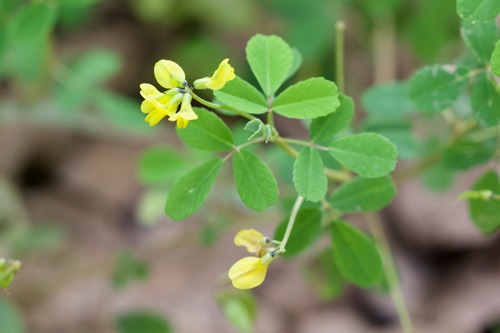
iNaturalist · cc-by-nc
(c) connk, some rights reserved (CC BY-NC), uploaded by connk
(c) connk, some rights reserved (CC BY-NC), uploaded by connk

iNaturalist · cc-by-sa
(c) Dinesh Valke, some rights reserved (CC BY-SA)
(c) Dinesh Valke, some rights reserved (CC BY-SA)

iNaturalist · cc-by-sa
(c) Dinesh Valke, some rights reserved (CC BY-SA)
(c) Dinesh Valke, some rights reserved (CC BY-SA)
What to Eat
Edible parts: Leaves, Shoots
The leaves and shoots are cooked and eaten as a vegetable.
Where to Find It
It is a temperate plant. In the Indian Himalayas it grows between 2,100-4,500 m above sea level. It suits cold arid places.
Asia, China, Himalayas, India, Nepal, Pakistan, Tibet,
Countries: United Arab Emirates, Afghanistan, Armenia, Azerbaijan, Bangladesh, Bahrain, Brunei, Bhutan, China, Georgia, Indonesia, Israel, India, Iraq, Iran, Jordan, Japan, Kyrgyzstan, Cambodia, North Korea, South Korea, Kuwait, Kazakhstan, Laos, Lebanon, Sri Lanka, Myanmar, Mongolia, Maldives, Malaysia, Nepal, Oman, Philippines, Pakistan, Qatar, Saudi Arabia, Singapore, Syria, Thailand, Tajikistan, Timor-Leste, Turkmenistan, Turkey, Taiwan, Uzbekistan, Vietnam, Yemen
How to Identify
A herb. It keeps growing from year to year. It grows 20-60 cm tall. The leaves have 3 leaflets. The leaflets are broadly oval and 10-25 mm long by 7-15 mm wide. There are 5-8 flowers in a group. They are yellow.
Names & Synonyms
Buksup, Kuchona
Melilotus emodi Wall.Trigonella emodi var. himalaica Sirj.
References (3)
- Rana, J.C. et al, 2011, Genetic resources of wild edible plants and their uses among tribal communities of cold arid regions of India. Genetic Resources and Crop Evolution. 59:135-149
- Rana, P. K., et al, 2014, Uses of Local Plant Biodiversity among the Tribal Communities of Pangi Valley of District Chamba in Cold Desert Himalaya, India. The Scientific World Journal. Volume 2014, Article ID 753289, 15 pages
- Sharma, L. et al, 2018, Diversity, distribution pattern, endemism and indigenous uses of wild edible plants in Cold Desert Biosphere Reserve of Indian Trans Himalaya. Indian Journal of Traditional Knowledge. Vol 17(1) January 2018 pp 122-131




