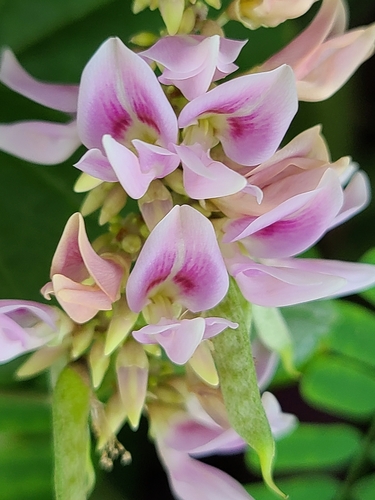
Vachellia prasinata
(Asfaw Hunde) Kyal. & Boatwr.

wikimedia · cc-by-sa
Melburnian (via Wikimedia Commons)
Melburnian (via Wikimedia Commons)
What to Eat
Edible parts: Seeds
The seeds are edible.
Known Hazards
Where to Find It
It is a tropical plant. It grows in dry woodland and semi-desert. It has been collected at 1,000 m above sea level in Ethiopia,
Africa, East Africa, Ethiopia*,
Countries: Angola, Burkina Faso, Burundi, Benin, Botswana, Congo (DRC), Central African Republic, Congo (Republic), Cote d'Ivoire, Cameroon, Cape Verde, Djibouti, Algeria, Egypt, Eritrea, Ethiopia, Gabon, Ghana, Gambia, Guinea, Equatorial Guinea, Guinea-Bissau, Kenya, Comoros, Liberia, Lesotho, Libya, Morocco, Madagascar, Mali, Mauritania, Mauritius, Malawi, Mozambique, Namibia, Niger, Nigeria, Rwanda, Seychelles, Sudan, Sierra Leone, Senegal, Somalia, South Sudan, Sao Tome & Principe, Eswatini, Chad, Togo, Tunisia, Tanzania, Uganda, South Africa, Zambia, Zimbabwe
How to Identify
A small tree. It grows 4.5 m tall. The crown is rounded and the branches are spreading. The bark is grey to black and deeply cracked. The flowers are pale yellow to white. The fruit are pods that split open. They have 3-5 seeds.
Wikipedia
Source ↗Vachellia prasinata (syn. Acacia prasinata) is a species of plant in the family Fabaceae. It is found only in Ethiopia. It is threatened by habitat loss.
Notes
It is an at risk species. Also as Mimosaceae.
Names & Synonyms
Dodoti
Acacia prasinata A. Hunde
References (1)
- Feyssa, D. H., et al, 2011, Seasonal availability an consumption of wild edible plants in semiarid Ethiopia; Implications to food security and climate change adaptation. Journal of Horticulture and Forestry 3(5): 138-149 (As Acacia prasinata)