Polycarpon prostratum
(Forssk.) Asch. & Schweinf.
CaryophyllaceaeLeaves

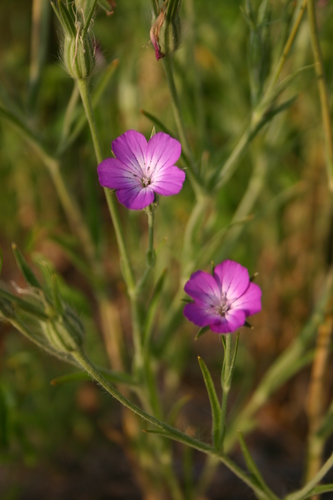
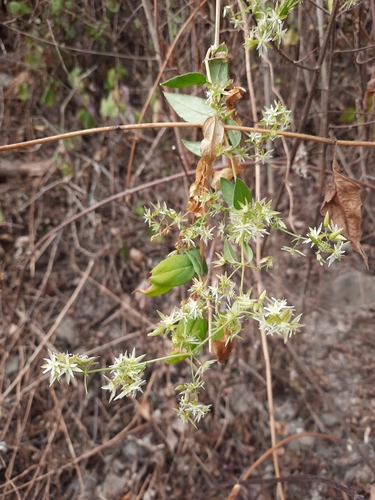
iNaturalist · cc-by
(c) i_c_riddell, some rights reserved (CC BY), uploaded by i_c_riddell
(c) i_c_riddell, some rights reserved (CC BY), uploaded by i_c_riddell
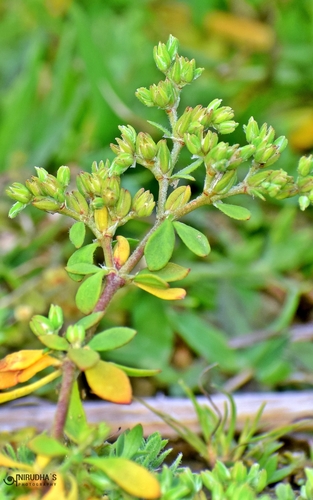
iNaturalist · cc-by-nc
(c) Aniruddha Singhamahapatra, some rights reserved (CC BY-NC), uploaded by Aniruddha Singhamahapatra
(c) Aniruddha Singhamahapatra, some rights reserved (CC BY-NC), uploaded by Aniruddha Singhamahapatra
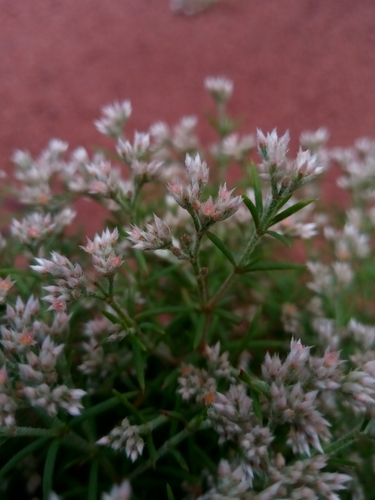
iNaturalist · cc-by-nc
(c) Rahaingoson Fabien, some rights reserved (CC BY-NC), uploaded by Rahaingoson Fabien
(c) Rahaingoson Fabien, some rights reserved (CC BY-NC), uploaded by Rahaingoson Fabien
What to Eat
Edible parts: Leaves
The leaves are cooked as a vegetable.
Where to Find It
It is a subtropical plant. It grows on open sands and farmland. In southern China it grows between 300-1,500 m above sea level. It grows in damp places and on the edge of ponds. It can be in rice fields. In Yunnan.
Africa, Asia, Botswana, Burkina Faso, Central Africa, China, East Africa, Gabon, India, Mozambique, Myanmar, Northeastern India, SE Asia,
Countries: United Arab Emirates, Afghanistan, Armenia, Angola, Azerbaijan, Bangladesh, Burkina Faso, Bahrain, Burundi, Benin, Brunei, Bhutan, Botswana, Congo (DRC), Central African Republic, Congo (Republic), Cote d'Ivoire, Cameroon, China, Cape Verde, Djibouti, Algeria, Egypt, Eritrea, Ethiopia, Gabon, Georgia, Ghana, Gambia, Guinea, Equatorial Guinea, Guinea-Bissau, Indonesia, Israel, India, Iraq, Iran, Jordan, Japan, Kenya, Kyrgyzstan, Cambodia, Comoros, North Korea, South Korea, Kuwait, Kazakhstan, Laos, Lebanon, Sri Lanka, Liberia, Lesotho, Libya, Morocco, Madagascar, Mali, Myanmar, Mongolia, Mauritania, Mauritius, Maldives, Malawi, Malaysia, Mozambique, Namibia, Niger, Nigeria, Nepal, Oman, Philippines, Pakistan, Qatar, Rwanda, Saudi Arabia, Seychelles, Sudan, Singapore, Sierra Leone, Senegal, Somalia, South Sudan, Sao Tome & Principe, Syria, Eswatini, Chad, Togo, Thailand, Tajikistan, Timor-Leste, Turkmenistan, Tunisia, Turkey, Taiwan, Tanzania, Uganda, Uzbekistan, Vietnam, Yemen, South Africa, Zambia, Zimbabwe
How to Identify
A herb. It grows each year from seed. The stems are woody at the base. It grows 10-25 cm tall and can be lying over. The leaves are oval or spoon shaped and 5-15 mm long by 2-3 mm wide.
Names & Synonyms
Bangima, Bongima, Bwkhate, Byaing-che, Gima sak
Alsine prostrata Forssk.Arenaria prostrata (Forssk.) Ser.Lepigonum prostratum Kindb.Loeflingia indica Retz.Pharnaceum depressum L.Polycarpa prostrata (Forssk.) KuntzePolycarpaea prostrata (Forssk.) Decne.Polycarpon depressum Rohrb.Polycarpon glaucifolium A. Chev.Polycarpon indicum (Retz.) Merr.Polycarpon loeflingii Wight & Arn. ex Benth.Robbairea prostrata (Forssk.) Boiss.Spergula prostrata (Forssk.) D. Dietr.Spergularia prostrata (Forssk.) G. Don
References (6)
- Bandyopadhyay, S. et al, 2009, Wild edible plants of Koch Bihar district, West Bengal. Natural Products Radiance 8(1) 64-72
- Deb, D., et al, 2013, Wild Edible Plants and Their Utilization in Traditional Recipes of Tripura, Northeast India. Advances in Biological Research 7(5):203-211
- Chowdhury, M. & Mukherjee, R., 2012, Wild Edible Plants Consumed by Local Communities of Maldah of West Bengal, India. Indian J.Sci.Res.3(2) : 163-170
- Sakar, A. & Das, A. P., 2018, The traditional knowledge on edible wild leafy vegetables of Rabha Tribe in Duars of North Bengal: a potential reinforcement to food security. Pleione 12(2): 275 - 281. 2018.
- Sinha, R. & Lakra, V., 2007, Edible weeds of tribals in Jharkhand, Orissa and West Bengal. Indian Journal of Traditional Knowledge 6(1) January 2007 pp 217-222 (As Polycarpon loeflingiae)
- www.efloras.org Flora of China Vol 6