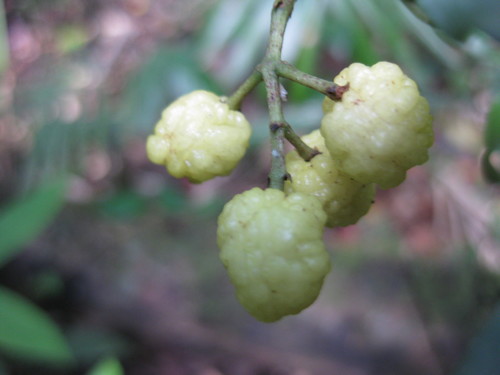
Diosma hirsuta
L.
Iris

iNaturalist · cc-by-nc
(c) vanrensk, some rights reserved (CC BY-NC)
(c) vanrensk, some rights reserved (CC BY-NC)

iNaturalist · cc-by-nc
(c) Johan October, some rights reserved (CC BY-NC)
(c) Johan October, some rights reserved (CC BY-NC)

iNaturalist · cc-by-nc
(c) Johan October, some rights reserved (CC BY-NC)
(c) Johan October, some rights reserved (CC BY-NC)
What to Eat
Edible parts: Bulb, Leaves - tea
The leaves are used to make tea drinks.
Where to Find It
It is a subtropical plant.
Africa, South Africa*, Southern Africa,
Countries: Angola, Burkina Faso, Burundi, Benin, Botswana, Congo (DRC), Central African Republic, Congo (Republic), Cote d'Ivoire, Cameroon, Cape Verde, Djibouti, Algeria, Egypt, Eritrea, Ethiopia, Gabon, Ghana, Gambia, Guinea, Equatorial Guinea, Guinea-Bissau, Kenya, Comoros, Liberia, Lesotho, Libya, Morocco, Madagascar, Mali, Mauritania, Mauritius, Malawi, Mozambique, Namibia, Niger, Nigeria, Rwanda, Seychelles, Sudan, Sierra Leone, Senegal, Somalia, South Sudan, Sao Tome & Principe, Eswatini, Chad, Togo, Tunisia, Tanzania, Uganda, South Africa, Zambia, Zimbabwe
How to Identify
A shrub. It grows 50 cm tall. It has a stout rootstock that produces many stems. The leaves are narrow and 12 mm long and 1 mm wide. The flowers are in a compound group at the top of the stems and are small. The flowers are 5 mm across.
Names & Synonyms
Diosma vulgaris SchltdlMany others
References (2)
- Welcome, A. K. & Van Wyk, B.-E., 2019, An inventory and analysis of the food plants of southern Africa. South African Journal of Botany 122 (2019) 136–179
- Youngblood, D., 2004, Identification and Quantification of Edible Plant Foods in the Upper (Nama) Karoo, South Africa. Economic Botany 58 (Supplement) :S43-S65 (As Diosma ericoides)