Catha edulis
(Vahl) Forssk. ex Endl.
Arabian tea tree, Bushman’s tea, Khat
(с) Nick Helme, некоторые права защищены (CC BY-NC), загрузил Nick Helme

(c) caroline kruger, some rights reserved (CC BY-NC)

(c) caroline kruger, some rights reserved (CC BY-NC)
What to Eat
Edible parts: Leaves - tea, Caution, Fruit
Although the practice of khat-chewing is still primarily restricted to its original area of cultivation in the Red Sea area, the khat plant is native to the whole of the eastern side of Africa from Kenya southwards to Tanzania, Malawi, Zambia, Zimbabwe, where it grows on rocky outcrops and around the fringes of woodlands. In southern Africa the shrub's range is scattered but still grows in the KwaZulu-Natal, Eastern Cape, Western Cape and Mpumalanga provinces of South Africa, in addition to Eswatini and Mozambique. Traditionally, khat is used as a socialising drug as in Yemen, where khat-chewing is predominantly a male habit combined with conversation, hookah smoking, and tea drinking. Khat is so popular in Yemen that its cultivation consumes much of the country's agricultural resources. An estimated 40% of Yemen's water supply goes towards irrigating it, with production increasing by about 10% to 15% every year. One "daily bag" of khat requires an estimated 500 litres (130 US gal) of water to produce. Water consumption is high and groundwater levels in the Sanaa basin are diminishing, so government officials have proposed relocating large portions of the population of the city to the Red Sea coastal areas. In countries outside the core area of growth and consumption, khat is sometimes chewed at parties or social functions. It may also be used by farmers and labourers for reducing physical fatigue or hunger, and by drivers and students for improving attention. In 2018, General Taher al-Aqili, chief of staff of the Yemeni Armed Forces, said that khat is "our whisky" and that it "gives his men strength to fight." Reports indicate that child soldiers in Yemen have been chewing khat in order to remain alert on the battlefield.
Where to Find It
A tropical plant. It does best on well drained soils. It prefers an open sunny position. It is drought and frost tender. In Uganda they grow from 1,400-2,200 m altitude. In Ethiopia it grows between 900-2,400 m above sea level. It needs a temperature above 10°C. It grows in areas with a rainfall between 800-1,800 mm per year. It suits hardiness zones 10-12. In XTBG Yunnan.
Africa, Australia, Angola, Asia, Central Africa, China, Congo, East Africa, Eswatini, Ethiopia, Hawaii, India, Israel, Kenya, Madagascar, Malawi, Mediterranean, Middle East, Mozambique, Saudi Arabia, Somalia, South Africa, Southern Africa, Swaziland, Tanzania, Uganda, USA, Yemen, Zambia, Zimbabwe,
How to Identify
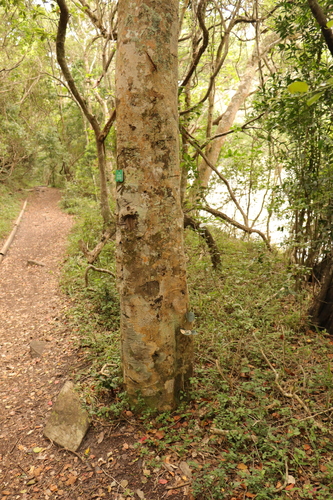
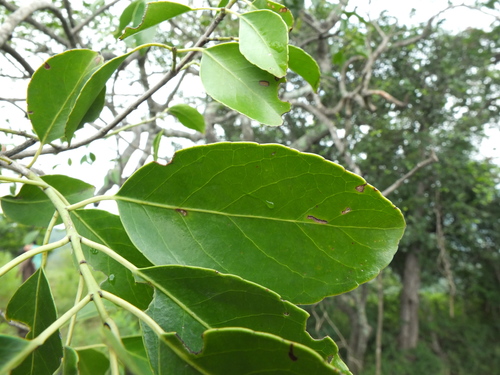
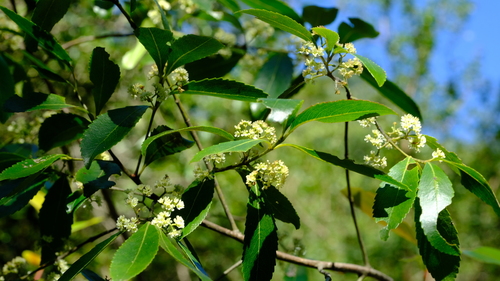
A shrub or small evergreen tree. It grows to 7-18 m high and spreads 3 m across. Trees that are regularly harvested are smaller. The stem is erect. The bark is grey and smooth when young. It becomes dark brown and flaky at maturity. The branches hang downwards. The leaves are simple and opposite. The leaves are glossy green and oval. They are 5-11 cm long and the edges of the leaf have small teeth. Leaves are paler underneath. The leaf stalks are reddish and about 1 cm long. The flowers are very small and pale green to white and with 5 petals. They occur in small clusters in the axils of leaves. The clusters are up to 2 cm across. The fruit has 3 lobes. It is a woody capsule about 1 cm long. It is reddish brown when mature. It contains many small winged seeds.
How to Grow
Plants can be grown from seed or by using cuttings. Suckers and root cuttings can be used. Seeds germinate within 2 weeks. (There are 60,000-80,000 seeds per kg.) Plants can be shaped or pruned.
Propagation: Seed - best sown as soon as it is ripe since it quickly loses its viability. Fresh seeds germinate within 15 - 20 days. Nearly all propagation is by cuttings taken from orthotropic (alternate-leaved) shoots. Growth of rooted cuttings starts with the emergence of new orthotropic shoots with reddish bark and alternate leaves from buds above the leaf axils. These stems continue to increase in length for some two years before the first lateral branches with plagiotropic growth appear from the axils of the oldest leaves, bearing slightly smaller opposite leaves. Suckers develop at the base of stems in response to heavy pruning.
Medicinal Uses
The stimulant effect of the plant was originally attributed to "katin", cathine, a phenethylamine-type substance isolated from the plant. However, the attribution was disputed by reports showing the plant extracts from fresh leaves contained another substance more behaviourally active than cathine. In 1975, the related alkaloid cathinone was isolated, and its absolute configuration, (S)-2-Amino-1-phenylpropan-1-one, was established in 1978. Cathinone is not very stable and breaks down to produce cathine and norephedrine. These chemicals belong to the PPA (phenylpropanolamine) family, a subset of the phenethylamines related to amphetamines and the catecholamines epinephrine and norepinephrine. In fact, cathinone and cathine have a very similar molecular structure to amphetamine. Khat is sometimes confused with methcathinone (also known as cat), a Schedule I substance that possesses a similar chemical structure to the khat plant's cathinone active component. However, both the side effects and the addictive properties of methcathinone are much stronger than those associated with khat use. When khat leaves dry, the more potent chemical, cathinone, decomposes within 48 hours, leaving behind the milder chemical, cathine. Thus, harvesters transport khat by packaging the fresh leaves and stems in plastic bags or wrapping them in banana leaves to preserve their moisture and keep the cathinone potent. It is also common for them to sprinkle the plant with water frequently or use refrigeration during transportation. When the khat leaves are chewed, cathine and cathinone are released and absorbed through the mucous membranes of the mouth as well as the lining of the stomach. The action of cathine and cathinone on the reuptake of epinephrine and norepinephrine has been demonstrated in lab animals, showing that one or both of these chemicals cause(s) the body to recycle these neurotransmitters more slowly, resulting in the wakefulness and insomnia associated with khat use. Receptors for serotonin show a high affinity for cathinone, suggesting this chemical is responsible for feelings of euphoria associated with chewing khat. In mice, cathinone produces the same types of nervous pacing or repetitive scratching behaviours associated with amphetamines. The effects of cathinone peak after 15 to 30 minutes, with nearly 98% of the substance metabolised into norephedrine by the liver. Cathine is somewhat less understood, being believed to act upon the adrenergic receptors causing the release of epinephrine and norepinephrine. It has a half-life of about three hours in humans. The medication bromocriptine can reduce cravings and withdrawal symptoms within 24 hours.
Other Uses
The wood of large trees is golden-yellow to brown, lustrous, straight grained, fine and even in texture, strong and moderately hard. It saws and planes well. When left to grow into large trees, it yields a fine timber for furniture and building, called Chirinda redwood in southern Africa. The wood pulp makes excellent blotting paper.
Production
The tree is fast growing. It suckers readily. The stimulant effect is less in cooler places.
Other Information
It's use is common in Somalia and Yemen. It is cultivated.
Notes
There is only one Catha species. The leaves contain the alkaloids cathine, cathenine and cathidine. They affect the nervous system. The plant is banned in some countries.
Names & Synonyms
Abyssinian tea, Boesmanstee, Cat, Igqwaka, Iwani, Kat, Luthadzi, Miraa, Mkalanga, Mlomomnandzi, Muhulo, Mushyuluti, Mutsawari, Muza-ramashawa, Ndimamadzi, Qaad, Quat, Umhlwazi, Umlomo-mnandzi
References (47)
- Ambasta S.P. (Ed.), 2000, The Useful Plants of India. CSIR India. p 111
- Bekele-Tesemma A., Birnie, A., & Tengnas, B., 1993, Useful Trees and Shrubs for Ethiopia. Regional Soil Conservation Unit. Technical Handbook No 5. p 142
- Ben-Shabat, S., et al, 2014, Farming Amphetamines: Khat (Catha edulis Forsk.) a Traditional Plant with Mild Stimulating Psychoactive and Medicinal Properties, in Z. Yaniv, N. Dudai (eds.), Medicinal and Aromatic Plants of the Middle-East, Springer
- Bodkin, F., 1991, Encyclopedia Botanica. Cornstalk publishing, p 228
- Brouk, B., 1975, Plants Consumed by Man. Academic Press, London. p 350
- Brown, D., 2002, The Royal Horticultural Society encyclopedia of Herbs and their uses. DK Books. p 158
- Cundall, P., (ed.), 2004, Gardening Australia: flora: the gardener's bible. ABC Books. p 342
- Dale, I. R. and Greenway, P. J., 1961, Kenya Trees and Shrubs. Nairobi. p 134
- Ench. bot. 575. 1841
- Etherington, K., & Imwold, D., (Eds), 2001, Botanica's Trees & Shrubs. The illustrated A-Z of over 8500 trees and shrubs. Random House, Australia. p 191
- Facciola, S., 1998, Cornucopia 2: a Source Book of Edible Plants. Kampong Publications, p 75
- Fowler, D. G., 2007, Zambian Plants: Their Vernacular Names and Uses. Kew. p 17
- Fox, F. W. & Young, M. E. N., 1982, Food from the Veld. Delta Books. p 149
- Goode, P., 1989, Edible Plants of Uganda. FAO p 30
- Gouldstone, S., 1983, Growing your own Food-bearing Plants in Australia. Macmillan p 163
- Hedrick, U.P., 1919, (Ed.), Sturtevant's edible plants of the world. p 176
- Heywood, V.H., Brummitt, R.K., Culham, A., and Seberg, O. 2007, Flowering Plant Families of the World. Royal Botanical Gardens, Kew. p 94
- Hibbert, M., 2002, The Aussie Plant Finder 2002, Florilegium. p 62
- Katende, A.B., Birnie, A & Tengnas B., 1995, Useful Trees and Shrubs for Uganda. Identification, Propagation and Management for Agricultural and Pastoral Communities. Technical handbook No 10. Regional Soil Conservation Unit, Nairobi, Kenya. p 166
- Long, C., 2005, Swaziland's Flora - siSwati names and Uses http://www.sntc.org.sz/flora/
- Lord, E.E., & Willis, J.H., 1999, Shrubs and Trees for Australian gardens. Lothian. p 212
- Lovett, J. C. et al, Field Guide to the Moist Forest Trees of Tanzania. p 35
- Magwede, K., van Wyk, B.-E., & van Wyk, A. E., 2019, An inventory of Vhavenḓa useful plants. South African Journal of Botany 122 (2019) 57–89
- Martin, F.W. & Ruberte, R.M., 1979, Edible Leaves of the Tropics. Antillian College Press, Mayaguez, Puerto Rico. p 106
- Maundu, P. et al, 1999, Traditional Food Plants of Kenya. National Museum of Kenya. 288p
- Mbuya, L.P., Msanga, H.P., Ruffo, C.K., Birnie, A & Tengnas, B., 1994, Useful Trees and Shrubs for Tanzania. Regional Soil Conservation Unit. Technical Handbook No 6. p 172
- Molla, A., Ethiopian Plant Names. http://www.ethiopic.com/aplants.htm
- Mutie, F. M., et al, 2023, Important Medicinal and Food Taxa (Orders and Families) in Kenya, Based on Three Quantitative Approaches. Plants 2023, 12, 1145
- Ojelel, S., et al, 2019, Wild edible plants used by communities in and around selected forest reserves of Teso-Karamoja region, Uganda. Journal of Ethnobiology and Ethnomedicine (2019) 15:3
- Palgrave, K.C., 1996, Trees of Southern Africa. Struik Publishers. p 505
- Palmer, E and Pitman, N., 1972, Trees of Southern Africa. Vol. 2. A.A. Balkema, Cape Town p 1300
- Plowes, N. J. & Taylor, F. W., 1997, The Processing of Indigenous Fruits and other Wildfoods of Southern Africa. in Smartt, L. & Haq. (Eds) Domestication, Production and Utilization of New Crops. ICUC p 187
- Purseglove, J.W., 1968, Tropical Crops Dicotyledons, Longmans. p 630
- Recher, P, 2001, Fruit Spirit Botanical Gardens Plant Index. www.nrg.com.au/~recher/ seedlist.html p 5
- Ruiters-Welcome, A. K., 2019, Food plants of southern Africa. Ph.D. thesis. Univ. of Johannesburg p 42
- Schmidt, E., Lotter, M., & McCleland, W., 2007, Trees and shrubs of Mpumalanga and Kruger National Park. Jacana Media p 332
- Swaziland's Flora Database http://www.sntc.org.sz/flora
- Tredgold, M.H., 1986, Food Plants of Zimbabwe. Mambo Press. p 94
- van Wyk, B, van Wyk, P, and van Wyk B., 2000, Photographic guide to Trees of Southern Africa. Briza. p 82
- Venter, F & J., 2009, Making the most of Indigenous Trees. Briza. p 96
- Vickery, M.L. and Vickery, B., 1979, Plant Products of Tropical Africa, Macmillan. p 90
- Welcome, A. K. & Van Wyk, B.-E., 2019, An inventory and analysis of the food plants of southern Africa. South African Journal of Botany 122 (2019) 136–179
- White, F., Dowsett-Lemaire, F. and Chapman, J. D., 2001, Evergreen Forest Flora of Malawi. Kew. p 185
- Wiersema, J. H. & Leon, B., 2013, World Economic Plants. A Standard Reference CRC Press. 2nd Ed. p 153
- Williamson, J., 2005, Useful Plants of Malawi. 3rd. Edition. Mdadzi Book Trust. p 59
- World Checklist of Useful Plant Species 2020. Royal Botanic Gardens, Kew
- Zeven, A. C. & de West, J. M. J., 1982, Dictionary of cultivated plants and their regions of diversity. Wageningen. p 123