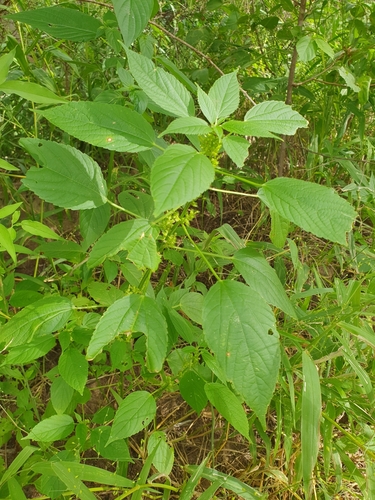
Mallotus discolor
F. Muell. ex Benth.
White kamala, Yellow kamala

(c) Rodney Falconer, some rights reserved (CC BY-NC), uploaded by Rodney Falconer

(c) Geoffrey Sinclair, some rights reserved (CC BY-NC)
What to Eat
Edible parts: Fruit
The fruit is eaten.
Where to Find It
It is a tropical plant. It grows in well-drained soils. It is best in full sun and can be in coastal rainforest.
Moist and dry rainforest on the coast and coastal ranges of Eastern Australia.
How to Identify
A shrub or small tree. It grows 15 m high. They bark is smooth and grey. The leaves are oval and 10 cm long. They are dark green above and whitish underneath. The flowers are small and grey. They are in sprays 10 cm across. The male and female flowers are separate. The fruit are small and bright yellow. They are in segments and fleshy.
How to Grow
Plants can be grown by seed or cuttings. The seed are washed in warm, soapy water then sown fresh. Seed can be very slow to germinate. Cuttings of tips or softwood can be used.
Propagation: Seed - germination rates, even of fresh seed, can be poor.
Other Uses
A bright yellow dye is obtained from the powdered seed capsules. Yellow powdery glands cover the fruit surface and also dot the pale, downy underside of the long-stalked leaves. They are the source of a golden dye.
Wikipedia
Source ↗Mallotus discolor is an Australian rainforest tree in the spurge family. It is known as the yellow kamala, due to the yellowish orange fruit covering, which produces a yellow dye.
Names & Synonyms
References (2)
- Anon., 2003, Native Plants for the Fitzroy basin. Society for Growing Australian Plants Inc. (Rockhampton Branch) p 64
- Melzer, R. & Plumb, J., 2011, Plants of Capricornia. Belgamba, Rockhampton. p 128