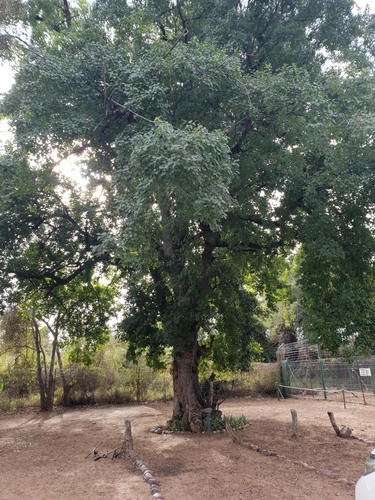
Ceanothus integerrimus
Hook. & Arn.
Deer brush
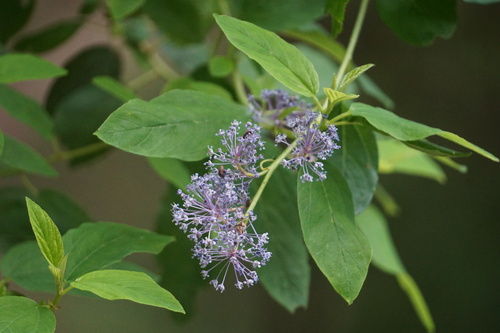
(c) terrydad2, some rights reserved (CC BY-NC), uploaded by terrydad2
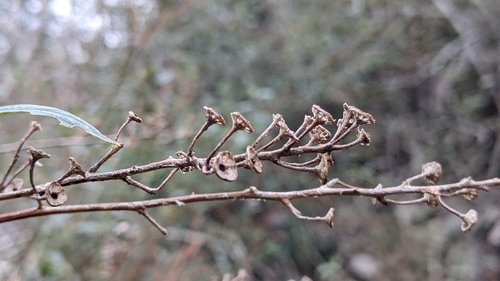
(c) velodrome, some rights reserved (CC BY)
What to Eat
Edible parts: Seeds
Edibility Summary: Parts used historically include immature fruits and seeds as mush and leaves/flowers as tea. All are extremely high in saponins and have soapy, bitter flavours; any caloric contribution is small and comes with potential GI risk. Deerbrush should be treated as “technically edible, practically unsuitable,” and approached, if at all, with great caution and in tiny trial quantities.Seed - raw or cooked. Used as piñole. As with Fendler’s ceanothus, ethnobotanical notes report immature fruits and seeds being cooked into mush. However, a high saponin content, a strongly soapy taste, and the absence of any sweet or pleasant flavour make this a very low-value wild food. Leaves may be brewed into a tea with a green, somewhat soapy character. Overall, deerbrush’s edible rating is poor; its primary significance for people lies in non-food uses and ecological services. Taste, Processing & Kitchen Notes: Immature deerbrush fruits taste acrid, bitter, and strongly soapy, closely matching the description you already have for C. fendleri; processing them into mush by boiling does little to remove the underlying detergent-like character. The mouthfeel is slightly fleshy at first, but dries quickly as astringency and saponins interact with mucous membranes. Leaf and flower teas are aromatic and “green” but can easily cross into shampoo-like flavours when brewed strongly. Traditional or experimental use should restrict them to very dilute infusions; even then, they are closer to herbal medicine than to a pleasant drink. Seasonality (Phenology): Deerbrush is leafless in winter, leafs out in spring, and flowers from roughly May to July, depending on elevation and latitude, with some variation into August in cooler, higher sites. Immature capsules are present through early to mid-summer and harden and dry by late summer to early autumn. Leaves may persist into autumn before dropping; in mild coastal climates, they may hold longer. Safety & Cautions (Food Use): Immature fruits and leaves share the same saponin-rich chemistry as other Ceanothus species and should be treated with caution. Regular or large-quantity consumption is not advised due to potential gastrointestinal irritation and other saponin-related effects. As with Fendler’s ceanothus, any experimentation should be limited to very small samples, and pregnant people, children and anyone with GI or renal vulnerabilities should avoid using deerbrush as food. Harvest & Processing Workflow: Historically, if fruits were used, they would have been gathered in their immature but fleshy stage and cooked thoroughly, often with other ingredients, to soften tissue and at least partially leach saponins. Modern foragers, if experimenting, might double- or triple-boil, discarding cooking water between boils. For tea, small quantities of leaves and flowers can be steeped briefly, then diluted. In all cases, the actual caloric or nutritional return is minimal compared with the effort. Look-Alikes & Confusion Risks: Deerbrush can be confused with other shrubby ceanothus, particularly white-flowered species, or with some Rhamnus and other small-leaved shrubs at a glance. Closer inspection of flower structure, capsule form and leaf arrangement usually resolves the identity. From a food perspective, misidentification among Ceanothus species mainly shuffles you between equally dubious wild foods; misidentification with buckthorns or other toxic shrubs would be more problematic, reinforcing the advice not to pursue Ceanothus fruits as edibles. Traditional/Indigenous Use Summary: Ethnobotanical sources for California and the interior West indicate that immature deerbrush fruits and seeds were occasionally boiled into mush, likely as a minor backup resource when better seeds were scarce. The shrub also provided browse for game animals and may have had medicinal or cleansing uses associated with its saponin-rich flowers and leaves. However, its overall importance as a staple food appears low, and it was not comparable in value to acorns, pinole seeds or other major native plant foods.
Known Hazards
Where to Find It
It suits hardiness zones 7-9.
Australia, North America, USA,
How to Identify
A large shrub. It grows 0.9-2 m high and spreads 0.9-2 m wide. It has dull green leaves. The flowers are pale blue.
How to Grow
Deerbrush is a key native shrub of western chaparral and forest edges: floriferous, attractive, wildlife-friendly and soil-improving. It plays a central role in post-fire succession and provides nectar, browse and cover across a wide elevational range. Its edible credentials are almost entirely theoretical and overshadowed by serious taste and chemistry drawbacks. For land managers and gardeners, it is a valuable restoration and habitat plant; for foragers, it is more a plant-study interest than a practical food source. Deerbrush thrives in full sun to light shade in well-drained soils, commonly on dry slopes, canyon sides, and forest edges. It tolerates a wide range of soil pH, from slightly acidic to slightly alkaline, and often occurs on granitic, volcanic, or metamorphic substrates. It is particularly abundant in post-fire chaparral and open conifer forests where it can quickly dominate the shrub layer. As a native shrub from California north to Oregon and east into the interior West, it is hardy roughly in USDA zones 5–9, tolerating winter cold in the interior while doing well in mild Mediterranean climates. Prefers a warm sunny position but tolerates light shade. Tolerates some lime, but will not succeed on shallow chalk. Requires a well-drained soil. This species is hardy to about -10°c according to some reports, whilst another says that it requires a sheltered position or the protection of a wall when grown outdoors in Britain. Plants dislike root disturbance; they should be planted out into their permanent positions whilst still small. Dislikes heavy pruning; it is best not to cut out any wood thicker than a pencil. Any pruning is best carried out in the spring. Fast growing but short-lived, it flowers well when young, often in its second year from seed. Hybridizes freely with other members of this genus. Some members of this genus have a symbiotic relationship with certain soil micro-organisms, which form nodules on the roots of the plants and fix atmospheric nitrogen. The growing plant utilizes some of this nitrogen, but some can also be used by nearby plants. Deerbrush is a tall, airy, deciduous ceanothus of lower to mid-elevation forests and chaparral from California into the interior West. It bears showy clouds of white to pale blue flowers and small three-lobed capsules whose immature stages have been used as mush, though their soapy, saponin-rich character makes them a last-resort food at best. Much like Fendler’s ceanothus, deerbrush is ecologically and horticulturally valuable – especially for pollinators, soil improvement, and deer browse – but nutritionally minor and not recommended for regular human consumption. Habitat & Range: Deerbrush is distributed from California (Sierra Nevada, Coast Ranges, Cascade foothills) north to Oregon and eastward into Nevada, Utah and as far as New Mexico in suitable habitats. It prefers mid-elevation chaparral, mixed conifer forests and forest edges, often 600–2,400 m above sea level, and is strongly associated with fire-prone landscapes where it colonises after burns. Size & Landscape Performance: In the landscape, deerbrush typically grows 1.5–3 m tall and 1.5–3 m wide, forming airy, arching masses. Its growth rate is moderately fast once established, especially after disturbance such as fire or soil scarification. In garden settings with an appropriate climate, it can be an attractive, lightly structured shrub for naturalistic plantings, hedgerows, and restoration projects, providing seasonal floral displays and wildlife benefits with relatively low input. Cultivation (Horticulture): Where available in native plant nurseries, deerbrush should be given full sun to light shade and relatively lean, well-drained soils. It is drought-tolerant once established and generally dislikes heavy fertilisation or frequent summer irrigation, which can predispose it to root problems. It pairs well with dryland conifers, oaks, and other chaparral species in designed plantings. Pruning is best limited to light thinning and removal of dead wood; heavy renovation pruning into old wood may be risky. Pests & Problems: Deerbrush is typically robust in native habitats. Potential issues in cultivation include root rot in poorly drained soils and occasional insect herbivory or browsing pressure. It is not generally prone to devastating insect or fungal epidemics. Cultivar/Selection Notes: Deerbrush is not as widely used in ornamental horticulture as some coastal ceanothus, and there are few, if any, named cultivars in general use. For restoration projects, local ecotypes or seed mixes are standard. In gardens, it is chosen more for ecological and aesthetic compatibility with native plantings than for unique cultivar traits. Overall Plant Summary: Deerbrush is a key native shrub of western chaparral and forest edges: floriferous, attractive, wildlife-friendly, and soil-improving. It plays a central role in post-fire succession and provides nectar, browse, and cover across a wide elevational range. Its edible credentials are almost entirely theoretical and overshadowed by serious taste and chemistry drawbacks. For land managers and gardeners, it is a valuable restoration and habitat plant; for foragers, it is more of a plant-study interest than a practical food source.
Propagation: Sow seed as soon as it is ripe in a cold frame. Stored seed should be pre-soaked for 12 hours in warm water, then given 1–3 months of stratification at 1°C; germination usually takes 1–2 months at 20°C. One method recommends boiling water treatment, or heating seed in 4 times its volume of sand at 90–120°C for 4–5 minutes, followed by a 12-hour soak in warm water; after this treatment, a chilling period below 5°C for up to 84 days may be needed before germination occurs. Seed is long-lived — stored for 15 years in an airtight dry container at 1–5°C, it shows little drop in viability. Seed is ejected forcefully from the capsule at ripeness, so collect it just before dehiscence or it becomes hard to extract and rarely germinates well. Prick seedlings into individual pots as soon as they are large enough to handle and grow on under glass for at least their first winter before planting out in late spring or early summer. Half-ripe cuttings taken at a node can be struck in a frame in July or August. Mature wood cuttings from the current year's growth, 7–12 cm with a heel, can be taken in October in a cold frame. The roots are brittle — pot up callused cuttings in spring just before the roots break. Success rates are generally good.
Medicinal Uses
Some Native North American tribes used the plant to treat women who had suffered injury in childbirth.
Other Uses
A green dye is obtained from the flowers. Young, flexible shoots can be used as the circular withes in basket making. All parts of the plant are rich in saponins — when crushed and mixed with water they produce a good lather that makes an effective and gentle soap. It removes dirt well but does not lift oils, so it leaves natural skin oils intact while being unable to remove engine oil or similar substances. The flowers are a particularly good source and leave a pleasant scent on skin after use. The developing seed cases are also a very good source of saponins.
Wikipedia
Source ↗Ceanothus integerrimus, known by the common name deer brush, is a species of woody shrub in the family Rhamnaceae, native to the western United States in Arizona, New Mexico, California, Oregon, and Washington. It grows in montane chaparral and woodlands regions, in hardwood forests, and in fir, spruce, and Ponderosa pine plant communities, being most abundant in the California chaparral and woodlands and Sierra Nevada.
Notes
There are about 55 Ceanothus species.
Names & Synonyms
Deerbrush
References (5)
- Beckstrom-Sternberg, Stephen M., and James A. Duke. "The Foodplant Database." http://probe.nalusda.gov:8300/cgi-bin/browse/foodplantdb.(ACEDB version 4.0 - data version July 1994)
- Bot. Beechey Voy. 329. 1838
- Cundall, P., (ed.), 2004, Gardening Australia: flora: the gardener's bible. ABC Books. p 347
- Plants for a Future database, The Field, Penpol, Lostwithiel, Cornwall, PL22 0NG, UK. http://www.scs.leeds.ac.uk/pfaf/
- Tozer, F., 2007, The Uses of Wild Plants. Green Man Publishing. p 59