Celastrus flagellaris
Rupr.
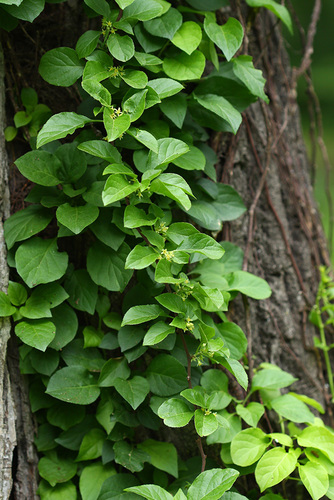
(с) V.S. Volkotrub, некоторые права защищены (CC BY-NC), загрузил V.S. Volkotrub

(с) V.S. Volkotrub, некоторые права защищены (CC BY-NC), загрузил V.S. Volkotrub

(c) onidiras-iNaturalist, some rights reserved (CC BY-NC)
What to Eat
Edible parts: Leaves
Young leaves are eaten cooked.
Where to Find It
It is a temperate plant. It grows on riversides and sunny slopes.
Asia, Britain, China, Europe, Japan, Korea, Russia,
How to Identify
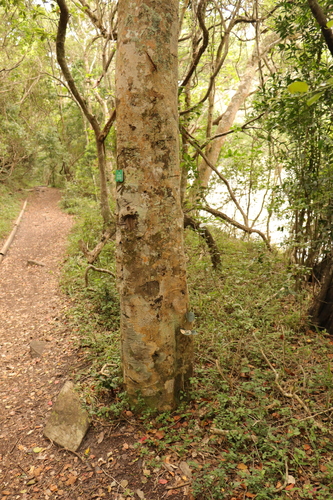
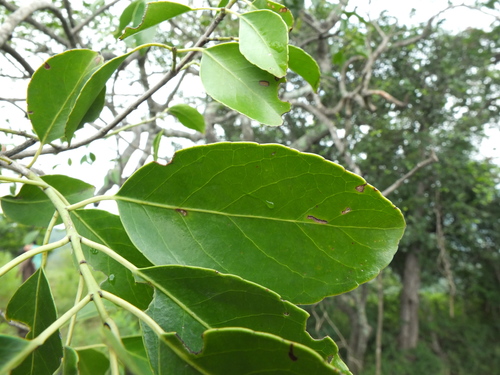
A twining shrub. It loses its leaves during the year. The leaves are broadly oval and 3-6 cm long by 2-5 cm wide. The base is narrowly wedge shaped. There are teeth along the edge usually with small spines. There are 1-5 flowers together in the axils of leaves. The fruit is a capsule 2-8 mm long.
How to Grow
Prefers a deep loamy soil. A gross feeder, it requires a rich soil. A rampant climber, it requires ample space and is best grown into an old tree. Fruits best when its top growth is in a sunny position. Plants climb by means of twining and by hooked prickles. They do not normally require pruning. Plants in this genus are notably resistant to honey fungus. Dioecious, male and female plants must be grown if seed is required.
Propagation: Gather seed when ripe, store in dry sand, and sow in February in a warm greenhouse. Three months of cold stratification improves germination rates. Remove the aril before sowing as it inhibits germination. Germination rates are generally good. Prick seedlings into individual pots when large enough to handle and grow on in a greenhouse through at least their first winter. Plant out in late spring or early summer after the last expected frosts. Layering can be done in August using the current season's growth and takes 12 months. Root cuttings 6mm thick and 25mm long, taken in December, should be planted horizontally in pots in a frame.
Medicinal Uses
Many plants in this genus contain compounds of interest for their antitumour activity.
Other Uses
None known.
Wikipedia
A deciduous climbing vine reaching 7.5m at a fast growth rate, hardy to UK zone 4. It flowers in June with seeds ripening in October. The species is dioecious, requiring both male and female plants for seed production, and is pollinated by bees. It grows in light woodland or open conditions across sandy, loamy, or clay soils with mildly acid to mildly alkaline pH, preferring moist soil.
Notes
There are about 30 Celastrus species.
References (2)
- Bull. Cl. Phys.-Math. Acad. Imp. Sci. Saint-Petersbourg 15:357. 1857
- Plants for a Future database, The Field, Penpol, Lostwithiel, Cornwall, PL22 0NG, UK. http://www.scs.leeds.ac.uk/pfaf/