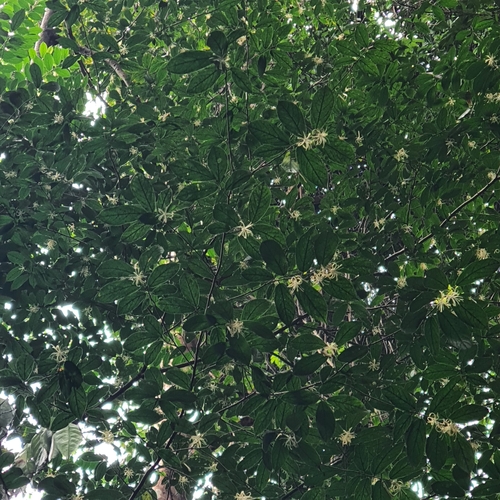
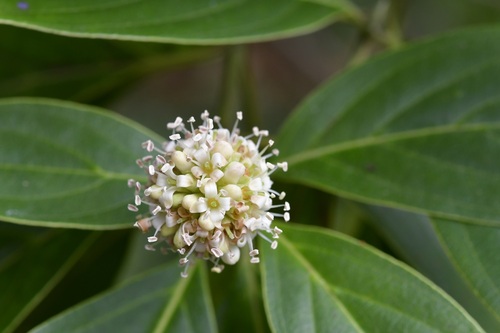
Cornus disciflora
Monico & Sesse ex DC.
Iloro
CornaceaeFruit
iNaturalist · cc-by
(c) Neptalí Ramírez Marcial, some rights reserved (CC BY), uploaded by Neptalí Ramírez Marcial
(c) Neptalí Ramírez Marcial, some rights reserved (CC BY), uploaded by Neptalí Ramírez Marcial

iNaturalist · cc-by
(c) Neptalí Ramírez Marcial, some rights reserved (CC BY), uploaded by Neptalí Ramírez Marcial
(c) Neptalí Ramírez Marcial, some rights reserved (CC BY), uploaded by Neptalí Ramírez Marcial

iNaturalist · cc-by-nc
(c) alex monro, some rights reserved (CC BY-NC)
(c) alex monro, some rights reserved (CC BY-NC)
What to Eat
Edible parts: Fruit
The fruit are eaten.
Where to Find It
It is a tropical plant. It grows in the high altitude cloud forest in Costa Rica.
Central America, Costa Rica*, Mexico, Panama,
Countries: Belize, Costa Rica, Guatemala, Honduras, Mexico, Nicaragua, Panama, El Salvador
How to Identify
A tree. It can grow 5-23 m tall. The trunk is 40 cm across. The branches have nodes along them. The leaves are opposite and 6-15 cm long by 2-6 cm wide. The fruit are deep red to purplish black. They are 10 mm long by 7 mm wide.
Wikipedia
Source ↗Cornus disciflora is a species of flowering plant native to Mexico and Central America.
Names & Synonyms
Acietuno, Guardalagua, Limoncillo
Benthamia disciflora (DC.) T. NakaiCornus capitata Sesse & Moc.and several others
References (2)
- Kapelle, M., et al, 2000, Useful plants within a Campesino Community in a Costa Rican Montane Cloud Forest. Mountain Research and Development, 20(2): 162-171.
- Segura, S., et al, 2018, The edible fruit species in Mexico. Genet Resour Crop Evol (2018) 65:1767–1793