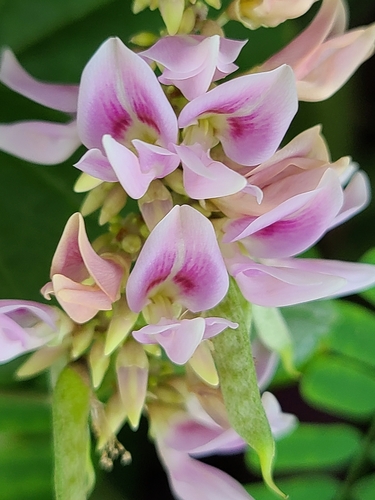
Acacia baileyana
F. Muell.
Cootamundra wattle

(c) zebsphotography, some rights reserved (CC BY-NC)
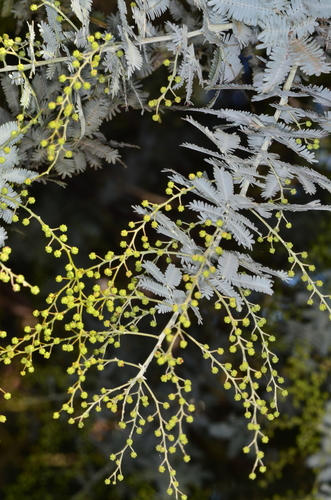
(c) Chris Lindorff, some rights reserved (CC BY-NC), uploaded by Chris Lindorff
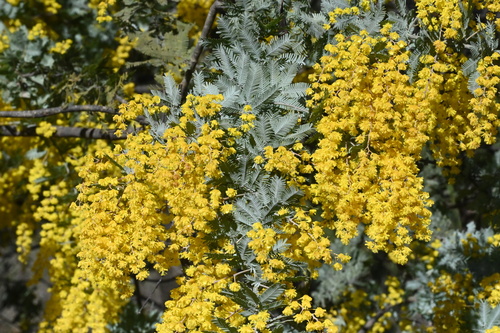
(c) Alex Martine, some rights reserved (CC BY-NC), uploaded by Alex Martine
What to Eat
Edible parts: Seed
Acacia baileyana is used in Europe in the cut flower industry. It is also used as food for bees in the production of honey. American urban landscape designer Renée Gunter uses this plant in her South Los Angeles lawn as a drought-resistant alternative to thirstier plants.
Where to Find It
It is a temperate plant. It can tolerate forests. Arboretum Tasmania.
Australia*, St Helena, Tasmania,
How to Identify
A shrub or small tree. It grows 5 m tall. There are prickles along the stem. The leaves are twice divided and there are 8-18 pairs of pinnae. There are up to 50 pairs of pinnules on each pinnae. The flowers are yellow. They are in large clusters at the ends of branches. The pods are flattened.
How to Grow
Plants can be grown from seed. Seeds should be soaked in boiling water. It can be grown by cuttings.
Wikipedia
Source ↗Acacia baileyana, commonly known as Cootamundra wattle, Bailey's wattle or golden mimosa, is a species of flowering plant in the family Fabaceae and is endemic to a restricted area of New South Wales, although it has become naturalised in other parts of Australia. It is a shrub or tree with smooth bark, bipinnate leaves with mostly two to four pairs of oblong to narrowly oblong leaflets, spherical heads of bright yellow flowers arranged in 8 to 36 racemes in leaf axils, and straight, leathery pods up to 100 mm (3.9 in) long.
Notes
Also as Mimosaceae.
Names & Synonyms
References (2)
- Lambdon, P.. 2013, Flowering Plants and Ferns of St Helena. St Helena Nature Conservation Group.
- Greg Steenbeeke as part of the Plants Directory project. List of plant species from northern NSW that may be used as food plants p 1