Capparis sicula
Duhamel
Sicili caper
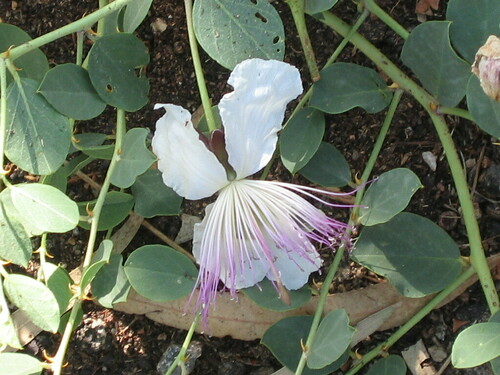
(c) zebedeugalinha, some rights reserved (CC BY)
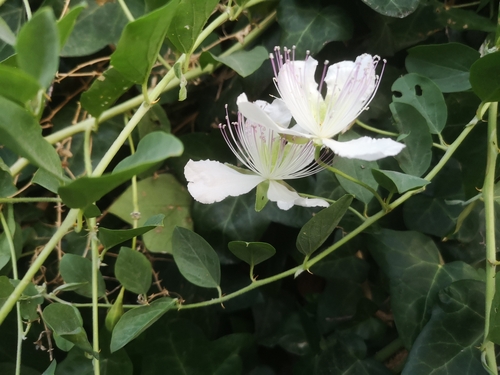
(c) Isa Klee, some rights reserved (CC BY-NC)
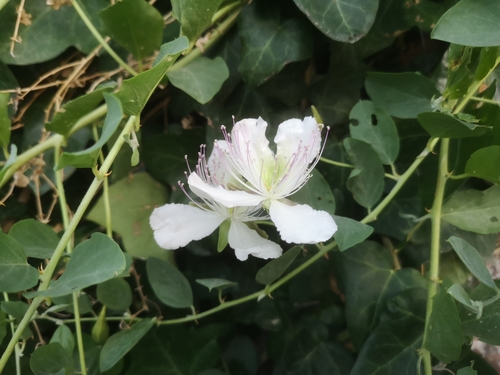
(c) Isa Klee, some rights reserved (CC BY-NC)
What to Eat
Edible parts: Fruit, Flower buds - spice
The salted and pickled caper bud (simply called a "caper") is used as an ingredient, seasoning, or garnish. Capers are a common ingredient in Mediterranean cuisine, especially Cypriot, Italian, Aeolian Greek, and Maltese food. The immature fruit of the caper shrub are prepared similarly and marketed as "caper berries". Fully mature fruit are not preferred, as they contain many hard seeds. The buds, when ready to pick, are a dark olive green and range in size from under 7 mm (1⁄4 in) to more than 14 mm (1⁄2 in). Once the capers are picked, they are pickled in salt or a salt and vinegar solution, and drained. Intense flavour, sometimes described as being similar to black pepper or mustard, is developed as glucocapparin, a glycoside organosulfur molecule, is released from each caper bud. This enzymatic reaction leads to the formation of rutin, often seen as crystallized white spots on the surfaces of individual caper buds. Capers are a distinctive ingredient in Italian cuisine, especially in Sicilian, Aeolian and southern Italian cooking. They are commonly used in salads, pasta salads, meat dishes, and pasta sauces. Examples of uses in Italian cuisine are piccata dishes, vitello tonnato and spaghetti alla puttanesca. In Campania, the best capers are believed to grow on Pantelleria, an island off the region's coast. Capers are sometimes an ingredient in tartar sauce. They are often served with cold smoked salmon or cured salmon dishes, especially lox and cream cheese. Capers and caper berries are sometimes substituted for olives to garnish a martini. Capers are categorized and sold by their size, defined as follows, with the smallest sizes being the most desirable: non-pareil (up to 7 mm), surfines (7–8 mm), capucines (8–9 mm), capotes (9–11 mm), fines (11–13 mm), and grusas (14+ mm). If the caper bud is not picked, it flowers and produces a caper berry. The fruit can be pickled and then served as a Greek mezze. Caper leaves, which are hard to find outside of Greece or Cyprus, are used particularly in salads and fish dishes. They are pickled or boiled and preserved in jars with brine—like caper buds. Dried caper leaves are also used as a substitute for rennet in manufacturing high-quality cheese.
Where to Find It
It is a Mediterranean climate plant.
Africa, Europe, Israel, Italy, Mediterranean, Middle East, Morocco, North Africa, Sicily, Spain, Turkey, Türkiye,
How to Identify
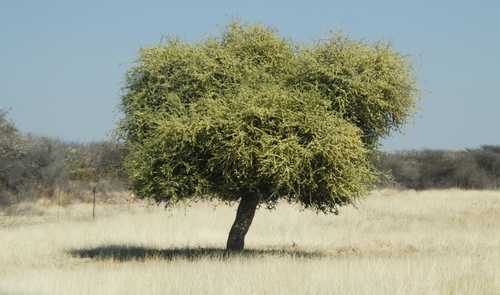
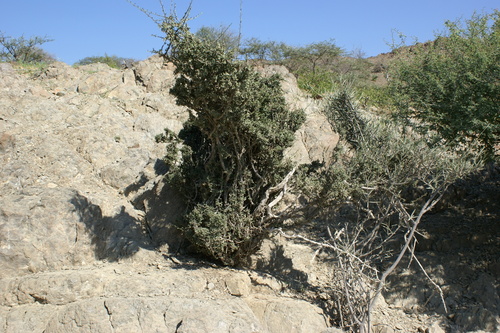
A Mediterranean shrub in the Capparaceae family that is cultivated as a food plant.
Other Information
It is a cultivated food plant.
Names & Synonyms
Berik, Delikarpuzu, Inok, Kebere, Kember, Kemberok, Welleh
References (7)
- Demir, I. & Ayaz, N., 2022, Wild edible plants contributing to the traditional foods of Mardin (Turkey) Province. Indian Journal of Traditional Knowledge Vol 21(3), July 2022, pp 569-582
- Ertug, F, Yenen Bitkiler. Resimli Türkiye Florası -I- Flora of Turkey - Ethnobotany supplement
- Pasta, S., et al, 2020, An Updated Checklist of the Sicilian Native Edible Plants: Preserving the Traditional Ecological Knowledge of Century-Old Agro-Pastoral Landscapes. Frontiers in Plant Science. Volume 11|Article 388
- Rivera, 2003, Economic Botany, 57, 515
- Seidemann J., 2005, World Spice Plants. Economic Usage, Botany, Taxonomy. Springer. p 80
- Yesil, Y., et al, 2019, Wild edible plants in Yeşilli (Mardin-Turkey), a multicultural area. Journal of Ethnobiology and Ethnomedicine (2019) 15:52
- Yesil, Y., et al, 2019, Traditional knowledge of wild edible plants in Hasankeyf (Batman Province, Turkey). Acta Societatis Botanicorum Poloniae. 88(3):3633