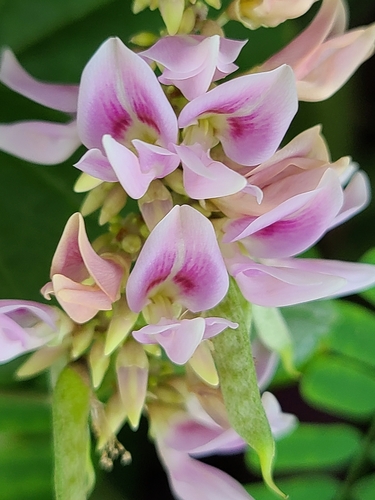
Dipteryx punctata
(S. F. Blake) Amshoff
Pointed tonka

(c) Guillaume Léotard, some rights reserved (CC BY-NC), uploaded by Guillaume Léotard
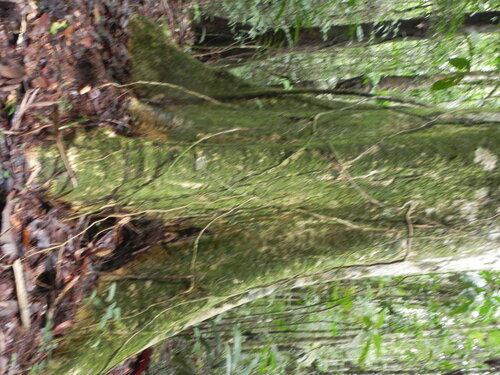
(c) anonyme973, some rights reserved (CC BY-NC-SA)
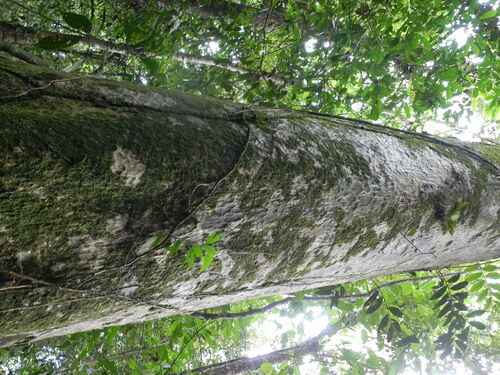
(c) anonyme973, some rights reserved (CC BY-NC-SA)
What to Eat
Edible parts: Seeds - spice, Fruit
A coumarin-like flavouring can be extracted from the seed through a process of fermentation. It has been used commercially as a vanilla substitute in flavouring a wide range of foods including baked goods, ice cream, cocoa etc. Its use is banned in some countries because of the possibility that coumarins can cause health problems - see notes above on toxicity. The seed pods are 5 - 6cm long and about 3cm in diameter.
Known Hazards
Where to Find It
It is a tropical plant.
Amazon, Brazil, Caribbean, Columbia, French Guiana, Guianas, Peru, South America, Suriname, Venezuela,
How to Identify
A tropical tree in the legume family (Fabaceae) that produces seeds and fruit used as spice.
How to Grow
Propagation: Seed - viability is generally restricted to a period of 9 - 10 days. Without pre-treatment, germination takes 12 - 20 days and is 80 - 90%. The fruits should be placed on a germination bank or in sand with the peduncle up, taking care that they are half-covered by the medium. Sometimes fruits are planted directly in plastic bags. After 3 - 4 months in the nursery, seedlings can be outplanted. Even though the seeds could be recalcitrant, they can endure a certain degree of dryness. The dry fruits can be stored in moist sawdust for at least 3 months and some seeds will germinate. When pseudocuttings are used for reproduction, they must remain in the nursery for at least 6 months.
Medicinal Uses
A decoction of the trunk-bark is used as an external wash for relieving fevers. The bark is mixed in a decoction with the crushed whole plant of Tonina fluviatilis as an infant fortifier. The seed is mixed with rum to make an alcoholic extract that is rubbed on snakebites, contusions and rheumatic joints.
Other Uses
Coumarin, obtained from the seeds, is added to perfumes as a fixative. It is also an aromatic ingredient in tobaccos and snuffs. After the seeds have been soaked for several days in strong rum or alcohol (45 - 65%) and then dried they become pliable, show a heavy crystalline coumarin deposit on the testa and have an odour of new-mown hay. These cured beans contain about 8% water, 2 - 3% coumarin and 25% of tonka butter. The bean or its extract is used to perfume and flavour food, tobacco, soap and liqueurs. It is also used as a substitute for vanilla and as a fixing agent for dyes and perfumes. Traditionally, the grated seeds are mixed with vaseline and rubbed on the skin or hair as a perfume. The seeds are used in pot pourri. The aromatic seeds are used as beads in necklaces and waistbands. The sound of the beads clicking together add a musical dimension to the sounds of drum beats and the dancer’s stomping feet. A very durable wood, it is often used in building tradition housing in its native range. The tree provides a timber of high commercial value.
Names & Synonyms
Aumaru-amarelo, Charapilla, Orelha-de-macaco, Tonka, Saramaccan, Sarrapio, Sranan
References (4)
- Grandtner, M. M. & Chevrette, J., 2013, Dictionary of Trees, Volume 2: South America: Nomenclature, Taxonomy and Ecology. Academic Press p 206
- Lopez-Diago, D. & Garcia, N., 2021, Wild edible fruits of Colombia. Biota ColomBiana 22 (2) p 37
- Roa, J. A. G. & Boada, D. S. G., 2018, Fundación para el Fortalecimiento de la Fruticultura y Plantas Alimenticias no Convencionales en Colombia.
- Seidemann J., 2005, World Spice Plants. Economic Usage, Botany, Taxonomy. Springer. p 137