Manilkara dawei
(Stapf) Chiov.

Meise Botanic Garden

Royal Botanic Garden Edinburgh

Meise Botanic Garden
What to Eat
Edible parts: Fruit
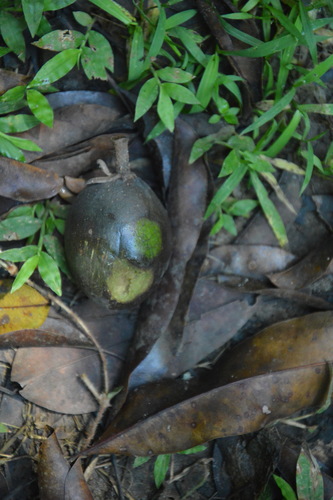
Fruit - raw. The pulp is eaten, but the seeds are rejected. Only eaten in small amounts, mainly by children. The fruit is a rounded berry, white powdery and hairy, the flesh containing about 9 seeds.
Where to Find It
It is a tropical plant. It grows in lowland forest. It Tanzania it grows between 1,100-1,600 m above sea level.
Africa, Central Africa, Central African Republic, CAR, Congo, East Africa, Tanzania, Uganda,
How to Identify
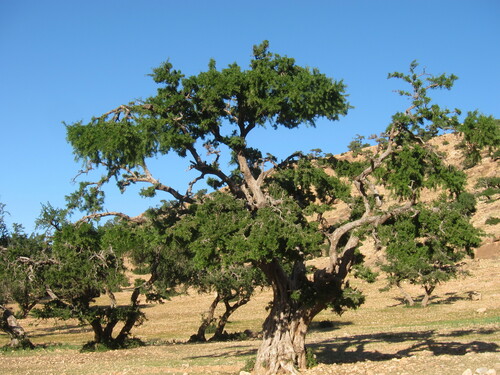
A medium sized forest tree. It grows 25 m tall. The trunk is fluted at the base. There is gum from the young shoots. The bark is brown and has grooves. The leaves are leathery. They are clustered at the ends of branches. They are 25 cm long and widest near the tip. They are dark green above and silvery white underneath. There are 18-22 clear veins on each side. The stalk is 4 cm long. The flowers occur in groups of 2-4. They are beside the leaves. They are small and white to green. The fruit is a rounded berry. It is white and powdery and hairy. The flesh contains about 9 seeds.
How to Grow
Plants can be grown by seeds.
Other Uses
The bark exudes a white latex when cut. The wood is used for timber, tool handles, carvings, poles, bedsteads, gunstocks and spoons. The wood is used for fuel and making charcoal. The tree provides good shade.
Production
Fruit are collected from October to December.
Other Information
The fruit are eaten especially by children.
Names & Synonyms
Mgambo
References (2)
- Ruffo, C. K., Birnie, A. & Tengnas, B., 2002, Edible Wild Plants of Tanzania. RELMA p 454
- World Checklist of Useful Plant Species 2020. Royal Botanic Gardens, Kew