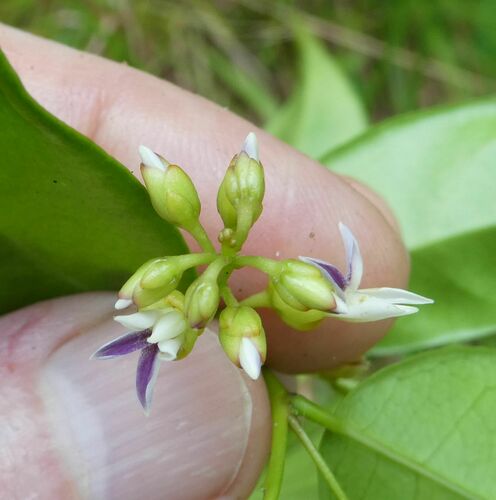
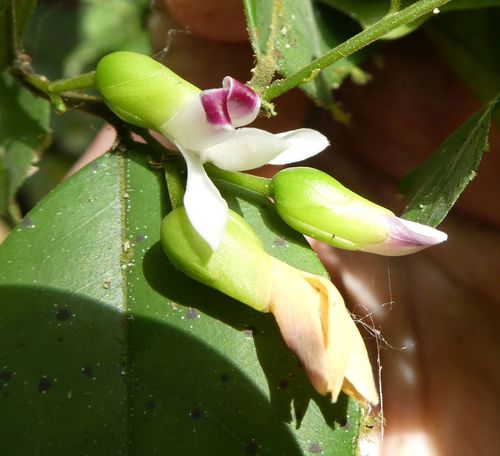
Xanthophyllum lanceatum
(Miq.) J. J. Sm.

Wikimedia Commons - Gardenology.org-IMG_7322_qsbg11mar.jpg

Wikimedia Commons - Raffi Kojian
What to Eat
Edible parts: Seeds - oil
The oil extracted from the seeds is used in food preparation.
Where to Find It
It is a tropical plant. It grows along streams and in swamps. It grows in lowland rainforests up to 500 m above sea level.
Asia, Bangladesh, Cambodia, Indochina, Indonesia, Laos, Malaysia, Myanmar, SE Asia, Thailand,
How to Identify
A shrub or small tree. It grows 3-12 m tall. The trunk can be 18-20 cm across.
Medicinal Uses
The leaves have been used as a hops-substitute in beer making. The wood is used as firewood. The bark is used in folk medicine to treat chickenpox. The extract from the fruit displayed excellent inhibitory activity against the plant-pathogenic fungus Magnaporthe grisea.
Other Uses
An oil obtained from the seed is used for making candles and soap.
Wikipedia
Source ↗Xanthophyllum lanceatum is a tree in the Polygalaceae family. It grows across Southeast Asia from Sumatera to Bangladesh. The leaves are used as a hops-substitute in beer making and the wood as fuel. Fish in the Mekong regularly eat the fruit, flowers and leaves.
Notes
Also put in the Xanthophyllaceae family.
Names & Synonyms
Kam-gaw, Lanthan, Thit-kayin, Thit-pyu, Thit-sagwe
References (3)
- Fern, K., 2012, Tropical Species Database http://theferns.info/tropical/
- Khumgratok, S., Edible Plants in Cultural Forests of Northeastern Thailand. Mahasarakham University Thailand.
- World Checklist of Useful Plant Species 2020. Royal Botanic Gardens, Kew