Begonia dryadis
Irmsch.
BegoniaceaeLeaves
iNaturalist · cc-by-nc
(c) 刘光裕 Liu Guangyu, some rights reserved (CC BY-NC), uploaded by 刘光裕 Liu Guangyu
(c) 刘光裕 Liu Guangyu, some rights reserved (CC BY-NC), uploaded by 刘光裕 Liu Guangyu

iNaturalist · cc-by-nc
(c) Patrick James, some rights reserved (CC BY-NC)
(c) Patrick James, some rights reserved (CC BY-NC)

iNaturalist · cc-by-nc
(c) Patrick James, some rights reserved (CC BY-NC)
(c) Patrick James, some rights reserved (CC BY-NC)
What to Eat
Edible parts: Leaves, Vegetable, Flavouring, Stalks
The leaves and stalks are eaten fresh or cooked and used as a flavouring.
Where to Find It
It is a tropical plant. It grows in the under storey of the forest by streams in valleys between 600-1,200 m above sea level. In Yunnan.
Asia, China,
Countries: United Arab Emirates, Afghanistan, Armenia, Azerbaijan, Bangladesh, Bahrain, Brunei, Bhutan, China, Georgia, Indonesia, Israel, India, Iraq, Iran, Jordan, Japan, Kyrgyzstan, Cambodia, North Korea, South Korea, Kuwait, Kazakhstan, Laos, Lebanon, Sri Lanka, Myanmar, Mongolia, Maldives, Malaysia, Nepal, Oman, Philippines, Pakistan, Qatar, Saudi Arabia, Singapore, Syria, Thailand, Tajikistan, Timor-Leste, Turkmenistan, Turkey, Taiwan, Uzbekistan, Vietnam, Yemen
How to Identify
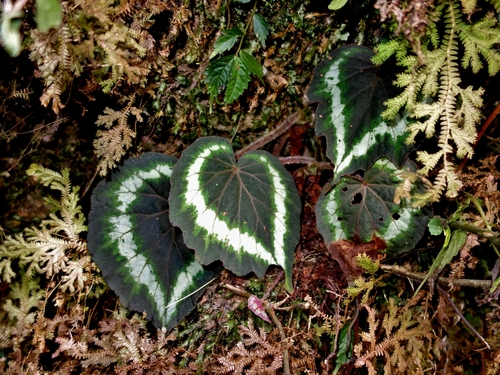
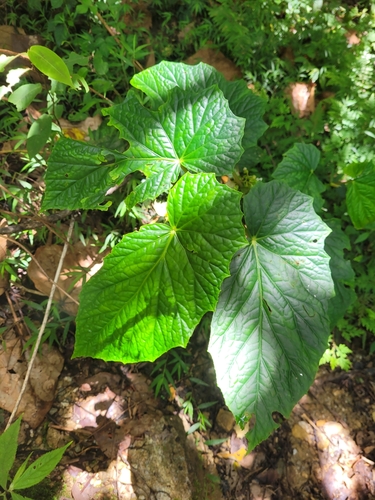
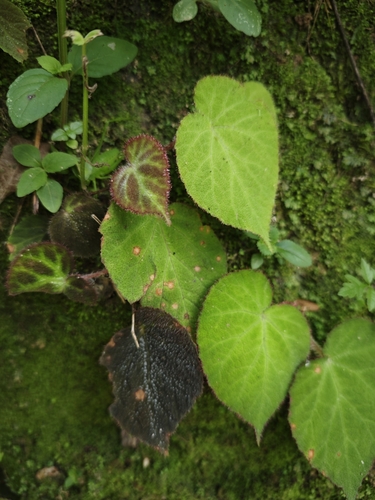
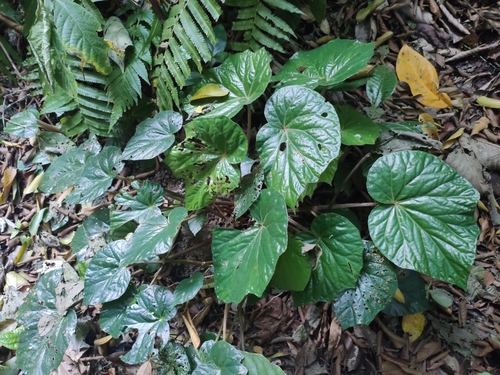
A herb. It has a short stout rhizome. The stems are erect and 60 cm tall. The leaf stalks are 18-42 cm long. The leaves are on the stem. They are oval and unequal of opposite sides. They are 9-30 cm long by 8-24 cm wide. They are hairy underneath.
Production
Leaves are available throughout the year.
Other Information
It is a cultivated food plant.
Names & Synonyms
Qieme
References (2)
- Ghorbani, A., et al, 2012, A comparison of the wild food plant use knowledge of ethnic minorities in Naban River Watershed Nature Reserve, Yunnan, SW China. Journal of Ethnobiology and Ethnomedicine; 8:17
- Xu, You-Kai, et al, 2004, Wild Vegetable Resources and Market Survey in Xishuangbanna, Southwest China. Economic Botany. 58(4): 647-667.