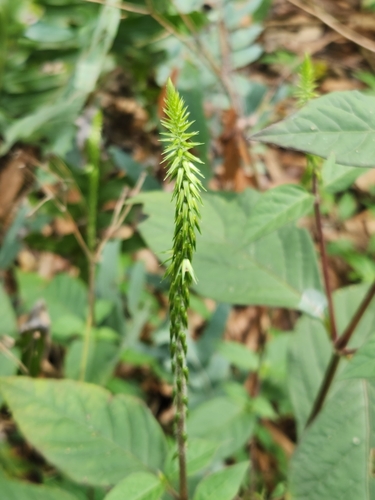
Chenopodium bryoniifolium
Bunge
AmaranthaceaeLeaves

iNaturalist · cc-by-nc
(c) V.S. Volkotrub, some rights reserved (CC BY-NC), uploaded by V.S. Volkotrub
(c) V.S. Volkotrub, some rights reserved (CC BY-NC), uploaded by V.S. Volkotrub

iNaturalist · cc-by-nc
(c) sergeyprokopenko, some rights reserved (CC BY-NC)
(c) sergeyprokopenko, some rights reserved (CC BY-NC)
What to Eat
Edible parts: Leaves, Vegetable
The leaves are cooked as a vegetable.
Where to Find It
It is a tropical plant. In Yunnan.
Asia, China, Japan, Korea, Russia, Siberia,
Countries: United Arab Emirates, Afghanistan, Armenia, Azerbaijan, Bangladesh, Bahrain, Brunei, Bhutan, China, Georgia, Indonesia, Israel, India, Iraq, Iran, Jordan, Japan, Kyrgyzstan, Cambodia, North Korea, South Korea, Kuwait, Kazakhstan, Laos, Lebanon, Sri Lanka, Myanmar, Mongolia, Maldives, Malaysia, Nepal, Oman, Philippines, Pakistan, Qatar, Russia, Saudi Arabia, Singapore, Syria, Thailand, Tajikistan, Timor-Leste, Turkmenistan, Turkey, Taiwan, Uzbekistan, Vietnam, Yemen
How to Identify
A herb. It grows 50-80 cm tall. The stem is erect and much branched. The lower leaves are oval or triangle shaped. The flowers are in slender spike like groups on the branches.
Notes
Also put in the family Chenopodiaceae.
Names & Synonyms
Pahoumuge
Chenopodium koraiense Nakai
References (3)
- Hwang, H., et al, 2013, A Study on the Flora of 15 Islands in the Western Sea of Jeollanamdo Province, Korea. Journal of Asia-Pacific Biodiversity Vol. 6, No. 2 281-310 (As Chenopodium koraiense)
- www.eFloras.org Flora of China
- Xu, You-Kai, et al, 2004, Wild Vegetable Resources and Market Survey in Xishuangbanna, Southwest China. Economic Botany. 58(4): 647-667.