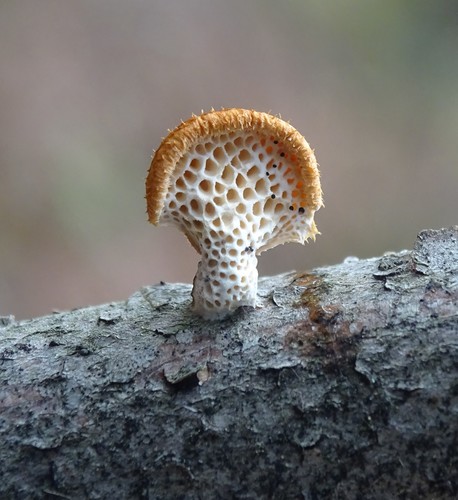
Favolus canadensis
Klotzsch
ThelephoraceaeMushrooms

gbif · cc0
University of Florida Herbarium - Fungi (FLAS-)
University of Florida Herbarium - Fungi (FLAS-)

gbif · cc0
Academy of Natural Sciences of Drexel University (PH)
Academy of Natural Sciences of Drexel University (PH)

gbif · cc-by-nc
University of Nebraska State Museum, C.E. Bessey Herbarium - Fungi (NEB-)
University of Nebraska State Museum, C.E. Bessey Herbarium - Fungi (NEB-)
What to Eat
Edible parts: Mushroom, Fungus
The mushroom fruiting body is edible.
Where to Find It
It is a subtropical plant.
Asia, Nepal,
Countries: United Arab Emirates, Afghanistan, Armenia, Azerbaijan, Bangladesh, Bahrain, Brunei, Bhutan, China, Georgia, Indonesia, Israel, India, Iraq, Iran, Jordan, Japan, Kyrgyzstan, Cambodia, North Korea, South Korea, Kuwait, Kazakhstan, Laos, Lebanon, Sri Lanka, Myanmar, Mongolia, Maldives, Malaysia, Nepal, Oman, Philippines, Pakistan, Qatar, Saudi Arabia, Singapore, Syria, Thailand, Tajikistan, Timor-Leste, Turkmenistan, Turkey, Taiwan, Uzbekistan, Vietnam, Yemen
How to Identify
A fungal mushroom in the family Thelephoraceae, found in subtropical regions.
Medicinal Uses
This mushroom is edible when young. It has been described as "edible but tough", with toughness increasing with age, and not having "all that distinctive of a flavor". Another reference lists the species as inedible. A polypeptide with antifungal properties has been isolated from the fresh fruit bodies of this species. Named alveolarin, it inhibits the growth of the species Botrytis cinerea, Fusarium oxysporum, Mycosphaerella arachidicola, and Physalospora piricola.
References (2)
- Adhikari, M. K., 2014, Addition and correction to the knowledge on edibility of wild mushrooms in Nepal: a discussion. Bul. Dept. Pl. Res. N. 36, Nepal p 4
- Dongol, et al, 1995, Edible Mushrooms in Nepal