Lactarius pallidus
Pers.
RussulaceaeMushrooms

iNaturalist · cc-by-nc
(c) Federico Calledda, some rights reserved (CC BY-NC), uploaded by Federico Calledda
(c) Federico Calledda, some rights reserved (CC BY-NC), uploaded by Federico Calledda

iNaturalist · cc-by-nc
(c) Marco Floriani, some rights reserved (CC BY-NC), uploaded by Marco Floriani
(c) Marco Floriani, some rights reserved (CC BY-NC), uploaded by Marco Floriani
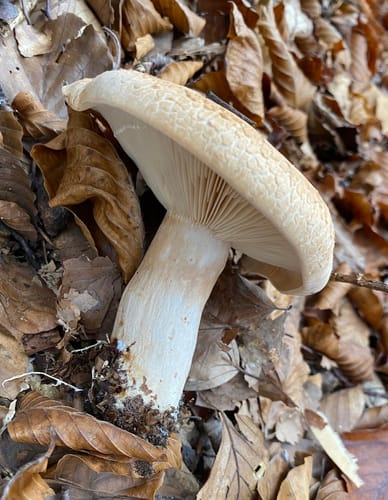
iNaturalist · cc-by-nc
(c) Filip Fuljer, some rights reserved (CC BY-NC)
(c) Filip Fuljer, some rights reserved (CC BY-NC)
What to Eat
Edible parts: Mushroom, Fungus
The mushroom fruiting body is edible.
Where to Find It
It is a tropical plant.
Africa, Central Africa, Congo,
Countries: Angola, Burkina Faso, Burundi, Benin, Botswana, Congo (DRC), Central African Republic, Congo (Republic), Cote d'Ivoire, Cameroon, Cape Verde, Djibouti, Algeria, Egypt, Eritrea, Ethiopia, Gabon, Ghana, Gambia, Guinea, Equatorial Guinea, Guinea-Bissau, Kenya, Comoros, Liberia, Lesotho, Libya, Morocco, Madagascar, Mali, Mauritania, Mauritius, Malawi, Mozambique, Namibia, Niger, Nigeria, Rwanda, Seychelles, Sudan, Sierra Leone, Senegal, Somalia, South Sudan, Sao Tome & Principe, Eswatini, Chad, Togo, Tunisia, Tanzania, Uganda, South Africa, Zambia, Zimbabwe
How to Identify
A tropical mushroom in the Russulaceae family.
Wikipedia
Source ↗Lactarius pallidus, the pale milkcap, is an edible mushroom of the genus Lactarius. It is pale in colour, and found on the floor in beech or birch woodland. It's smooth cap features a particularly thick layer of flesh and often has an incurved margin. Though generally considered edible, it is not recommended to be eaten raw. It is common in Europe, and less common in North America and Australasia.
References (1)
- Boa, E. R., Wild edible fungi and their importance to people. FAO Non Wood Forest Products Booklet 17 (Also as Lactarius pelliculatus f. pallidus)


