Pluteus leoninus
(Schaeff.) P. Kumm.
PluteaceaeMushrooms

iNaturalist · cc-by-nc
(c) Bojan Šeguljev, some rights reserved (CC BY-NC), uploaded by Bojan Šeguljev
(c) Bojan Šeguljev, some rights reserved (CC BY-NC), uploaded by Bojan Šeguljev
iNaturalist · cc-by-sa
(c) mycowalt, some rights reserved (CC BY-SA), uploaded by mycowalt
(c) mycowalt, some rights reserved (CC BY-SA), uploaded by mycowalt
iNaturalist · cc-by-nc
(c) Adam Boring, some rights reserved (CC BY-NC), uploaded by Adam Boring
(c) Adam Boring, some rights reserved (CC BY-NC), uploaded by Adam Boring
What to Eat
Edible parts: Mushroom, Fungus
The mushroom fruiting body is edible.
Where to Find It
It is a temperate plant.
Asia, China, Hong Kong,
Countries: United Arab Emirates, Afghanistan, Armenia, Azerbaijan, Bangladesh, Bahrain, Brunei, Bhutan, China, Georgia, Indonesia, Israel, India, Iraq, Iran, Jordan, Japan, Kyrgyzstan, Cambodia, North Korea, South Korea, Kuwait, Kazakhstan, Laos, Lebanon, Sri Lanka, Myanmar, Mongolia, Maldives, Malaysia, Nepal, Oman, Philippines, Pakistan, Qatar, Saudi Arabia, Singapore, Syria, Thailand, Tajikistan, Timor-Leste, Turkmenistan, Turkey, Taiwan, Uzbekistan, Vietnam, Yemen
How to Identify
A mushroom in the Pluteaceae family found in temperate regions.
Wikipedia
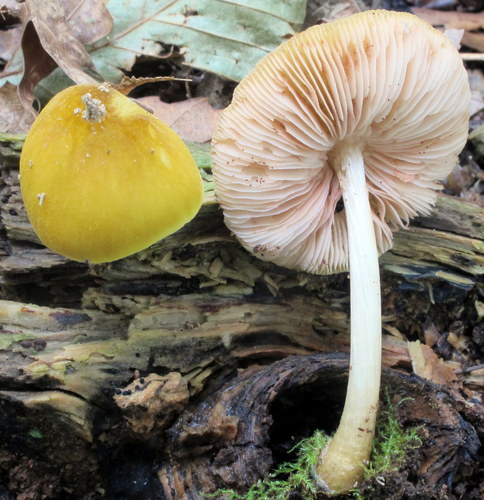
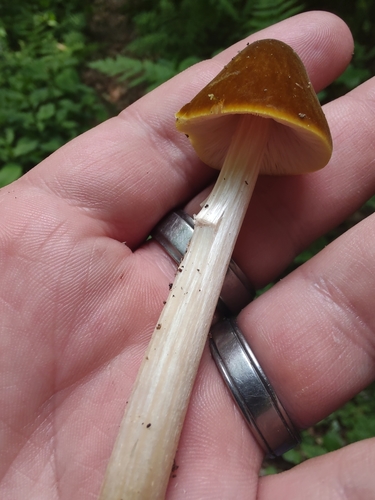
Source ↗Pluteus leoninus, commonly known as the lion pluteus or lion shield, can occasionally be found growing on dead wood in Europe and North Africa. The underside of the cap is typical of the genus Pluteus — the gills are pale, soon becoming pink when the spores ripen. But the upper surface is a bright tawny or olivaceous yellow. The species name leoninus (meaning leonine) refers to this cap colour.
References (1)
- Boa, E. R., Wild edible fungi and their importance to people. FAO Non Wood Forest Products Booklet 17


