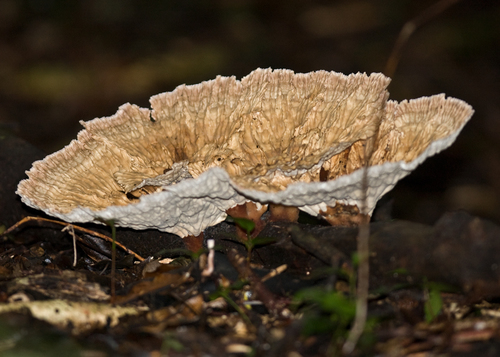
Lentinus araucariae
Har. & Pat.
PolyporaceaeMushrooms

gbif · cc-by
Royal Botanic Gardens, Kew
Royal Botanic Gardens, Kew

gbif · cc-by
Royal Botanic Gardens, Kew
Royal Botanic Gardens, Kew

gbif · cc-by
Royal Botanic Gardens, Kew
Royal Botanic Gardens, Kew
What to Eat
Edible parts: Mushroom, Fungus
The mushroom fungus is edible.
Where to Find It
It is a tropical plant.
Africa, Asia, Central Africa, Central African Republic, CAR, Indonesia, Papua New Guinea, PNG, SE Asia, West Papua,
Countries: United Arab Emirates, Afghanistan, Armenia, Angola, Azerbaijan, Bangladesh, Burkina Faso, Bahrain, Burundi, Benin, Brunei, Bhutan, Botswana, Congo (DRC), Central African Republic, Congo (Republic), Cote d'Ivoire, Cameroon, China, Cape Verde, Djibouti, Algeria, Egypt, Eritrea, Ethiopia, Gabon, Georgia, Ghana, Gambia, Guinea, Equatorial Guinea, Guinea-Bissau, Indonesia, Israel, India, Iraq, Iran, Jordan, Japan, Kenya, Kyrgyzstan, Cambodia, Comoros, North Korea, South Korea, Kuwait, Kazakhstan, Laos, Lebanon, Sri Lanka, Liberia, Lesotho, Libya, Morocco, Madagascar, Mali, Myanmar, Mongolia, Mauritania, Mauritius, Maldives, Malawi, Malaysia, Mozambique, Namibia, Niger, Nigeria, Nepal, Oman, Papua New Guinea, Philippines, Pakistan, Qatar, Rwanda, Saudi Arabia, Seychelles, Sudan, Singapore, Sierra Leone, Senegal, Somalia, South Sudan, Sao Tome & Principe, Syria, Eswatini, Chad, Togo, Thailand, Tajikistan, Timor-Leste, Turkmenistan, Tunisia, Turkey, Taiwan, Tanzania, Uganda, Uzbekistan, Vietnam, Yemen, South Africa, Zambia, Zimbabwe
How to Identify
Lentinus araucariae is a tropical mushroom in the family Polyporaceae, also classified in Agaricaceae and Tricholomataceae.
Notes
Also put in the families Agaricaceae and Tricholomataceae.
Names & Synonyms
Aelgit, Gilprat
References (3)
- Boa, E. R., 2004, Wild edible fungi and their importance to people. FAO Non Wood Forest Products Booklet 17
- Milliken, W., Ethnobotany of the Yali of West Papua. Royal Botanical Garden, Edinburgh. p 10 (near Baliem)
- Sillitoe, P. 1995, An Ethnobotanical Account of the Plant Resources of the Wola Region, Southern Highlands Province, Papua New Guinea. J. Ethnobiol. 15(2): 201-235