Agaricus abruptibulbus
Peck
AgaricaceaeMushrooms
iNaturalist · cc-by-nc
(c) Mycoprof, some rights reserved (CC BY-NC), uploaded by Mycoprof
(c) Mycoprof, some rights reserved (CC BY-NC), uploaded by Mycoprof

iNaturalist · cc-by-nc
(c) corndog, some rights reserved (CC BY-NC)
(c) corndog, some rights reserved (CC BY-NC)

iNaturalist · cc-by-nc
(c) Catherine Williamson, some rights reserved (CC BY-NC)
(c) Catherine Williamson, some rights reserved (CC BY-NC)
What to Eat
Edible parts: Mushroom, Fungus
Where to Find It
It is a temperate plant.
Asia, China, Finland, Hong Kong, Scandinavia,
Countries: United Arab Emirates, Afghanistan, Armenia, Azerbaijan, Bangladesh, Bahrain, Brunei, Bhutan, China, Georgia, Indonesia, Israel, India, Iraq, Iran, Jordan, Japan, Kyrgyzstan, Cambodia, North Korea, South Korea, Kuwait, Kazakhstan, Laos, Lebanon, Sri Lanka, Myanmar, Mongolia, Maldives, Malaysia, Nepal, Oman, Philippines, Pakistan, Qatar, Saudi Arabia, Singapore, Syria, Thailand, Tajikistan, Timor-Leste, Turkmenistan, Turkey, Taiwan, Uzbekistan, Vietnam, Yemen
How to Identify
A temperate mushroom in the family Agaricaceae.
Wikipedia
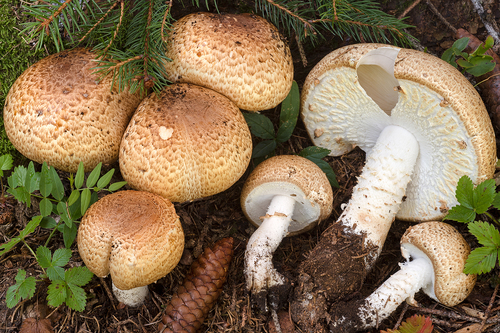
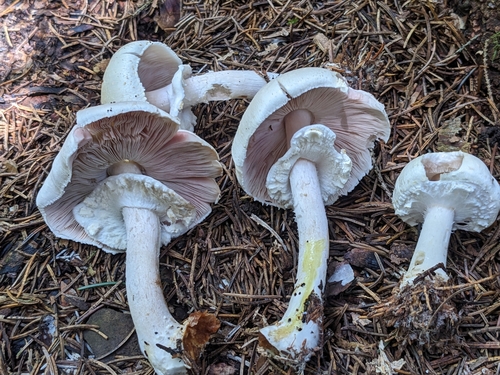
Source ↗Agaricus abruptibulbus is a species of fungus in the genus Agaricus. It is commonly known as the abruptly-bulbous agaricus or the flat-bulb mushroom. First described by mycologist Charles Horton Peck, the mushroom is medium-sized, with a white, yellow-staining cap on a slender stipe which is bulbous on the base. The species smells slightly of anise and turns yellow when bruised or cut.
Names & Synonyms
Knölfotad snöbolls- champinjon, Kuusen herkkusieni
Psalliota abruptibulba (Peck) Kauffman
References (4)
- Boa, E. R., 2004, Wild edible fungi and their importance to people. FAO Non Wood Forest Products Booklet 17
- Li, H., et al, 2020, Reviewing the world’s edible mushroom species: A new evidence-based classification system. Compr Rev Food Sci Food Saf. 2021;20:1982–2014.
- Pace, G., 1998, Mushrooms of the world. Firefly books. p 48 (As Psalliota abruptibulba)
- Pelkonen, R., et al, 2008, Element Concentrations in Wild Edible Mushrooms in Finland. The Finnish Environment 25