Cerastium semidecandrum
L.
Little mouse-ear chickweed
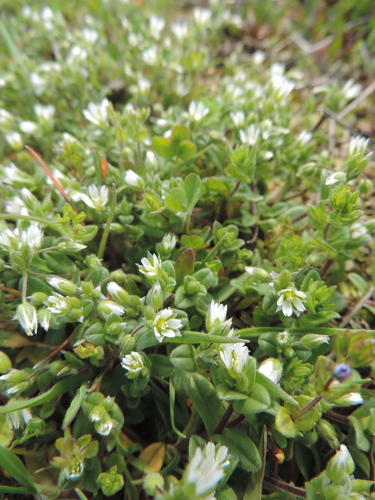
(c) Marco Schmidt, some rights reserved (CC BY-NC-SA), uploaded by Marco Schmidt
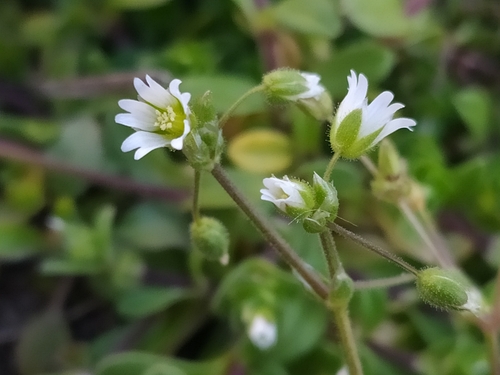
(c) kisstamas, some rights reserved (CC BY-NC), uploaded by kisstamas

(c) stephane_herens, some rights reserved (CC BY-NC)
What to Eat
Edible parts: Leaves
The young plant is edible cooked. It is best harvested before flowering.
Where to Find It
It is a temperate or Mediterranean plant. It grows in pasture and between tussocks. Tasmania Herbarium.
Australia, Britain, Caucasus, Central Asia, Cyprus, Europe, Iran, Luxembourg, Mediterranean, Middle East, North America, Tajikistan, Tasmania, Turkey, Türkiye,
How to Identify
An annual herb. It grows up to 20 cm high. It is usually branched from the base. It is slightly sticky to the touch. The leaves are 18 mm long by 2-4 mm wide. They are hairy above. The leaves near the base are broadly sword shaped and the upper ones are more narrow. The flowers are white and 5 mm across. The sepals are longer than the petals. The flowers are loosely arranged.
How to Grow
See the plants native habitat for ideas on its cultivation needs.
Propagation: Sow seed in spring in a cold frame. Once seedlings are large enough to handle, prick them out into individual pots and plant into permanent positions during summer.
Medicinal Uses
None known.
Other Uses
None known.
Wikipedia
Source ↗Cerastium semidecandrum is an annual growing to 0.2 m tall. It flowers April to May and is hermaphroditic, self-fertile, and pollinated by insects. The plant tolerates light sandy, medium loamy, or heavy clay soils with mildly acid to basic pH, requires full sun, and prefers moist soil.
Notes
There are about 100 Cerastium species.
References (8)
- Dashorst, G.R.M., and Jessop, J.P., 1998, Plants of the Adelaide Plains & Hills. Botanic Gardens of Adelaide and State Herbarium. p 56
- Harris, S., Buchanan, A., Connolly, A., 2001, One Hundred Islands: The Flora of the Outer Furneaux. Tas Govt. p 132
- Hussey, B.M.J., Keighery, G.J., Cousens, R.D., Dodd, J., Lloyd, S.G., 1997, Western Weeds. A guide to the weeds of Western Australia. Plant Protection Society of Western Australia. p 128
- Kermath, B. M., et al, 2014, Food Plants in the Americas: A survey of the domesticated, cultivated and wild plants used for Human food in North, Central and South America and the Caribbean. On line draft. p 206
- Plants for a Future database, The Field, Penpol, Lostwithiel, Cornwall, PL22 0NG, UK. http://www.scs.leeds.ac.uk/pfaf/
- Seidemann J., 2005, World Spice Plants. Economic Usage, Botany, Taxonomy. Springer. p 91
- Sp. pl. 1:438. 1753
- Tasmanian Herbarium Vascular Plants list p 18