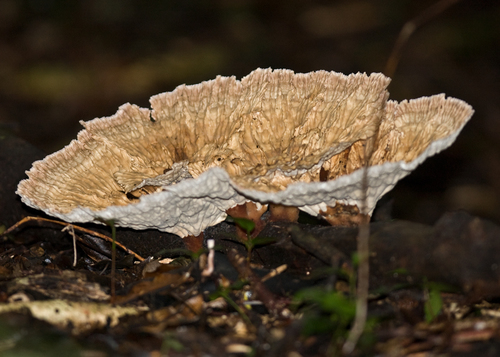
Pogonomyces hydnoides
(Sw.) Murrill

President and Fellows of Harvard College

President and Fellows of Harvard College

President and Fellows of Harvard College
What to Eat
Edible parts: Mushroom, Fungus
The mushroom fruiting body is edible.
Where to Find It
It is a subtropical plant.
Mexico, North America,
How to Identify
A fungal mushroom in the Polyporaceae family, found in subtropical regions. The fruiting body is the edible portion.
Medicinal Uses
Although Hexagonia hydnoides is considered inedible due to its tough, woody texture, therapeutic compounds within the basidiocarp can be extracted for use in traditional herbal medicines such as teas through being ground into a powder. A study published in 2021 analyzed the common knowledge, usage, and effects of various fungi in traditional medicine in rural Northeastern Brazilian communities. H. hydnoides was specifically cited for use as a solution to colic in infants, as an antispasmodic therapy for the digestive system. H. hydnoides was further analyzed and found to have antibacterial properties as a result of saponin compounds. A similar study found that extracts from H. hydnoides were effective as an antibacterial agent against Bacillus cereus. The usage of H. hydnoides in traditional medicine is endangered by increased access to commercially produced medicines, loss of tradition throughout generations, and a decline in fungal species populations due to environmental factors such as deforestation, which is particularly relevant to H. hydnoides' use among populations in South America, especially regarding the gradual loss of Brazilian rainforests. The fungus is also reported to be used in Mexico as a medicine for the treatment of pimples, warts, and ringworm.
References (1)
- Boa, E. R., 2004, Wild edible fungi and their importance to people. FAO Non Wood Forest Products Booklet 17